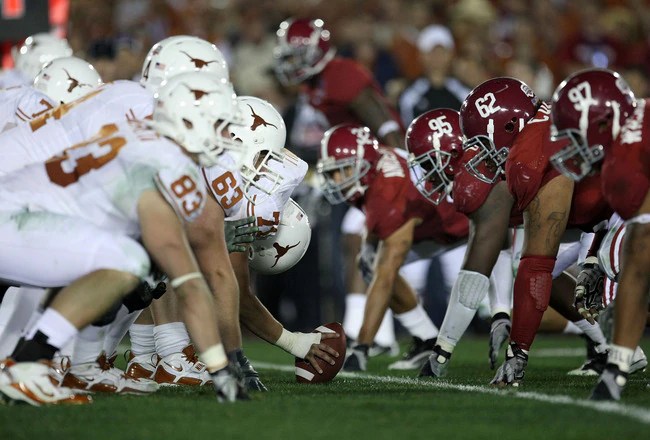
The ACC Has the Luck of the Irish: How Notre Dame’s Move Affects the College Sports World

There has been one phrase that I’ve repeated many times on this blog over the past two years because so many college football fans continuously refuse to believe it: the ACC is much stronger than what people give them credit for.  I don’t say that as someone that is even a fan of the ACC at all (as it would bring me great personal joy to see Duke get relegated to the Southern Conference), but rather as an observer that when the academic leaders that ultimately make conference realignment decisions have a legitimate choice, they would vastly prefer being in an academically prestigious conference.  That is something that the ACC has always had in its favor (notwithstanding the hypocrisy of fake grades) and is a powerful counter to the lure a even a few million more dollars per year that could theoretically be obtained in other conferences.  This has culminated in the ACC grabbing the most powerful brand name in college sports (albeit on a partial basis): Notre Dame.

It doesn’t surprise me one bit that Notre Dame would bolt the Big East for the ACC as a non-football member.  From the Irish perspective, the ACC looks more like the Big East that the Domers originally joined in the 1990s (which had Miami, Boston College, Virginia Tech, Pitt and Syracuse at the time) than the Big East does itself today.  With the Big East getting shut out of the top level of conferences in the new college football postseason structure, the ACC provides “power conference” membership for Notre Dame’s basketball program and non-football sports without actually having to join a power conference for football.  Notre Dame is an institutional fit with many of the ACC schools as an elite private university, as well (which always played into the Domer bias against the Big Ten as a league that is made up of massive public schools with the exception of Northwestern).  The stipulation that Notre Dame play 5 ACC football games per year might not be optimal for the Irish, but it’s certainly doable since the ACC provides such a large slate that the Domers have chosen to play on their own, anyway.  Boston College and Pitt have long been almost annual Notre Dame opponents, while Miami, Syracuse, Georgia Tech, Maryland, Wake Forest and Florida State are all schools that the Irish have scheduled recently.  The ACC also allows Notre Dame to continue playing schools on the East Coast where much of its alumni base is located (which was a major detraction from the Big 12’s own non-football membership offer to the school).  On virtually every level (institutional fit, maintaining football independence, a football scheduling arrangement that they could live with, East Coast exposure, competitive basketball and Olympic sports), this was the best situation that Notre Dame could have received.

(From a purely personal standpoint, I want to see Illinois and Notre Dame play a Big Ten/ACC Challenge game annually at the United Center.  The Illini have been looking for better opponents for its annual Chicago game while the Irish are now going to need a presence in that market since it won’t be playing DePaul anymore.)

What surprises me is that the ACC offered this deal to Notre Dame in the first place.  ACC commissioner John Swofford has long taken the position that the league should only be made up of all-sports members along with members such as UNC that believe that they are every bit as powerful on the college sports landscape as Texas, Michigan and USC, so it can’t be emphasized enough that this is a dramatic change.  Unlike the perception in much of the media that this move was “Notre Dame choosing the ACC”, the reality is that this was the ACC choosing to move off of a previously intractable position.  The ACC might have been spooked by the constant rumors that the Big 12 would poach schools such as Florida State or Clemson (along with adding Notre Dame as a non-football member itself) as a result of the Big 12’s new TV deal.  On that front, the ACC schools agreed to what will likely be an impenetrable wall of a $50 million exit fee for each school.  That is honestly an even bigger deal in the long-term than the Notre Dame move since it effectively the ACC from its football cash cows bolting to other conferences.

What effect does this have on conference realignment?  At least when it comes to the “Big Five” power conferences, I believe that it stops it in its tracks.  Notre Dame and Texas are the two schools that have the ability to create dramatic shifts toward 16-team superconferences on their own, but both of them look to be settled for the foreseeable future.  The ACC itself has no need to expand further either on the football front or in a non-football manner.  15 members for basketball and Olympic sports don’t cause any material issue for scheduling and Notre Dame has always been the only school that the ACC would have ever offered partial membership to.  Therefore, Big East Catholic schools such as Georgetown and Villanova aren’t going to find a lifeline in the ACC.  Notre Dame also doesn’t impact the football side at all, so there is no need to expand beyond 14 there, which means that Big East schools such as Rutgers and UConn aren’t going to find a lifeline in the ACC, either.

The SEC and Pac-12 have always been the two leagues where Notre Dame’s potential movement would have the least amount of impact, so the ACC move doesn’t really require a reaction from either of them.  In the case of the Big Ten, it likely doesn’t change their thinking, either.  If the Big Ten wanted to expand to 14 or 16 without Notre Dame (and I never believed that they did unless Texas was coming along instead), then it would have occurred two years ago concurrently with the move to add Nebraska.  A school such as Rutgers is going to have to build a substantial resume both on-the-field (in terms of competing for top tier bowls) and off-the-field (in terms of actually delivering its home market for TV purposes) in order for the Big Ten to take any interest.  At this point, the Big Ten isn’t taking any “project” schools – it only wants elite programs with top-level financial underpinnings from the get-go and there aren’t any out there outside of the Big Five.

The Big 12 has an interesting dilemma as to whether they stay at 10 or expand to 12.  Now that it’s clear that the Big 12 isn’t going to be taking any ACC schools (which should have been obvious to the rationally-minded among us a long time ago), many conference realignment observers (including me) believe that Louisville is next on the list for the Big 12.  The problem for Louisville, though, is that there continues to be a lack of consensus around who would be school #12 and the Cardinals simply aren’t enough of a brand name to justify a league going to and stopping at 11 schools in the way that the Big Ten did with Penn State.  I’m sure that all of the Big East schools that the Big 12 could conceivably add (Louisville, Rutgers, Cincinnati, UConn, USF) are burning up the phone lines to Bob Bowlsby’s office, but I don’t see the Big 12 biting.  My personal view has long been that BYU paired with Louisville would be the best viable Big 12 expansion opportunity out there, but (1) that may not add enough revenue to justify expansion and (2) even if it would be revenue beneficial, BYU’s independence and demand for certain TV rights for BYUtv can get in the way.  As a result, I think the Big 12 is going to stay put for awhile.

The upshot is that despite the general storyline that the Big East is reeling once again, the actual impact of Notre Dame leaving the conference isn’t necessarily going to be that great.  Any major impact to the Big East would come in form of collateral damage of all-sports members such as Louisville and Rutgers leaving, which appears to be unlikely at this point.  Now, that’s not the say that the Big East should be happy about anything that has gone down today.  From a perception standpoint, Notre Dame was the last link that the Big East had to the college sports power table, which is now gone.  Notre Dame was also the main back channel that the Big East had to communicate with NBC/Comcast, who is widely speculated to be interested in the league’s new TV contract.  The Big East isn’t going to receive as reliable information on that front, which comes at an inopportune time with the conference’s exclusive negotiation period with ESPN now in effect.

Meanwhile, new Big East commissioner Mike Aresco faces the question of whether the league should replace Notre Dame with another non-football member, a full all-sports member, or no one at all.  Regardless of the Notre Dame situation, the Big East needs to find a 14th member for football.  However, that 14th member likely needs to come from the West, which precludes an all-sports invite to that school.  (My money is on Air Force eventually coming around as a football-only member with rival Navy already in the fold.  The leadership at the BYU, AKA the leaders of the LDS, is too infatuated with independence right now.)  If the Big East adds a non-football replacement, I’d put St. Louis University high on the list as a large market urban Catholic school that already has a long history with several of the Big East’s legacy Conference USA members.  Butler is also a great option on paper (although not quite the institutional fit that SLU presents).  That could result in some further shifting around in the Atlantic 10 and the midmajor conferences below it.  As a result, Notre Dame’s move to the ACC is more likely to trigger conference realignment aftershocks in the non-power conferences that don’t even play FBS football than any movement within the Big Five.

Speaking of which, one question that I have seen from a lot of people today is whether the Big East Catholic schools will split off and form their own league as a result of the Notre Dame defection.  I don’t see that happening with the irony being that with each defection from the Big East that is in part because it is an unstable hybrid conference, the remaining members end up needing the hybrid more than ever.  The Big East Catholic schools might end up finally leaving if Louisville and UConn find other homes, but until that happens, the Big East is still a superior basketball league compared to a split Catholic-only conference.  Now, maybe the Big East Catholic members believe that they can control their own destinies better by forming their own league, which is certainly a consideration.  That would certainly cause complete chaos among the midmajor conferences as much of the Atlantic 10 would definitely position themselves to get into the new Catholic league, which would then result in a massive chain realignment reaction.  As a pure financial decision, though, a hybrid Big East is still worth more to all of its current members than what they would have in a split situation.

The ultimate bottom line is that the ACC raided the Big East and Notre Dame got exactly what it wanted.  Something tells me that we have already heard that story several times before.

(Follow Frank the Tank’s Slant on Twitter @frankthetank111 and Facebook)

(Image from Rankontur)

Notre Dame to Join ACC as a Non-Football Member

There are multiple breaking reports this morning that Notre Dame will move its sports other than football and basketball from the Big East to the ACC.  Brian Hamilton of the Chicago Tribune reports that there will be announcements made today in both South Bend and North Carolina, while Brett McMurphy of ESPN says that the deal entails Notre Dame playing 5 ACC schools per year in football.  I’ll have some more thoughts on this later, but you can discuss this huge conference realignment news in this thread in the meantime.

(Follow Frank the Tank’s Slant on Twitter @frankthetank111 and Facebook)

Someday Love Will Find You: The Longhorn Network, BlogPoll Ballot, Parlay Picks and Classic Music Video of the Week

There’s a post-Labor Day rush of thoughts on football of all stripes and types.  Let’s get to it:

(1) Longhorn Network Carriage – Anyone that has followed conference realignment over the past couple of years understands the importance of the ESPN-owned Longhorn Network.  In my opinion, it’s the single greatest factor that is keeping Texas in the Big 12, and in turn, Texas has the ability to cause a greatest earthquake out of any school on the college sports landscape (even more than Notre Dame) if it ever chooses to move.  Therefore, it’s key to keep an eye on Longhorn Network carriage in the State of Texas and its environs.

Last week, the Longhorn Network finally signed up AT&T U-Verse as its first of what would considered to be “major” cable carriers after a year of being on the air.  From those who recollect the carriage disputes in the Midwest when the Big Ten Network was formed, it took about a year for the top cable carriers such as Comcast to add the channel (with the one major difference being that DirecTV had the BTN from day one).  Getting AT&T on board is an important step for the LHN, but there’s still a lot work to be done in order to get the network onto what I would consider to be the most critical ones for its long-term survival: Comcast, Time Warner Cable and DirecTV.  With each week that goes by during the football season, the leverage that ESPN has in negotiating with carriers diminishes.  If ESPN can’t strike more deals by the time that the LHN airs its next football game, the chances of anything else occurring before next football season drop precipitously, which is where the long-term viability of the LHN starts truly coming into question.

My impression is that ESPN’s asking price for LHN is too high for the market to bear, but the problem is that the asking price is effectively what ESPN has to have in order to make only a minimal amount of profit (or even just to break even) after taking away all of the expenses of running the network.  If ESPN lowered the asking price much further, then it would be locking in long-term losses that would send Mickey Mouse and his shareholders into a bloody rage.  As a result, ESPN is likely going to have to go back to Texas to renegotiate its rights fees if these carriage disputes continue much further.  While Texas could theoretically sit back and tell ESPN, “F**k you, pay me” (which is effectively what the Longhorn Network contract states), the LHN is still an extension of the program’s brand even if it technically doesn’t own the channel.  The university ultimately doesn’t want irate alums and donors calling every week about why the LHN isn’t on their cable systems (as many of them actually mistkanely believe that the school owns the channel as opposed to ESPN), so it behooves the school to bend on rights payments if it can translate into greater carriage down the road.  Plus, if you look at the linked LHN contract, the real potential financial windfall for Texas comes from when the LHN hits profitability targets and a lucrative revenue sharing arrangement kicks in.  That windfall is realistically only possible if the LHN gets broad distribution across the State of Texas.

(2) BlogPoll Ballot

The clear lesson of the first week of the college football season is that Alabama is a holy terror of a scary team.  It looks like Alabama-LSU in November will be yet another national championship elimination game that might not end up being an elimination game.

Note that I got onto this week’s BlogPoll “Straight Bangin’ Award”  list for those biased against their favorite schools since there were actually some poor souls out there that put Illinois on their ballots.

(3) College Football Parlay Picks (odds from Yahoo! and home teams in CAPS)

Purdue (+14.5) over NOTRE DAME – The Boilermakers are going to sneak up on some teams this year.

Nebraska (-5) over UCLA – I have a feeling that enough Husker fans are going to head out to Pasadena to make this a fairly hospitable atmosphere for the road team.

Illinois (+4) over ARIZONA STATE – The Illini offense (particularly the offensive line) was pretty shaky last week, but the defense is impressive and can keep this game close.

(4) NFL Parlay Picks (odds from Yahoo! and home teams in CAPS)

Bills (+2.5) over JETS – Unfortunately, I think the Tebow Starter Watch is going to begin immediately.

PACKERS (-4.5) over 49ers – There’s a lot of interesting analysis out there suggesting that the 49ers are going to come back to Earth this season and I’m starting to buy it.  As a Bears fan, I have seen the great defense/untrustworthy quarterback combo rear its head for most of my lifetime and can easily see a drop off for the 49ers similar to what Chicago experienced from 2001 to 2002 and 2006 to 2007.

Colts (+9.5) over BEARS – I’m not that concerned that the Bears are going to lose this game outright, but as long as the team’s offensive line has more holes than the Soldier Field sod, there are going to be a lot of close calls.

(5) Classic Music Video of the Week: “Separate Ways” by Journey

Back in 2005, my Chicago White Sox adopted “Don’t Stop Believin'” as a corny theme song for the season and rode all the way to a World Series Championship (the first that either Chicago baseball franchise had seen since 1917).  Journey front man and self-described San Francisco Giants fan Steve Perry had enough time on his hands to show up to both the White Sox World Series clincher in Houston and the team’s ticker tape parade despite having no previous connection to the team.

“Don’t Stop Believin'” has enjoyed a fairly stunning renaissance since that time that was supercharged by its prominence in the closing moment in The Sopranos finale* and then the pilot episode of the shrill Glee.  It is now the most downloaded song of all time and has been ensconced in the top 100 list on iTunes every week for several years (which is remarkable for a 30 year old song).

(* If you haven’t already spent a couple of hours going through the legendary “Definitive Explanation” and second-by-second analysis of the final scene of The Sopranos, it’s well worth the time.)

One would think that this would be Journey’s greatest achievement, but the reality is that it’s not even close.  Please see the following:

It always slays me that Steve Perry and company are dead serious in this video.  There’s not a hint of irony or self-deprecation (or self-awareness, for that matter).  This is nothing less than the Citizen Kane of all music videos (or Vertigo, if you prefer).

Enjoy a wall-to-wall football weekend!

(Follow Frank the Tank’s Slant on Twitter @frankthetank111 and Facebook)

I Can’t Remember What Was Said or What You Threw at Me: Frank the Tank’s Week 1 BlogPoll Ballot, Parlay Picks and Classic Music Video of the Week

With the return of college football on Thursday night, here’s the season premiere of the weekly post combining my SBNation BlogPoll ballot, parlay picks for 3 games each for college and the NFL (including every Illinois and Bears game) and a classic music video (heavily tilted toward old school rap, ’80s trash rock and ’90s one-hit wonders as always).  Let’s get to it:

(1) BlogPoll Ballot

Nothing too crazy here, as evidenced by the fact that I ranked #2 out of more than 100 voters in the “Mr. Dumb Existence” category for having a low standard deviation between my personal ballot and the overall poll.  I feel pretty good that any of the top 5 can make it to the national championship game (look at Florida State’s schedule and tell me that they can’t run the table there) while it’s more of a crapshoot afterwards.

(2) Parlay Picks (odds from Yahoo! and home teams in CAPS)

Navy (+15.5) over Notre Dame (in the land of Guiness) – These schools will be completely out of their element overseas, which means that this is way too large of a spread for my tastes.

Western Michigan (+10) over ILLINOIS – I don’t know what it is, but Illinois always sleepwalks against the Broncos.  Being a Chicago and Illini sports fan, I’ve accumulated a lot of rooting scar tissue over the years and the Illinois loss to WMU at Ford Field in 2008 is up there in terms of sheer horror.  I’ll be down in Champaign with my wife and twins for this one, so I hope I’m wrong here.

AUBURN (+3.5) over Clemson – Clemson has a habit of burning gamblers in high profile openers.  I’d take a solid SEC home team and the points.

(3) Classic Music Video of the Week: “My Own Worst Enemy” by Lit

This song from my college days has held up fairly well over the years, but its video in particular has held a special place in my heart since the main feature of the town that I grew up in (Glenwood, Illinois) was its old school bowling alley that circulated the same nicotine-tinged air from the 1950s through its closing in 2008.  R.I.P., Glenwood Bowl.

Enjoy the sweet smell of a brand new football season and your Labor Day weekend!

(Follow Frank the Tank’s Slant on Twitter @frankthetank111 and Facebook)

A Big Ten Guy’s Defense of Notre Dame (Except for the Ed Hardy Uniforms)

“Notre Dame is no longer relevant.” That’s a fashionable phrase among sportswriters and the bloggerati as we head into a new college football season next week. Rick Reilly kicked up the dust like many others before this past week with his “Demoting Notre Dame” column. His argument is that Notre Dame hasn’t won anything for a long time, therefore:

(1) Notre Dame doesn’t deserve “special treatment” from the BCS.

(2) Notre Dame doesn’t deserve its NBC TV contract.

(3) Notre Dame doesn’t deserve all of the preseason hype.

(4) Notre Dame doesn’t deserve to be independent and needs to join a conference.

These statements have been made by many people many times before, with the only difference for Reilly is that he gets to trumpet his view on the front page of ESPN.com.

Of course, the mere fact that so many people feel the need to proclaim that Notre Dame is “irrelevant” is de facto proof that they are very relevant. Sportswriters might take some time to review the latest hookers-and-blow scandal at Miami, but no one has written that the Hurricanes are “irrelevant”. When a whole host of power schools went through down periods over the past decade, including Alabama and Michigan programs that will be playing a massive opening weekend game at Jerry World next week, I don’t recall anyone complaining that they were still on TV too much or living off of their respective histories.

Look – I’m an Illinois alum that lives and works in the Chicago area. Unlike the vast majority of college football fans, I actually have to deal with Domers (actual Notre Dame alums as opposed to subway fans) on a daily basis. To say that they have an inflated sense of self-worth about their school is an understatement – the football elitism that comes out that school makes Texas, Michigan and USC look like humblebots.

However, it has always bothered me when sportswriters and college football fans claim that Notre Dame doesn’t “deserve” all of its bowl perks and TV money. Whether Notre Dame deserves anything has little to do with whether it has performed on-the-field since the Lou Holtz era. The free market says that Notre Dame is valuable and it is rewarded accordingly. It’s as simple as that. NBC offered Notre Dame a TV contract as opposed to the other way around, so for Reilly to suggest that the school should “do the right thing and not renew” it is asinine. All of the Nielsen metrics suggest that the Pac-12 should not be receiving anywhere near the money that it will be taking in under its new TV deals that being this week, yet would Pac-12 commissioner Larry Scott be hailed if he “did the right thing” and took less money for the conference? Of course not! He would have been proclaimed an idiot and fired on the spot. Even the critiques that Notre Dame’s TV ratings have been dropping (which is true) don’t account for the fact that NBC televises all Irish home games, whether they’re playing Michigan or Tulsa. If any national network had to average in Florida vs. a Sun Belt school or Ohio State vs. a MAC school, it’s doubtful that those power schools would draw the audiences that Irish are able to draw when playing cupcake games (with the caveat that Notre Dame has been losing a large number of those cupcake games lately).

At the same time, Notre Dame’s “special treatment” from the BCS has long been overblown. Reilly rails against the Irish receiving a “bonus” of $1.3 million when it doesn’t go to a BCS bowl game, yet ignores the fact that schools such as Indiana, Washington State and Vanderbilt receive the same type of “bonus” from their respective conferences whether they are 12-0 or 0-12. For practical purposes, Notre Dame is receiving about the same amount from the BCS each year as any random member of a power conference, which is hardly “special treatment”. As for access, all that the current BCS rules state is that Notre Dame receives an automatic bid to a BCS bowl if it ranks in the top 8 of the final BCS standings. This really doesn’t mean anything since a top 8 Notre Dame team would almost certainly be snapped up as an at-large bid immediately by a BCS bowl regardless of any auto-qualifier rule. Most importantly, the Irish aren’t getting forced upon anyone. The top bowls want Notre Dame because what matters to them are ticket sales and TV ratings, which the Irish provide in spades. (In contrast, the Big East and non-AQ schools were definitely forced upon the BCS bowls.) That’s why the Orange Bowl appears to rather have a tie-in with Notre Dame in the new postseason system that is replacing the BCS as opposed entire non-power conferences. Even the other power conferences, such as the supposed rival Big Ten, get a financial benefit from including Notre Dame in the power structure that they don’t get from, say, Boise State. As a result, Notre Dame is still with the “in” crowd. (I guarantee you that Jim Delany would rather have a Big Ten school facing Notre Dame in a playoff or top bowl as opposed to Boise State 1000 times out of 1000.) Once again, this is simply the free market at work.

As for Notre Dame’s preseason hype, it’s Reilly’s employers at ESPN along with other TV networks that know that they get an immediate influx of viewers every time that they mention the Irish that are to blame there. Heck, Reilly is guilty of it himself since he knows full well that he wouldn’t have received even close to the same reaction if he wrote a column called “Demoting Miami” or “Demoting Tennessee”. I’d be more than happy if SportsCenter would stop talking about Notre Dame (and for that matter, a sub-.500 Red Sox team and our Lord and Savior backup Jets QB Tim Tebow*), but it’s ridiculous to see a media member shill blaming the school for hype that is entirely generated by the media itself.

(* I’ll admit that I love NBA trade and free agent rumors, which is another prominent source of complaints from many fans about SportsCenter. If the Lakers hadn’t fleeced the rest of the league yet again, I’d still be eating up every Dwight Howard trade scenario. This is sports crack to me on par with conference realignment.)

Finally, Notre Dame is free to be independent. They shouldn’t be forced to do anything that they don’t want to do, including but not limited to joining a conference. As long as they have a TV contract and what they deem to be a suitable home for their non-football sports, then more power to them. There are plenty of other schools that would do the exact same thing if they had the ability to do so, but they simply don’t have that ability. One of these days, market forces might persuade Notre Dame to join a conference (although note that BYU was able to get its own TV contract with ESPN, so any thought that NBC is going to drop the Irish at any point is soon is misguided). However, it should simply be left to that free market to decide Notre Dame’s fate as opposed to some shakedown from the NCAA or other conferences.

Now, before all of you start thinking that I’m some sort of Notre Dame apologist, let’s get to what should truly be causing a crisis of confidence in South Bend: these historically awful uniforms where I had to look away for fear of turning into stone. This is what happens when Ed Hardy and a leprechaun have a love child. These uniforms might only be used for one night, but that one night can cause a lifetime of nightmares a la Bjork. There has been an Ebola-like spread of color-blind fashion in college football uniforms lately, but never in my life did I think that Notre Dame (of all schools) would stoop to such cheap gimmickry. It’s as if though Jack Swarbrick said, “Maryland’s uniforms are waaaay too understated.”

Let’s face it: shoe and apparel companies such as adidas, Under Armour and Nike (whose Oregon uniforms now look like Brooks Brothers suits by comparison) love to design ugly ass shit because young people are fashion idiots that will buy it all up. I’m not hating on just today’s generation: my junior high school years featured vintage Zubaz pants and a superintendent-ordered ban on kids wearing massively baggy jeans backwards because of so many Kriss Kross imitators. (We did have great taste with our Starter jackets and gear back then, though. This Blackhawks Starter jacket was the best piece of outerwear that I’ve ever owned.) Meanwhile, my parents’ clothing from the ’60s and ’70s can be used unironically as Halloween costumes. ’nuff said. It’s simply the circle of life* and the shoe titans know it.

(* My kids have watched The Lion King and listened to its soundtrack so much in the past year that I’ve caught myself inserting phrases from the movie into adult conversations without even knowing it. I’d be horrified to look at a scan of my brain activity right now.)

Therefore, it is the duty of schools such as Notre Dame, Michigan, Alabama and USC that actually have great classic traditional uniforms to resist the unwavering urges from their shoe partners to mess them up. adidas will always argue that a football uniform designed by a drunk Lady Gaga is a “good idea”. It’s up to people with a working pair of eyes with actual standards to put a stop to it. Sadly, Notre Dame has fallen into the trap of believing that being “relevant” today means using horrible helmets when such a large reason of why they continue to be relevant despite some putrid years on the field is their history and tradition. I’m happy that Illinois appears to be working with Nike in going the other direction.

(Follow Frank the Tank’s Slant on Twitter @frankthetank111 and Facebook)

(Image from ESPN.com)

Gold Standard or Tulip Bulbs? The Big East and the Overall Sports TV Rights Market

From the first time that I wrote about the Big Ten’s plans for expansion way back in the winter of 2009, I emphasized the importance of the conference’s television contracts and revenue, particularly the setup of the Big Ten Network.  Up until that time, the standard thinking of conference realignment among college sports fans was that it should be focused upon geography.  Back then, Penn State in the Big Ten looked like a major geographic outlier among the power conferences.  Then, we entered a 2-year period where 1 out of 4 schools at the FBS level switched conferences (plus a trickle-down effect to non-football conferences such as the Atlantic 10 and Colonial Athletic Association), including a marquee brand name to the Big Ten (Nebraska), two massive markets to the SEC (Texas A&M and Missouri), ownership of the Rocky Mountain region by the Pac-12 (Colorado and Utah), consolidation of the East Coast power base by the ACC (Syracuse and Pitt) and massive upheaval in the Big 12 and Big East.  With such a massive number of movements that were seemingly driven by television money, my previous minority view was turned on its head where all that many people are thinking about the is value of the latest TV deal.  This leads to continuing rumors of the ACC getting raided by the already raided Big 12 simply based on TV money*.

(* It’s August 15th, which was supposed to be the deadline for ACC schools such as Florida State and Clemson to bail for the Big 12.  Where are the “done deals” that were supposedly ironclad a few months ago?)

The general argument, which we have explored on this blog several times, is that sports programming is particularly valuable in this age of fragmented viewing audiences and high DVR usage.  There is no other type of programming that delivers younger male viewers (the most expensive demographic for advertisers to reach) that watch TV live* (meaning they actually see the commercials) than sports.  As a result, this has been pushing rights fees further and further into the stratosphere for all types of leagues (whether college or pro).  Currently, the Pac-12 has the largest TV contract out of any college conference even though it is only in 5th place for TV ratings among the power conferences for football and 6th place for basketball.

(* Of course, “live TV” is a loose term for NBC Sports.  I’ll spare you a lengthy treatise of how much I loathed the over-the-air NBC Olympics coverage since this issue has been rehashed extensively in many other places, but suffice to say, I’m never watching Animal Practice just on principle.  There was a brief moment when I thought that Bob Costas was trolling us by saying that “they would be back in an hour” for the end of the Closing Ceremonies, as if it were some type of perverse joke in light of all of the #NBCfail commentary over the past 2 weeks, but NBC proved that they can’t even be trusted to do tape delays correctly.)

The Big East is the next college conference that’s coming up to bat for a new TV deal and it will be a litmus test of how the overall sports TV rights market is faring prior the next large group of marquee properties that will be hitting the open market over the next few years (Major League Baseball, NBA and the Big Ten).  Regardless of any critiques of the Big East’s leadership over the years, the conference certainly understands how important the new TV contract will be for its long-term stability, which is why it has hired former CBS Sports Vice President Mike Aresco as its new commissioner.  (For what it’s worth, I believe that this is a fantastic hire for the league.)  Negotiating media deals has become possibly the #1 priority for all conference commissioners, so it makes sense for any league to place a huge premium on those who have worked at the highest levels of the TV sports industry.  At the same time, the Big East has hired Chris Bevilaqua as a consultant, who was the lead negotiator for the Pac-12 in that league’s record-breaking TV deal.  So, the conference seems to be setting forth the best TV negotiation team possible.  The question will be whether the Big East will be judged on its fundamental intrinsic value (which is much lower than the 5 power conferences) or get paid a hefty increase simply because of the overall TV sports bull market.

On the one hand, the Big East has been battered with the loss of West Virginia, Syracuse and Pitt.  Even if replacements such as Boise State could match or exceed the quality on-the-field of those programs, those were tradition-rich schools with a large amount of national TV brand value.  (I know that Syracuse has blown chunks for the past decade and Pitt is only starting to recover from the Wannstache era, but they are still in the old school fraternity of college football, whether it’s fair or not.)  At this point, the only school left in the Big East that was a continuous member since the BCS system started in 1998 is Rutgers.  (Temple was in the conference at that time, but they were kicked out in 2004 and just invited back in to start in 2013.)  From a national perception standpoint, the Big East is at an all-time low since it is a league full of noveau riche schools in a college football world that values blue blood lineages the most.

On the other hand, the Big East has the potential benefit of market timing that, say, the ACC didn’t have (as the Carolina-centric league signed its current deal with ESPN right before the bull market for sports TV rights began and then negotiated a decent increase only after expanding with Pitt and Syracuse).  At the same time, there is a reinvigorated competitor of Comcast-basked NBC Sports Network that has been hungry for additional sports content yet hasn’t been able to procure much beyond the properties that NBC already had such as the Olympics and NHL.  As a result, there is this belief/hope that NBC is going to be willing to overpay for Big East content because it has few other choices with the other power conferences off of the table and all NFL packages locked up for several more years.

If the major college conferences were all negotiating new TV deals at the same time today, I would rank them as follows in terms of value: (1) SEC, (2) Big Ten, (3) ACC, (4) Big 12, (5) Pac-12 and (6) Big East.  Of course, the Big East is fortunate that none of those other conferences are going to have new TV deals soon, so it can possibly be the beneficiary of overall market timing.  As we saw with the tulip bulb craze of the 1600s, a dramatic rise in the overall market isn’t always necessarily rational (and on the flip side, just as we saw with stock market crash and bank runs in the 1920s, drops in the markets fueled by panic aren’t always rational, either).

My feeling is that the new Big East TV contract is going to be the proverbial canary in the coal mine of whether we’re in the sports TV rights equivalent of the US real estate market in 2006 (when it was at its peak before the global financial meltdown) or networks will start fighting back to have a cooling off period.  In the real estate boom, even houses in poor locations were being swept up in paper value, while the real estate bust has shown that the old “location, location, location” maxim is more important than ever.  So, is the Big East a penthouse on the Upper East Side of Manhattan (which intrinsically has a high market value no matter what is happening in the overall real estate market) or a spec house in an exurb that is completely beholden to overall market forces?  Loose lending practices artificially fueled the housing market and we may be seeing the same thing with cable subscriber fees driving up sports TV rights fees.  As carriage disputes between TV networks and cable/satellite companies continue to escalate and become more common, there’s a not-so-insignificant risk that the market could snap back harshly if the gusher of cable subscriber fees doesn’t continue.

We have seen a wide range of estimates for how much the Big East deal is going to be worth, with a low point of around $4 million per year per all-sports school to high estimates of the league ACC-type dollars that would be in the range of $17 million per year per school.  This reflects the corresponding wide range of interests involved, with those low numbers likely being provided by people on the TV network side (who have a heavy interest in seeing a slowdown in the rise of sports rights fees) and the high numbers being thrown out by those that make their livings negotiating against the TV networks.  Indeed, Chris Bevilaqua himself stated that the low predictions are being provided by those with “some kind of agenda”, but that cuts both ways.  For instance, Neil Pilson, who was the former president of CBS Sports, seems to have been quoted in virtually every single article that I’ve seen regarding the new Big East television deal for the past 6 months (in just the past 24 hours, he’s been quoted by the New York Times and ESPN) and has always given an extremely rosy prediction.  At a surface level, this sounds great to Big East fans, who see this as someone that has a lot of industry experience that is willing to give on-the-record predictions (as opposed the anonymous “TV industry sources” that are often quoted).  However, dig a little deeper and you’ll see that Pilson, as the owner of the largest TV sports consulting business in the country, has quite possibly more incentive than any single person out there to see all sports TV rights continue to skyrocket.  His incentive is that if the Big East can procure a large TV deal simply because it’s live sports programming for the sake of being live sports programming (ratings, popularity and national interest be damned), then his own clients that draw much larger audiences (e.g. the International Olympic Committee, NASCAR, the Rose Bowl, etc.) can effectively name their own prices and TV networks will have to pay up.  That’s why Pilson is so willing to go on the record with reporters regarding the Big East – he is attempting to use the conference’s new TV deal as a catalyst to pump up the overall sports rights market even further into the stratosphere.  If the Big East is getting $17 million per school per year essentially for existing, then how much is the Big Ten going to be worth with much larger fan bases and TV appeal?  What about Major League Baseball and the NBA?  These leagues and their respective TV consultants would love nothing more than to see the Big East to receive a payday on steroids.  To be sure, Pilson’s optimistic predictions for the Big East may end up being correct, but it just needs to be noted that he’s not a neutral observer in the least (just as the anonymous sources that are providing the opposing sandbagged figures have their own agendas).

Regardless, if there’s any semblance of reason out there, then the truth will likely be somewhere in the middle.  NBC Sports Network effectively needs any type of halfway decent live sports content, so it has a larger incentive to pay a premium to the Big East.  Comcast is NOT a charity, though, as evidenced by the aforementioned Animal Practice interlude to the Closing Ceremonies of the Olympics.  This can’t be emphasized enough: Comcast is going to pay the least amount that they can possibly get away with in order to win the Big East rights.  As a result, that floor is going to be determined by how much interest ESPN and, to a lesser extent, Fox have in the Big East.  If the conference wants to obtain maximum value, then it particularly needs to have ESPN legitimately involved in the bidding process or else Comcast isn’t just going to hand over large rights fees for the hell of it and negotiate against themselves.  In my humble opinion, ESPN isn’t going to want to let NBC Sports Network get the Big East for free, but the guys in Bristol aren’t going to go balls out to retain the Big East, either (and Comcast, who has gone toe-to-toe with ESPN in tough negotiations on many fronts, definitely knows that).  That points to a potential Big East contract that’s in the middle of the high and low figures that have been reported out there – let’s say about $10 million per all-sports school per year and $4 million per non-football school per year.

Jim Delany, David Stern and the Crypt Master Bud Selig are all watching this closely.  The Big East’s new TV contract will have a large impact on how much of a payday their own leagues will be receiving over the next few years.

(Follow Frank the Tank’s Slant on Twitter @frankthetank111 and Facebook)

(Image from SBNation)

Everyday I’m Shuffling: College Football Playoffs, Conference Realignment and Penn State

I’m finally back from along family vacation where I was blissfully unaware of any major news during that time, so let’s catch up on a few items:

(1) College Football Playoff Details Dripping Out and Confusing Everyone – About a month ago when the FBS commissioners plus Notre Dame announced that they agreed upon a new college football playoff system, it seemed fairly straight-forward with a 4-team playoff, semifinal sites rotated among 6 bowls to be played on New Year’s Eve and New Year’s Day, and a selection committee choosing the participants in the semifinals and top bowls.  The first caveat, however, was that certain bowls would have ironclad contractual tie-ins, specifically the Big Ten and Pac-12 with the Rose Bowl, the SEC and Big 12 with the Please Choose the Sugar or Cotton So I Can Stop Calling This The Pompous Champions Bowl, and the ACC with the Orange Bowl.   I wrote back in November prior to a playoff being on the radar that any proposed elimination of automatic qualifier (AQ) status from the BCS system would simply be a matter of semantics and that contractual tie-ins would not go away.  In essence, the removal of AQ status only affected the Big East (which didn’t have a contractual tie-in with any top bowl).  In fact, the new system goes a step further and protects the contractual tie-ins in years where those top bowls aren’t semifinals regardless of ranking.  That is, if the Rose Bowl isn’t a semifinal in a given year and a Big Ten team is a semifinalist, the Rose will have a Big Ten replacement no matter what record or ranking such replacement has at the time (whereas the current BCS system requires any non-champ replacement needs to be in the top 14).  On the flip side, in the years that the Rose Bowl is a semifinal host and the Big Ten champ isn’t in the top 4, then that Big Ten champ will go to one of the other top 6 bowls.  From this point forward, being a “power conference” means having a guaranteed tie-in with a “contract bowl”, while “access bowls” provide variable at-large spots that may or may not provide access to the non-power conferences in a given year.

At the same time, what was initially thought to be a simple rotation of semifinal games among the 6 top bowls may end up being much more complex.  The new Rose Bowl deal with ESPN indicated that Pasadena might only host 2 semifinals over a 12-year period (as opposed to 4 if there was an even rotation).  It has been speculated that the I’m Really Really Really Sick Of Calling This The Champions Bowl would similarly host fewer semifinals.  That didn’t make too much sense to me until SportsBusiness Daily reported an extremely important detail yesterday: the Big Ten and Pac-12 will split $80 million per year in media revenue from the Rose Bowl for the years that the game is NOT a semifinal host, while the revenue during semifinal years would be distributed in a manner to be determined with the rest of the new playoff system.  No wonder why the Big Ten and Pac-12 (and the SEC and Big 12) aren’t really that keen on giving up their top bowl tie-ins very often to semifinal games – they could be taking a haircut on a guaranteed $40 million payday in the applicable years.

The SportsBusiness Daily report also indicated that the commissioners expected to have the Rose Bowl and Allstate AT&T Chick-fil-A Breakfast of Champions Bowl host semifinals in the same years, which perplexes me to no end. What’s the point of doing that?  Would this mean that there could be years where there isn’t any semifinal on New Year’s Day when those two bowls aren’t hosting semifinals?  Why would a TV partner paying billions of dollars for this playoff (which is basically the entire impetus for this playoff being created in the first place) not want at least one semifinal in prime time every New Year’s Day?  By the same token, why would such TV partner pay for any semifinal games played on low-rated New Year’s Eve when most of America is outside of their homes getting hammered and not near a TV?

How the “access bowl” slots will be filled is also up in the air.  The goals of a selection committee, bowls and TV networks aren’t always going to be aligned here.  A selection committee will presumably want to award bids based on merit, bowls want teams with the best ticket buying traveling fan bases and TV networks want the most attractive national brand names.  (The latter two usually have a strong correlation, but there are certain exceptions.  Iowa, for example, is gold for bowls with how Hawkeye fans travel, yet a TV network would likely prefer bad-traveling-but-big-TV-ratings-draw Miami if it came down to a choice between the two.)

Then, we get to the selection committee itself.  I’ve warmed up to the concept a bit over the past month or so, but I still have a ton of reservations on how it’s going to work.  Is this structurally going to end up being an end-of-the-year poll only using 10 to 20 people as opposed to 115 people?  If so, why is that an improvement over the current usage of the Harris Poll?  (Note that I firmly believe that the use of the Coaches’ Poll where there are blatant conflicts of interest should be eliminated from any sort of selection criteria.)  How is strength of schedule going to be taken into account?  (In my humble opinion, SOS is politically correct code for “only the 5 power conferences matter”. When looking at the SOS rankings last year, the only school outside of the 5 power conferences plus Notre Dame that made it to the top 50 was Tulsa, which had a murderer’s row non-conference schedule of Oklahoma State, Oklahoma and Boise State.  Big East champ West Virginia was only at #51 even though it played LSU as a non-conference opponent.  Anyone that thinks that SEC teams are going to get docked for playing cupcakes in their non-conference schedules are completely misguided – SOS rankings help the SEC even MORE than subjective human polls.)  I know a lot of college football fans believe that many pollsters fill out their ballots blindly every week and distrust the polls accordingly, but I’m honestly much more worried about the disproportionate power of 1 committee member vote that can’t be mitigated by a large poll pool.  This is a situation where we really won’t know how well the selection committee concept will work until we see it in action.

To be clear, I’m very happy with the new playoff system overall. I have been pushing for some type of playoff for many years that still manages to preserve the Big Ten/Pac-12 tradition of the Rose Bowl and this system largely fits that criteria.  As someone that has been following this story closely, though, I’m just curious about the details that I don’t believe the commissioners themselves know how to resolve as of yet.

(2) All Quiet on the Conference Realignment Front – When the Orange Bowl signed a new deal with the ACC that provided the conference with all of the bowl’s media revenues, that removed any doubt regarding the ACC’s place in college football’s power structure.  I feel like the proverbial broken record here in continuously saying that the ACC is much stronger than what football fans give them credit for.  The ACC’s on-the-field record in BCS bowl games is irrelevant here: a league with academically prestigious schools (many of whom are flagships) that own or have large shares of their own home markets isn’t going to get booted out of the elite club.

This means that the chances of Florida State, Clemson, or any other ACC schools defecting to the Big 12 or even SEC have dropped precipitously.  To be sure, the new Big 12 TV contract might end up being so massive that it’s too much for any of those schools to turn down, but then it becomes circular for the Big 12 schools themselves.  That is, if the Big 12 TV contract is truly going to be that large, why expand at all and split up the pie further?  We’re at the point where there might be little incentive for either side to make any moves other than to provide all of us here with blogging fodder to discuss during the offseason.  There is no longer any rational fear on the part of Florida State and Clemson that the ACC will no longer be part of the power group.  By the same token, the Big 12 doesn’t need Florida State or Clemson to stabilize themselves to get a larger TV contract.  The wild card is obviously Notre Dame, but I’ll agree with The Dude of West Virginia on one point: anyone that thinks the Irish are joining his/her conference for football has gone full retard.

That leaves us with some less-sexy outstanding conference realignment matters that need to be settled, mainly who the Big East will add as its 14th football member.  Air Force still seems to be the most reasonably plausible addition that would add value to the league by pairing it up with rival Navy, although the Falcons completely backed off from Big East overtures last fall after appearing very interested.  (Note that I personally believe that BYU is going to be committed to independence for awhile.  The Cougars appear to be concerned with national ESPN exposure and building up BYUtv even more than money and being independent could be a better value proposition to sell in competing against Pac-12 member Utah for recruits compared to being in the Big East or any other non-power conference.)  After that, the pickings get a lot slimmer.  Fresno State is competitive on-the-field with a solid fan base, but might be the West Coast version of East Carolina where the Big East isn’t interested in entering that market.  UNLV has a solid TV market yet is essentially the Western version of Memphis, where their football ineptitude/basketball competence means that they make more sense as a potential all-sports member as opposed to a football-only member (except that UNLV doesn’t have the geographic proximity of Memphis to make an all-sports membership viable).  Bottom line: the Big East needs Air Force pretty badly here.

(3) Little Glass Houses For You and Me – Finally, the Penn State scandal seems to continuously get worse and worse for the university in the wake of the issuance of the independent report by Louis Freeh.  This has led to calls of punishments such as the death penalty for the football program, which NCAA president Mark Emmert said is an option that is not “off the table”.

I really cannot defend anything that Penn State’s leadership, including but not limited to the late Joe Paterno, did (or more appropriately, did not do) in covering up multiple instances of child rape.  There is truly nothing more heinous than letting child rape continue on for years and years when it could have been prevented by someone just speaking up.  However, I have also seen a lot of commentators, columnists, bloggers and message board posters spend a ton of time acting sanctimonious and try to one-up each other in terms of how outraged they are.  What troubles me, and as Jason Gay of the Wall Street Journal poignantly pointed out in this piece, is that there’s an argument being parroted by many people that the “insular culture” in State College that allowed a massive coverup to protect the Nittany Lion football program is somehow a unique Penn State problem.  If you believe that to be the case, ask yourself about how confident you are that your own alma mater or favorite college team hasn’t skirted or outright violated the law at some point.  How many sexual assaults by star football and basketball players have been swept under the rug over the years?  How many schools use coeds as “hostesses” for top-level recruits visiting campus where there are certain expectations of how those hostesses are supposed to provide a memorable weekend? How would you feel if your own daughter was one of those hostesses?  What about the murder of a transferring player, like in the case of Baylor in 2003?  How about sending a student to a tall video tower with 50 mph wind gusts?  Even a marching band in the SWAC can have its own insular culture that results in horrific consequences.

It’s not just about whether child rape is worse than the recruiting violations at SMU back in the 1980s that caused the NCAA to hand that school the death penalty.  Child rape is obviously exponentially more heinous and awful than anything that the NCAA has on the books (and frankly, I’m someone that believes that most recruiting rules are completely ridiculous).  However, the supposedly insular culture at Penn State where the protection of the “brand” is of the utmost importance is a culture that permeates everywhere in big-time college sports.  Chances are pretty high that your own school has some skeletons in its own closest that would bury your football or basketball program if the truth ever came to light.  This isn’t to excuse anything that occurred at Penn State, but it’s something that everyone needs to remember when trying to pass judgment on the culture in State College.  None of us are in a position to be sanctimonious here.  The culture everywhere in college sports needs to change (not just at Penn State).

(Follow Frank the Tank’s Slant on Twitter @frankthetank111 and Facebook)

(Image from The C-Blog)

Consensus by Committee: A College Football Playoff is Almost Here

After some apparent hiccups in the college football playoff formulation process last week, it was back on like Donkey Kong today in Chicago.  The BCS commissioners plus Notre Dame athletic director Jack Swarbrick* came to a “consensus” that they would recommend to their respective bosses (the university presidents) a 4-team seeded playoff with the “best four teams” to be chosen by a selection committee (using criteria such as conference championships and strength of schedule) and the semifinals to be played among the existing BCS bowls.

(* If anyone doubted that Notre Dame is anything but irrelevant in today’s college football world, note that every news story about the college football playoff today referred to “the BCS commissioners and Notre Dame AD” and Jack Swarbrick was the spokesman for the working group in front of the media.  Plus, Swarbrick got to bat down an Orangebloods report about Notre Dame “likely” moving its non-football sports to the Big 12, but that’s an issue we’ll explore for another day.)

Here are a couple of instant reactions about what finally appears to be the new college football playoff format:

(1) A Committee to Form the Committee – I have long been an opponent to the use of a selection committee for various reasons, such as the concern that only one or two people could end up swaying the fate of a particular team.  The random rogue committee member scares me much more than a handful of idiot sportswriters (cough, Skip Bayless, cough) that might be voting in a larger poll. However, I’ve been coming around to the thought of it where it’s at least palatable in the sense that it’s a way for the conference commissioners to kick the can down the road regarding the selection process.  Some years, it might make sense to have 4 conference champs playing in the playoff.  In other seasons, 4 SEC schools might be the 4 best teams in the country.  Maybe #5 Pac-12 champ Oregon should have gotten into the playoff over #4 Stanford in 2011, but #5 Big Ten champ Wisconsin shouldn’t have gotten into the playoff over #4 Stanford in 2010 (or vice versa).  There’s so much variability from season to season that any prescribed requirements (e.g. conference champs only, 3 conference champs plus 1 wild card, taking the straight top 4 in the BCS rankings, etc.) would have all yielded unsatisfactory results in certain seasons.

This is the dilemma.  We, as college football fans, generally want to have concrete criteria in terms of determining the national champion.  However, most of us also care about the practical outcome, where putting 4 teams into a playoff that the average fan can plainly see are not the best 4 teams in the nation is bothersome, as well.  I’ve long said that what fans really want is an objective computer program that spits out the exact same result as a subjective human poll.  We hate the thought of using the results of a human poll because of the perception that there might be bias, but we generally agree with the results of that same human poll because it reflects what we have seen with our own eyes.  When push comes to shove, the general public (and the powers that be and TV networks) cares more about the output (the outcome of which 4 teams are in playoff) than the inputs (the criteria in choosing such teams).  The use of a selection committee is a further extension of the output-focused approach.

There are few suggestions that I have for the use of a selection committee:

  • Appoint one representative from each FBS conference to the committee along with having a pool of 10 or so “at-large” representatives.  This would make the committee compact enough that there can be in-depth discussions among its members, but large enough to mitigate the vote of a representative that has eaten too many paint chips.
  • Do not allow committee members that have a conflict of interest (e.g. an SEC representative discussing an SEC school) to discuss or vote on the applicable school.
  • Similar what the NCAA Tournament does, allow the mainstream media to participate in an extensive mock session of the selection process so that the public can understand what exactly happens in the war room.
  • Make all data that the selection committee will use in the selection process, such as computer rankings and strength of schedule calculations, available to the public every week throughout the season.

I’m still a little bit skeptical about using a selection committee, but I can wrap my arms around the concept a little bit better today compared to last month.

(2) Where the Rose Bowl Stands – Big Ten and Pac-12 fans had a bit more interest in the actual logistics of where the semifinals would be played because of the potential implications on the Rose Bowl.  While there was initially a plan to slot the semifinal games according to bowl tie-ins (e.g. a #1 Big Ten team would play the #4 team in the Rose Bowl), it appears that flex option is unlikely according to Brett McMurphy of CBS Sports.  Instead, the semifinals would rotate among the BCS bowls on a regular basis.  (Note that no one should be surprised if 1 or 2 other bowls, such as the Cotton and/or Outback, would get elevated and become part of that rotation.)  When I asked Teddy Greenstein about this last month, he indicated that this was also the preferred course of action for the Big Ten athletic directors.

It initially surprised me that the Big Ten didn’t support the flex option, but it makes sense if you think about the downside risk.  Many people have been focused upon the prospect of a top 2 Big Ten or Pac-12 team always getting slotted into a semifinal in the Rose Bowl, which would actually enhance the stature of the game even more than today.  However, there’s the flip side that a non-semifinalist Big Ten or Pac-12 champ could get kicked out of the Rose Bowl.  If USC were to go on a run like it did in the early-2000s, for instance, the Big Ten champ could end up outside of the Rose Bowl for several seasons in a row.  My longstanding general theory about the thinking of university presidents is that they about maximizing their take in the worst case scenario more than shooting the moon in the best case scenario, and this guarantee that the Rose Bowl will be a Big Ten vs. Pac-12 affair (even if they might not be conference champs) fits such thinking.

Personally, I hope that there will at least be a provision that a Big Ten and/or Pac-12 semifinalist will get slotted in the Rose Bowl whenever the semifinal is being hosted there.  The same would go for the Big 12 and SEC with their “Champions” Bowl (which will hopefully be the Sugar Bowl) when it’s a semifinal host.

There will still be further critical details to be hammered out such as the revenue distribution (where it appears, as expected, that the Big Ten, SEC, Big 12, Pac-12 and ACC will keep the lion’s share of the money by applying plausibly justifiable on-the-field criteria) and where the Big East stands in relation to the power conferences, but it’s nothing short of amazing that a 4-team playoff has gone from a pipe dream 6 months ago to possibly a week away from approval.  Considering that it took over 100 years for college football to institute a #1 vs. #2 national championship game, we’re moving at warp speed.

(Follow Frank the Tank’s Slant on Twitter @frankthetank111 and Facebook)

(Image from Christian Science Monitor)

A 5-Step Summer Plan to Save the ACC

Rumors continue to abound that Florida State and Clemson are looking to leave the ACC for the Big 12.  In the myopic world of conference realignment, a quote from Big 12 interim commissioner Chuck Neinas that his conference has tabled expansion for now is met with rolling eyes (and considering the track record of half-hearted denials and misleading statements on this topic over the past couple of years, it’s not surprising).  I had been thinking for the past week about putting together a 5-step plan to save the ACC (to the extent that it needs saving).  Tony Barnhart of CBS Sports actually beat me to it with the same concept here, but while he has a couple of good ideas under steps 4 (scheduling arrangement with the SEC) and 5 (top tier bowl game) that I had been also thinking about, the first step (the old Al Davis motto of “Just Win, Baby”) isn’t possible this summer, while his third step (talk to Notre Dame) is praying for a miracle as opposed to a plan.  Most importantly, Barnhart’s second step (getting Florida State to stay) is what the ACC specifically needs a plan for in the first place (not just a step in an overall plan).  With all of that in mind, here’s my own 5-step plan to strengthen the ACC this summer:

(1) Change the Football Divisional Alignment to North/South – As much as people have talked about national conferences and TV markets with respect to realignment, the only expansion among the five power conferences into a non-contiguous state was the Big 12 with West Virginia.  (The Big East, of course, expanded into a couple of different continents.)  Geography is still a powerful factor for both conferences and schools as isolated members tend to end up being unhappy members over the long-term.  That factor ought to weigh heavily on Florida State and Clemson in terms of staying in the ACC as they would largely be isolated members of the Big 12 outside of being in the same time zone as West Virginia.  However, the ACC’s football non-geographic divisional alignment largely takes that geographical argument off the table.  Currently, Florida State and Clemson only have Wake Forest and North Carolina State as fellow southeastern members in the Atlantic Division.  Here’s how I would re-align the ACC:

NORTH DIVISION
Miami
Syracuse
Pittsburgh
Boston College
Maryland
Virginia
Virginia Tech

SOUTH DIVISION
Florida State
Clemson
Georgia Tech
North Carolina
Duke
N.C. State
Wake Forest

Florida State-Miami and UNC-UVA would be protected cross-division rivalries, for sure.  It’s probably not necessary for the other schools to have cross-division rivals, but the schools can set them up that way if they want to.  Miami is placed in the North Division despite being the southernmost school because it’s really a Northeastern school in terms of culture and character, which was why the Hurricanes insisted on bringing along Boston College and (originally) Syracuse in the ACC raid of the Big East in 2003.

Does a change in the divisional alignment alone cause Florida State or Clemson to stay if they really want to go?  Probably not.  However, geography can be extremely important as part of the overall package of factors to persuade those schools to stay.

(2) Lobby the Faculty Members at Florida State and Clemson – There’s a continuous debate as to whether academics ought to matter in terms of formulating athletic conferences.  This has played out at Florida State at the highest levels, where the school’s chair of the Board of Trustees took an almost anti-intellectual viewpoint of stating that “[c]onference affiliation has no impact on academics”, while the university’s president took the opposite view that “the faculty are adamantly opposed to joining a league that is academically weaker.”  My take is pretty simple: conferences would rather have better academic schools than not, while schools would rather have a better academic conference than not.  That’s not to say academics are completely outcome determinative – the Big Ten chose Nebraska not because it was the best academic school available, but rather it was the best football program with acceptable academics available.  However, the point is that the Big Ten actually does have an academic threshold that potential expansion candidates need to meet.  The only other FBS conferences that have a legitimate academic threshold are the ACC and Pac-12.  It’s a strong calling card for those three conferences, whether football fans want to admit it or believe that it should even be a factor.

It’s one thing if you’re an academic heavyweight such as Vanderbilt or Texas where conference affiliation isn’t going to impact academic perception.  However, are Florida State and Clemson in that same category?  Do the faculty members at those two schools want to go from a conference where academic prestige is a clear value-added to one where it’s net neutral?  (Please note that I’m not saying that the Big 12 doesn’t care about academics or is made up of poor academic institutions.  However, the ACC, much like the Big Ten and Pac-12, have made a conscious decision in targeting highly-ranked academic schools in a way that other conference haven’t.)  This is new territory in the modern world of conference realignment where two schools would leave a conference that’s higher on the academic pecking order, which is a reason why I’ve stated previously that this isn’t anywhere near the no-brainer decision that Nebraska had in moving to the Big Ten, Colorado and Utah had in moving to the Pac-12, Missouri and Texas A&M had in moving to the SEC, Pitt and Syracuse had in moving to the ACC and West Virginia and TCU had in moving to the Big 12.

Much like the geography factor, the outcry of faculty may not overshadow the wishes of blood-thirsty fan and donor bases.  However, academics are certainly critical (let’s not forget that’s why colleges exist in the first place) and it’s an asset that the ACC needs to pound publicly and privately over and over and over and over again if it wants to avoid defections.

(3) Change the Football Scheduling to Appease Florida State and Clemson – The supposed ACC bias in having Florida State and Clemson play tough conference opponents (if not each other) right before their in-state rivalry games with SEC schools Florida and South Carolina, respectively, seems to be a popular complaint among Seminole and Tiger fans.  From an outside view, this seems to be more of a piling on conference leadership when fan bases are simply convinced that everything is being controlled by Tobacco Road (similar to how Big 12 schools view Texas and Big East members look at Providence).  Still, scheduling concessions are an easy give from the ACC’s leaders that takes a red meat on-the-field issue that has been firing up the Big 12 supporting crowd off the table.

(4) Sign an Orange Bowl Tie-in with Notre Dame as the Opponent – This suggestion was the subject of some unsubstantiated message board rumors, but the concept itself makes sense.  Now the Big 12 and SEC champions are locked-in with each other in a bowl and the Big Ten and Pac-12 are obviously bound to the Rose Bowl, the feeling is that the ACC is left standing in the proverbial game of bowl musical chairs.  Should the ACC be sending its champion to play, say, the #2 selection from the Big Ten or SEC?  If I were running the ACC, that might ultimately be acceptable and there are plenty of bowls that would take that matchup in a heartbeat, but that would also be a tough pill to swallow psychologically and in terms of the perception of the league in the college football power structure.  As an alternative, does the ACC really want to play the Big East champ?  That would likely be even less desirable to the powers that be within the ACC and to the bowls themselves.

There’s one power player without a bowl dance partner, though: Notre Dame.  I’ve never been one to believe that the Irish have anything to worry about in terms of qualifying for the new college football playoff (even in a conference champs only format, the TV networks at the very least will insist that an exception will be made for a top 4 independent).  However, the new bowl world outside of the semifinals might be a different story.  In the current system, Notre Dame had access to potential at-large spots in the Fiesta, Sugar and Orange Bowls.  It’s very unclear whether the concept of at-large bids will exist in the future – the Fiesta Bowl, for instance, could decide to sign with the Big Ten and Big 12 for their second selections.  The Irish might not have the bowl flexibility that they have had up to this point.  On the flip side, though, is that the new system may present an opportunity for Notre Dame to sign directly with a top tier bowl that would always rather take a 4-loss Notre Dame team as opposed to, say, a 1-loss Conference USA school.

Note that despite the perception that the ACC is toxic horse manure to the top tier bowls, somehow (1) the ACC championship game loser ended up getting a Sugar Bowl at-large bid last year instead of an almighty Big 12 school ranked at #8, (2) the highest paid bowl tie-in outside of the BCS and the Big Ten #2 and SEC #2 slots in the Capital One Bowl is actually the ACC #2 tie-in to the Chick-fil-A Hallelujah That They’re in Chicagoland Now Bowl (NOT the almighty Big 12 #2 tie-in to the supposedly endless flow of cash from the Jerry Jones Cotton Bowl) and (3) a quick look at the top-to-bottom bowl tie-ins indicates that the ACC is, at the very least, has more leverage than the Pac-12 (whose overall bowl depth weakness is masked by the Rose Bowl tie-in at the very top).  All of those facts indicate that the ACC champion isn’t going to have a problem getting a top bowl slot.  The only question is who the ACC champ will end up facing.  The ACC and Notre Dame are the two most powerful players and brand names left that aren’t paired up, so it’s natural and logical that they could end up with each other in a bowl.  It’s the best value proposition that’s available to both entities with the Big Ten, Pac-12, SEC and Big12 off the table.

(5) Push ESPN to Maintain Value of TV Contract if There are Defections – There might be a point where the fan bases at Florida State and Clemson are putting such overwhelming pressure in favor of a move to the Big 12 (similar to Texas A&M fans wanting the SEC last year) that the schools end up defecting to the ACC.  At that point, the ACC’s goal shifts to preventing a complete unraveling of the league.  Personally, I don’t buy that Armageddon situation at all (as we saw the Big 12 and Big East suffer even more crippling defections with dire predictions of those leagues dying, yet they’re still kicking), but the ACC still has to be proactive to ensure that it doesn’t happen.

This is pretty simple: agree with ESPN that even if Florida State and Clemson leave, ESPN won’t reduce the value of the recently signed ACC TV contract (which averages a bit over $17 million per school per year).  There’s pretty clear precedent for this scenario with ESPN agreeing to do the same with the Big 12 in 2010 and then coming to an understanding with the Big 12 again in 2011 to have a new contract extension.  As I’ve noted in a previous post, the ACC is actually the single largest content provider to ESPN of any sports entity (whether college or pro), so there’s even less incentive for ESPN to see the ACC break apart compared to the Big 12 (with whom ESPN has a much more limited package) the last couple of years.  Contrary to what many fans seem to believe, ESPN has a significant interest in not seeing the formation of superconferences because they do not want to deal with concentrated power entities that have NFL-type negotiating leverage.  Dispersal of power is how ESPN is able to keep college sports rights fees somewhat in check.  (To put rights fees in perspective, the Big Ten, which is the wealthiest conference, currently receives about $100 million per year from ESPN/ABC for first tier rights.  By comparison, ESPN pays over $100 million per game to the NFL for Monday Night Football.)

The irony of this scenario is that would kick in over $2 million in TV money per year extra to each of the remaining 12 ACC schools, which would raise their total annual per school payouts to close to the $20 million level that the Big 12 is reportedly negotiating with ESPN and Fox.  So, Florida State and Clemson could end up leaving for more TV money in the Big 12, which would actually result in an increase in TV money for the rest of the ACC that would match what the Big 12 schools receive.  That would certainly be enough to take TV rights fees off the table as an issue for the remaining ACC members.

These are 5 realistic steps that the ACC can take without having to compromise on their core principles (such as equal sharing of TV revenue).  I’ve said before that I believe that the ACC is stronger than what many football fans give it credit for.  That statement is certainly being put to the test right now.

(Follow Frank the Tank’s Slant on Twitter @frankthetank111 and Facebook)

(Image from Zimbio)

Bowling for Dollars: New SEC/Big 12 Bowl and Realignment Rumors

The SEC and Big 12 had a major announcement this past Friday that the two conferences are creating a new bowl pitting their champions against each other (provided that in the event either or both champions end up in the new college football playoff, the bowl will select other “deserving” teams from those conferences). Coupled with ongoing speculation that at least Florida State is looking to move to the Big 12 (with possibly Clemson following behind them), conference realignment fever is back once again. Let’s breakdown a number of questions that have come up regarding the new playoff system and conference movements in the wake of recent news:

(1) How will the new SEC/Big 12 bowl impact the college football postseason? – I’ll give the lawyerly answer that it could range from having very little impact to having a massive impact, with the likely outcome being somewhere in between. Here are the three main scenarios:

(a) Low Impact Scenario: Semifinals Rotated Among Bowls – If the new college football semifinals are simply rotated through 5 or 6 bowls on a regular basis, then this new SEC/Big 12 bowl won’t look too much different than the current Cotton Bowl matchup in most years despite all of the superlatives being thrown around in the media. (To be sure, the perception of where the conferences stand as a result of this new bowl is more important than the matchup itself, which I’ll get to later on.) All this is doing is effectively moving a team that would have played in the Fiesta Bowl to play the SEC champ in the Sugar Bowl (or whichever bowl or site ends up with the new matchup). It creates a clear separation of the Rose Bowl and the SEC/Big 12 bowl from the others in terms of the quality of the matchup and prestige, but doesn’t really impact the nature of the playoff itself in this scenario.

(b) Moderate Impact Scenario: Semifinals Slotted According to Bowl Tie-ins – What’s interesting is that out of all of the hub-bub about the SEC/Big 12 bowl on Friday, very little was mentioned by the media about a playoff format that received a ton of positive traction after last month’s BCS meetings: the semifinal matchups could be slotted according to bowl tie-ins (e.g. a #1 Big Ten champ would play the #4 team in the Rose Bowl, a #2 SEC champ would play the #3 team in the Sugar Bowl, etc.). Under that format, this new SEC/Big 12 bowl is fairly important since, just by basic arithmetic, a bowl with two contractual tie-ins is going to have a higher chance of hosting a semifinal than a bowl with only one tie-in and in practicality, a bowl with two tie-ins with conferences that have performed as well on the field as the SEC and Big 12 lately has an even higher chance of being a semifinal site.

If semifinals are slotted according to tie-ins, it would even further separate the Rose Bowl and the SEC/Big 12 bowl from the others. For example, if the playoff system were to use the selection criteria I proposed here (take the top 3 teams regardless of conference affiliation and the 4th spot goes to the highest ranked of a top4 independent or top 6 conference champ, and if those aren’t available, then it goes the #4-ranked team that isn’t a conference champ/independent), then the Rose Bowl and the SEC/Big 12 bowl would have hosted both semifinals every single year since the BCS system was overhauled in 2005 with the exception of 2009. The Rose Bowl and SEC/Big 12 bowl would more likely than not be semifinal sites on an annual basis.

(c) High Impact Scenario: Return of the Unseeded Plus-One or 4 Teams Plus – An unseeded plus-one system should be dead. The outcome of the BCS meetings indicated the support for a 4-team playoff and the Big Ten (who would have been most likely to fight for a plus-one) has come to a consensus that it supports it at a high level. However, Pete Thamel of the New York Times threw this wrinkle in his commentary on the new SEC/Big 12 bowl:

One notion that became more viable that had long been disregarded is an actual Plus One — the often misused term for a one-game playoff after the bowls are played. If all the power in football is consolidated in the Big Ten, the SEC, the Big 12 and the Pac-12 — especially if teams flee the A.C.C. — could the Rose Bowl and Champions Bowl serve as de facto national semifinals and the top-ranked teams play a title game?

It wouldn’t be a playoff, technically. And it would alienate fans, who want simplicity after years of frustration and confusion. But there is an argument that will be heard in the next few weeks that the four league title games would be (essentially) quarterfinals, the Rose and Champions Bowl semifinals and the Plus One game a title game in most years.

Remember the “4 Teams Plus” idea from reportedly Jim Delany that had the Rose Bowl matchup guaranteed to be the Big Ten champs vs. Pac-12 champs regardless of ranking and then the four highest-ranked teams outside of the participants in Pasadena would play each other? Pretty much everyone outside of the Big Ten and Pac-12 hated that idea at the time, but that sentiment could theoretically change quite a bit if the new SEC/Big 12 bowl also had a protected matchup just like the Rose Bowl.

Let’s say the the Big Ten champs and Pac-12 champs would always play each other in the Rose Bowl, the SEC and Big 12 champs would always play each other in their new bowl, and then the 4 highest ranked teams outside of that group would play in two other bowls. Would the ACC, Big East and other conferences actually like that format better since they’d have a better chance to be in that “other 4” group than in a pure top 4 playoff? Would the SEC and Big 12 like having de facto bids to a semifinal game every year?

Personally, I think we’re so far down the path of going toward a 4-team playoff that to reverse course suddenly isn’t realistically possible. However, no one can put it past for the rulers of college football to muddy the waters quickly. My guess is that we’ll end up with the Moderate Impact Scenario because it’s a way to enhance the values of both the Rose Bowl and the new SEC/Big 12 bowl without going away from a 4-team playoff. Speaking of which…

(2) What do the Big Ten, Pac-12 and Rose Bowl think of the new SEC/Big 12 bowl? – A lot of media-types enjoy playing up a supposed rivalry between the Big Ten and SEC and, in turn, want to project a similar rivalry between the Rose Bowl and the new SEC/Big 12 bowl. However, as I’ve said several times before, when it comes down to revenue sharing, which is what is truly contentious about the new postseason system (much more than which teams actually get into the playoff), Big Ten commissioner Jim Delany and SEC commissioner Mike Slive are brothers-in-arms: they believe that they should receive a helluva lot more money than everyone else.

Up until now, much of the college football playoff debate has been characterized as the Big Ten/Pac-12/Rose Bowl standing in the way of everyone else. Now, that trifecta has company, where the SEC and Big 12 have similar self-interests to protect the value of their new bowl. Frankly, this new SEC/Big 12 bowl is the best thing that could have happened to the Big Ten/Pac-12/Rose Bowl since there are now 4 heavyweight conferences seeking to maximize their respective bowl tie-ins (instead of just 2).

(3) Does the new SEC/Big 12 bowl mean that Florida State and Clemson are heading to the Big 12? – Not necessarily, but each new bit of news indicates that it’s more likely than each passing day. I’ll fully admit again to being a long-time skeptic of any Big 12 poaching of ACC schools and still believe that it would be a bad idea for Florida State to move (unlike Texas A&M and Missouri, who were 110% correct in moving to the SEC), yet if the money is good enough, no one can actually be surprised at this point. The new bowl game itself really isn’t a game changer – as I’ve stated above, it may end up being the current Cotton Bowl matchup most years under different management. However, the perception of where the conferences stand seems to have changed, which is a much larger take-away. If the mighty SEC deems the Big 12 worthy to have their respective champions play each other, then by extension, the SEC sees the Big 12 as an equal. That viewing of equality between the SEC and Big 12 is certainly a massive change from last September when the SEC raided the Big 12 of two key schools and Ken Starr was ready to use any legal means necessary to stop it.

I don’t know if the new SEC/Big 12 bowl is the panacea of revenue and power that many SEC and Big 12 partisans are trying to make it out to be, but the new deal is really the first indication to me that the Big 12 is truly stable. Oh sure, I wasn’t one to believe that the Big 12 would completely collapse. I haven’t been a subscriber that Texas would be moving anywhere ever since the Longhorn Network was started. At the same time, UT’s modus operandi has been to run a conference in the same way that Notre Dame wants independence in and of itself as opposed to money (which I’ll expand upon further in a moment) and the Big 12 was always in position to get a great TV as long the Longhorns and Oklahoma in the fold. The conference members even agreed to grant its TV rights to the league for the next 13 years in the same way that the Big Ten and Pac-12 already do, which means that even if a school were to leave, such school’s TV rights would still be retained by the Big 12.

Still, it all felt like a situation where there was one big dog in the room (Texas) that had enough power by itself to throw just enough cash out to make the others stay (even if they would all leave if the Big Ten, SEC or Pac-12 came calling). A league with a healthy backbone doesn’t lose Nebraska, Colorado, Texas A&M and Missouri (all 4 of whom are valuable schools) in the span of 14 months. What the new bowl deal indicates is that the Big 12 has something beyond the value of its current TV contracts to provide. That’s a big change from the chaos of 2010 and 2011.

Is that enough for Florida State to move? In turn, if this new SEC/Big 12 bowl is going to be a massive revenue generator, how much is the Big 12 going to be willing to expand further? My feeling is that the new bowl isn’t a definitive objective catalyst for major conference changes, but it plays into the shift in the subjective belief that the Big 12 is in one of 4 power conferences while the ACC is on the outside.

(4) Is the ACC going to die? – If there’s one thing that I’ve noticed over the past couple of years in writing about conference realignment, it’s that people love apocalyptic scenarios. For example, if Florida State and Clemson leave for the Big 12, one thought is that schools such as Virginia Tech and North Carolina State might look toward the SEC and the Big Ten could end up getting Maryland, Virginia, North Carolina and Duke, which in turn would kill the ACC completely. In the same way that people slow down to watch car wrecks, it’s almost addictive to plot out ways how a conference can be destroyed.

My response to this: simmer down! Just look at the Big East, which has only two members that were playing football in the conference prior to the ACC raid of that league in 2003 (Rutgers and Temple), and one of which (Temple) was actually kicked out and only invited back after the league was raided again. If any conference should be dead, it ought to be the Big East. Despite of all of this, the Big East still lives on*.

(* Counterpoint: Maybe the Big East was never alive in the first place.)

Even in the worst case scenario for the ACC described above with the Big 12, Big Ten and SEC simultaneously raiding the conference, the ACC could still backfill with schools such as UConn and Rutgers and continue to exist in some form. In the more realistic scenario of the ACC losing 2 schools, the league could still choose to take in UConn and/or Rutgers or simply stand pat at 12 schools.

Remember what I stated a couple of weeks ago about the one rule that we have learned in conference realignment: Shit ALWAYS runs downhill. The ACC might get weakened or even mortally wounded, but it’s far from the bottom of the hill. If you’re a fan of a school in a conference other than the Big Ten, SEC, Pac-12 or Big 12, be careful in delighting too much about the ACC’s suddenly undesirable place in the college sports world, because you’re probably next in firing line.

(5) Can the ACC maintain a place at the big boy table? – I honestly believe that they can, even if they lose Florida State and/or others. My feeling is that UNC, UVA and Duke are wedded to the ACC as much as Texas is to the Big 12 and Michigan and Ohio State are to the Big Ten, and as long as those three schools are there, they’re going to have a seat at the power table. The on-the-field focused people might say, “Those schools haven’t done jackshit in football for years,” and they’d be correct. However, they are also three schools with disproportionate influence and power in the college sports governing structure due to their combination of athletics and academics.

To put the ACC onto the same level as the Big East is misguided. Even if the ACC is the #5 conference today, it’s still quite far ahead of #6 when considering its roster of flagship schools and top academic institutions. On-the-field, Virginia Tech likely would have been in a 4-team playoff last year if it hadn’t crapped the bed in the ACC Championship Game and I believe that it’s foolhardy to believe that Miami is going to be in some permanent funk considering its unbelievable recruiting location advantage, both in terms of local recruits and national allure to 18-year old kids to its campus and metro area, which is only comparable to USC. I’ve seen many arguments about why Miami supposedly won’t bounce back, such as its fair-weather fan base, off-campus stadium and the fact that it’s a private school. All of those certainly are disadvantages compared to the Ohio States and Alabamas of the world. However, what football recruiting ultimately comes down to is convincing 18-year old kids to commit to a program. As a 34-year old with a wife and twin 2-year olds, I might not want to live in Miami, but if I’m a single hotshot 18-year old recruit that is able to be on a gorgeous campus in a place with great weather and basically limitless extracurricular activities with beaches and models galore, I may have a vastly different set of priorities. Don’t count Miami out for the long-term. People were writing the same obituaries about the Hurricanes in the late-1990s, after which they promptly went on a dominant tear of success in the early-2000s.

On the bowl front, the ACC champion was never going to play the SEC or Big 12 champs in bowls, anyway, so the new SEC/Big 12 bowl won’t have a true practical impact. So, let’s say that the Orange Bowl ends up pitting the ACC champ versus Big Ten #2 or SEC #2. The Orange may not end up providing the same payout as the Rose Bowl or new SEC/Big 12 bowl, but it may actually end up being an upgrade compared to the current BCS system (where it seemed as if though the Orange got stuck with a less-than-desirable Big East school a disproportionate amount of the time).

There could also be a rotation from year-to-year among tie-ins either to account for semifinals or at-large bids in a new BCS system (or whatever it’s called). For purely the sake of discussion, let’s say that the Sugar Bowl becomes the home of the SEC/Big 12 bowl and then the Cotton and Capital One Bowls are elevated to top tier status. In year 1, the tie-ins could look like the following:

YEAR 1
Rose Bowl: Big Ten #1 vs. Pac-12 #1
Sugar Bowl: SEC #1 vs. Big 12 #1
Orange Bowl: ACC #1 vs. SEC #2
Fiesta Bowl: Big Ten #2 vs. Big 12 #2
Capital One Bowl: at-large vs. at-large
Cotton Bowl: at-large vs. at-large

Then, the tie-ins would rotate the next year as follows:

YEAR 2
Rose Bowl: Big Ten #1 vs. Pac-12 #1
Sugar Bowl: SEC #1 vs. Big 12 #1
Capital One Bowl: ACC #1 vs. Big Ten #2
Cotton Bowl: Big 12 #2 vs. SEC #2
Orange Bowl: at-large vs. at-large
Fiesta Bowl: at-large vs. at-large

Depending upon which format is used, the at-large bids can also be placeholders for the 4 teams that are playing in the semifinals of a playoff (or even the “other 4” in a 4 Teams Plus system). This way, conferences such as the Big Ten and SEC get bowl tie-ins in the markets that they care about the most regularly (Florida and Arizona in the case of the Big Ten, Florida and Texas in the case of the SEC) while not subjecting their fans to fatigue of having to travel to the same set of locales every year.

Regardless, the ACC still has assets to get a good bowl tie-in, even if it might not be great on the level of the Big Ten, Pac-12, SEC or Big 12. I can’t really say the same about anyone else in the new system.

(6) What will Notre Dame do? – My 99% feeling is absolutely, positively nothing. There is .99% of me that thinks that Notre Dame could end up in the Big 12 as a non-football member, and I’ll leave a .01% chance that the Irish give up independence in football. As I’ve stated in several other posts, Notre Dame is NOT an independent as a result of money from its NBC deal. If Notre Dame simply wanted to make the most TV money possible, it would have chosen to be an equal revenue sharing member of the Big Ten. Instead, Notre Dame is independent because its alums have completely and thoroughly convinced themselves that independence in and of itself is the end game value that makes the Golden Dome special. I have a good number of Texas and Texas A&M readers and enjoy their stereotyping of each others’ fan bases – it’s what takes college sports fandom to another level beyond pro sports fandom. However, there is absolutely nothing compared to the laser-like unwavering focus that Notre Dame alums have upon independence with a groupthink that crushes every single other argument that the entire rest of the world deems to be “rational”. While Florida State alums might be wondering why the Seminoles aren’t maximizing their TV dollars as a member of the ACC, Notre Dame alums are the opposite and constantly on guard (and withholding large donations) about selling out independence for a few more dollars. Unlike many other schools, where members of the board of trustees might be political appointees, the alums are truly in control of Notre Dame.

The upshot is that Notre Dame alums aren’t rational regarding the issue of independence and that matters because they have the ultimate power at that school (as opposed to the board of trustees or the university president). As a result, attempting to use rational arguments to say, “Notre Dame needs to join a conference to be competitive for the college football playoff” or “Notre Dame could keep its NBC deal if they joined us instead of them” isn’t going to get anyone anywhere from South Bend on board with that. Believe me – I’ve tried.

For what it’s worth, the Domers aren’t completely irrational, either. BYU has a freaking TV deal worth millions of dollars per year with ESPN and Texas gets paid $15 million per year for bottom-of-the-barrel sports rights on the Longhorn Network, so the thought that Notre Dame couldn’t sell 7 home football games (of which there is guaranteed to be at least a game against Michigan or USC every year) for a price where it can more than afford to maintain independence is ridiculous. With every article, column, blog post and column that I see claiming that Notre Dame is “irrelevant”, I also see at least 3 power conferences (the Big Ten, Big 12 and ACC) that would add the Irish in a heartbeat and if the Pac-12 and SEC were actually viable options, they’d take the Domers, too. Every power conference bending over backwards to add a school is the antithesis of irrelevance.

Now, could I see Notre Dame end up moving its non-football sports to the Big 12? That’s certainly possible if the Big East gets raided again, although if the Irish haven’t left the Big East by now when schools that it actually cared about such as Pitt, Syracuse and Miami left, it’s hard to see them getting too hung up about the likes of UConn, Rutgers or Louisville leaving. Let me put it another way: Notre Dame would absolutely take a non-football membership in the Big 12 before it would take an all-sports membership in the ACC or Big Ten because independence is truly the end game for the Irish. However, there shouldn’t be any assumption that the willingness of Notre Dame to take a non-football membership in the Big 12 has any bearing on whether the Irish would ever join the Big 12 for all-sports. The Big East already knows that very well.

There are countless possibilities of how the college football world is going to look by the end of the summer, whether it’s how conference realignment is finalized or what format will be used for a college football playoff. Some words of wisdom actually come from Chip Brown of Orangebloods, who stated that “it’s important to remember that realignment plays out in real time. So you have to keep up. If you want to keep score on stories like these, good luck. Everyone will. But you have to keep up, because what is true now, might not be true in a week, a month, a year.” Lots could be happening or nothing could be happening at all, but only time will tell.

(Follow Frank the Tank’s Slant on Twitter @frankthetank111 and Facebook)

(Image from Bleacher Report)