B1G 24 Pac: The New Big Ten/Pac-12 Partnership

The Big Ten and Pac-12 announced a scheduling partnership on Wednesday encompassing football and basketball with plans to apply it to other sports.  Starting in 2017, each Big Ten school will play a Pac-12 counterpart annually in football.  In a shocking development, this pretty awesome setup was the brainchild of former Illinois athletic director Ron Guenther, who butchered Illini football schedules for close to two decades.  (Why would a Big Ten team ever schedule a neutral site game in Detroit against Western Michigan 4 weeks after they visited Ann Arbor?!  Why?!)

All orange-and-blue-tinged befuddlement aside, the Big Ten and Pac-12 entering into a scheduling arrangement is a natural extension of the link that they have because of the Rose Bowl and a way to add some high profile games to their respective football and basketball schedules without further expansion.  Some thoughts:

1. TV Advantages – Having all teams participate in one inter-conference football game per year is a way to build a critical mass of quality games during September that can be guaranteed to the conferences’ TV partners while still giving each individual school enough flexibility to maintain rivalries (particularly Michigan, Michigan State, Purdue, USC and Stanford with Notre Dame) and schedule the requisite MAC-rifice games.  Big Ten commissioner Jim Delany indicated that the Big Ten/Pac-12 games would likely be played during 2nd, 3rd and 4th weeks of the season.  That would provide 4 “challenge” games during each of those weeks where one could be placed into every time slot.  This can provide some real value to the respective TV packages of the Big Ten and Pac-12, as at the very least ABC/ESPN would avoid getting stuck with a Michigan/Ohio State vs. Random MAC School game in the 2:30 pm Central Time national window during the third week in September.  The Big Ten Network and the nascent Pac-12 Network would also likely get multiple inter-conference games per year for both football and basketball, which could help each network get penetration into the other network’s home region.

2. More Big Ten/Pac-12 Bowls? – The Rose Bowl is obviously of critical importance to both the Big Ten and Pac-12, but the two leagues don’t play any other bowl games against each other unless it’s by accident.  (I’m certainly spending my New Year’s Eve afternoon watching the Kraft Fight Hunger and Interim Coaches Bowl between Illinois and UCLA.  Who’s with me?)  The issue from the Big Ten perspective is that the West Coast bowls involving the Pac-12 (besides the Rose) have low payouts compared to the Florida-based bowls with SEC tie-ins (and even the Texas-based bowls with Big 12 tie-ins).  The Pac-12 Rose Bowl tie-in largely masks the fact that the conference otherwise has the weakest bowl lineup of the AQ leagues (outside of the Big East) as its even its most desirable members, such as USC, don’t have good traveling reputations.  Personally, I’d love for the Big Ten to mix in another bowl or two against the Pac-12, but I can’t see those New Year’s Day games against the SEC in Florida going away.  For bowl purposes, nothing is more attractive than a Big Ten vs. SEC matchup (and they pay accordingly).  As a result, any new bowls arrangements between the Big Ten and Pac-12 would likely need to be lower in the bowl selection order and require some significant payout offers out there.  If the new 49ers and downtown Los Angeles NFL stadiums actually get built, they would have the potential to host new bowls that could pay enough to entice the Big Ten.

3. Improvements for Non-revenue Sports – On the whole, the Big Ten is probably bringing more revenue and brand name power to the table in this partnership compared to the Pac-12.  However, the Pac-12 overall has extremely strong top-to-bottom athletic departments in all sports, which can potentially aid the Big Ten significantly.  For instance, the Big Ten is a massive underachiever in baseball considering the conference’s resources and facilities.  If each Big Ten school starts playing a couple of series every year against Pac-12 opponents (who make up an extremely strong baseball league), that can bring up the RPI numbers for all Big Ten teams, which could then result in more NCAA Baseball Tournament at-large bids and higher seeds.  I’ve long thought that improving baseball ought to be a top non-football/basketball priority for the Big Ten and this Pac-12 partnership could be a way to kick-start it.

There could also be some phenomenal non-conference women’s volleyball matches.  The Big Ten and Pac-12 have already solidified themselves as the top two volleyball conferences in the country year-in and year-out.  In this year’s NCAA Volleyball Tournament, 8 of the Sweet Sixteen and 3 of the Final Four were members of either the Big Ten or Pac-12.

4. Notre Dame Rivalries and ACC/Big Ten Challenge Staying Alive – The indications from Jim Delany point to this partnership not having any effect on the Big Ten’s other relationships, such as the traditional Notre Dame football rivalries and the ACC/Big Ten Challenge for basketball.  It’s telling that Notre Dame athletic director Jack Swarbrick said that he was actually kept apprised of the discussions between the Big Ten and Pac-12 and his relationship with Delany is characterized as “close”.  While a lot of fans like to jump to conclusions that conferences will act in a manner to “force” Notre Dame to do something (whether it’s conference realignment in general or a scheduling arrangement), commissioners such as Delany and Pac-12 boss Larry Scott are much more pragmatic.  As long as Notre Dame is independent, it’s ultimately extremely beneficial for both of their leagues to maintain high profile rivalries with the Irish if only because it helps out their TV packages quite a bit.  Think about it: the Big Ten guarantees 1 or 2 Notre Dame games to its TV partners every September, while the Pac-12 always has an Irish game to offer in prime time on Thanksgiving weekend (and these include marquee matchups such as Michigan-Notre Dame and USC-Notre Dame that TV networks pay a heavy premium for).  Delany and Scott don’t want to mess with that at all, which is why every time that a move that appears on its face might apply pressure on Notre Dame (such as the Pac-12 instituting a general rule last year that non-conference games should only be played prior to conference play) is explicitly caveated where it doesn’t end up affecting the Domers (where in the Pac-12 non-conference scheduling case, an exception was made for pre-existing contracts).

5. 8 Conference Games for Big Ten and 9 for the Pac-12 – Not surprisingly, the plans for a 9-game conference schedule for the Big Ten got nixed as a result of the new partnership.  Having every school be able to play at least 7 home games per year has become sacrosanct to the Big Ten, which would’ve made it impossible to have a 9-game conference schedule plus a Pac-12 game plus allowing other existing rivalries (such as the Notre Dame matchups described above) to continue.  The Pac-12 schools generally don’t have the same steadfast need to play 7 home games per year since they aren’t able to sellout their stadiums with Eastern Podunk State Polytechnic U coming into town the way a lot of the Big Ten schools can.  On the West Coast, higher quality opponents are required to draw attendance, which is why even USC has long scheduled 2 major non-conference opponent every year (Notre Dame and a power conference team) despite with the 9-game Pac-12 conference schedule.  As a result, it doesn’t surprise me that Larry Scott is indicating that the Pac-12 will maintain the 9-game conference slate for the long-term.

All-in-all, the Big Ten and Pac-12 partnering together is innovative in its simplicity.  They are adding on higher quality games without taking away existing rivalries while creating better inventory for their TV partners.  Both conferences have similar views toward academic excellence and maintaining strong top-to-bottom athletic departments.  With the two leagues already linked in the general public’s mind due to the Rose Bowl tie-ins, the partnership announcement makes sense at the end of a year where conference realignment didn’t make sense at all to a lot of people (unless you’re one of the commenters on this blog).

(Follow Frank the Tank’s Slant on Twitter @frankthetank111 and Facebook)

(Image from Los Angeles Times)

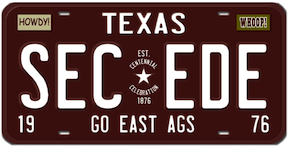
You Down with SEC? Yeah, You Know Me!

Well, I strive on this blog to be 100% right approximately 1% of the time.  I’ll have to co-sign this column by Stewart Mandel: it’s looking more and more like I was wrong about the Texas A&M to the SEC rumors (as he also admitted), but it still doesn’t quite make sense to either of us from a rational perspective.  Up until literally a few hours ago, it has all looked like completely fan-based chatter.  I’m honestly taken aback that it now appears that the SEC university presidents are going to meet on Sunday to discuss an A&M invite and the school’s Board of Regents will follow up with a meeting on Monday.  (We’ll address various rumors regarding schools like Florida State, Virginia Tech, Oklahoma and Missouri if necessary if something actually happens next week.)  I’ve always understood why Texas A&M fans wanted to go to the SEC and frankly, never disputed that it would be a good move for them.  The SEC is absolutely a superior conference to the Big 12 (both competitively and financially) and any Longhorns that think A&M wouldn’t benefit from moving are being disingenuous.  That’s the whole reason why that I argued in my last post that it would be UT people more than those from Baylor or Texas Tech that would work to block such a move.  I certainly understand the resentment/anger factor, as well.  As an Illinois alum, I’m still envious of Michigan’s central connection to the The Big Chill, which is a landmark achievement in the history of white people dancing.  Despite some interesting comments from various A&M factions about my loyalties or biases, I personally have nothing against the Aggies at all.

That being said, I share Mandel’s befuddlement about what’s in it for the SEC (although for slightly different reasons).  Let me be clear: my opinion has nothing to do about the value of Texas A&M itself.  As I’ve stated many times before, Texas A&M is extremely valuable and I could see why the SEC would want them in a vacuum where there is no domino effect on the rest of the college football landscape or there’s a clean slate in terms of TV contracts.  However, there’s a fairly good chance that we’ll see significant domino effects if this move occurs and, more importantly, it continues to be unclear to me how the SEC can monetize expansion with the length of its current TV contracts with ESPN and CBS.  Dennis Dodd yesterday stated that all conferences have a “look-in” provision that Mike Slive had described, so it’s not as if though that the SEC has some unique terms here where they get to expand at will in a manner that other conferences aren’t able to do.  At the very least, it’s not as easy as “expansion = look-in trigger = more $$$”, or else we’d see conferences expand every single time that their own TV contracts fell behind by a little bit.  To paraphrase a wise little green dude, that leads to fear, and fear leads to anger, and anger leads to hate, and hate leads to suffering.  To the extent that the SEC can open up its current TV contracts by expanding, every other conference can do it, too.  If it’s that “easy”, then the conference with the most incentive to expand is the ACC considering that the deal that they signed last year is looking quite outdated and could get outpaced by the Big East next year if the status quo holds.  It’s for those reasons why conferences only have a “look-in” when they expand, but networks have an explicit termination right in the event of conference contraction.

From a long-term perspective, Texas A&M certainly adds a ton of value to the SEC.  The Aggies have a rabid fan base and truly bring in the entire state of Texas as a market.  The recruiting benefits are also unquestioned.  Still, I still haven’t hard anyone explain how the SEC is going to cajole ESPN and CBS to throw more money around when their TV contracts last until the mid-2020s.  It’s one thing for those networks to maintain a good working relationship with the SEC, but entirely another to have to throw hundreds of millions of more at contracts that are locked-in for over a decade. Maybe ESPN and CBS could ensure that the SEC schools still get the same per-school share (so the current SEC members end up being revenue neutral), but those two networks, who have dealt with much larger entities like the NFL, aren’t simply going to be pushovers and provide some type of massive financial incentive that would encourage expansion.

I also know that a lot of readers believe that I overemphasize state politics, but I’ll continue to disagree on front.  Texas A&M might procedurally be able to get around Texas politicians by approving the move to the SEC on Monday in a year when the legislature is not in session.  (And I thought Illinois legislators were lazy! We’ll still take down anyone in blatant corruption, though.)  However, as a practical matter, the A&M Board of Regents are going to have to work with these legislators in the long-term, so it’s not as if though they can just ignore them.  Besides, if I’m a state legislator, do you think I want to put out more sound bites about crushing budget deficits, ignoring entitlement/pension reform and and failing to cure stagnant job growth?  Fuck that shit.  I’d be all over talking about college football like white on rice under any possible tangential hook.  (The federal guys in Washington certainly do it regularly when they complain about the BCS.)  Maybe it’s a moot point and the Aggies know that they have the requisite political support, but that’s to be determined in the maybe-too-late Texas House Higher Education Committee meeting that’s supposed to take place on Tuesday.

Last year, the entire world was convinced that the Pac-16 was a “done deal” on a Friday without any doubt in anyone’s mind, but after a weekend of rampant discussions, it ended up collapsing within a few days.  In conference realignment discussions, absolutely nothing is a done deal until you see an announcement with both the inviter and the invitee at a press conference with signed paperwork.  This goes double in the case of public universities located in the state of Texas.  Also note that Tony Barnhart (about as plugged-in with Mike Slive as anyone) and Mr. SEC seem to intimate that it’s not necessarily full speed ahead from the SEC side with a lot more smoke coming from College Station as opposed to Birmingham.

So, while it looks there’s a good chance that I’m going to be eating some crow with a Texas A&M move to the SEC, let’s just wait to see if we get some Stevie Wonder signed/sealed/delivered action on Monday.  After that, we can get back to doing what we do best here: engaging in rampant completely unsubstantiated speculation!

(Follow Frank the Tank’s Slant on Twitter @frankthetank111 and Facebook)

(Image from Mr SEC)

College Basketball Jones Bi-Winning in the Big Ten Coffers and Big East Expansion

As America is engrossed with the start of the NCAA Tournament and determining which former Illini coach that this year’s Illinois team will lose to this weekend, let’s turn our attention to the business of college basketball for a few moments.  I’m actually a hoops guy at heart, but as this blog delved into college conference realignment, the focus here turned to football because of that’s really the driving force between the major moves.

Kristi Dosh and Patrick Rishe have been writing a number of posts at the Forbes SportsMoney blog about athletic department and basketball revenue and profits among the major conferences. (h/t to Slant reader Brian.)  What’s interesting to note is that the largest revenue basketball conference on a per school basis isn’t the 11-bid Big East or Dook-UNC-led ACC, but none other than the Big Ten, which an unbiased ESPN SportsCenter anchor lovingly noted this past week was like “watching fat people have sex“.  (The Big East has a larger total basketball revenue number, although that’s skewed because it has 16 members.)  Concrete factors for this are that for all of the bashing of Big Ten basketball and the reputation that it’s made up of football schools, the conference has a rabid hoops fan base where it has led the nation in attendance for the past 34 consecutive years along with revenue from the Big Ten Network.  My personal observation is that most Big Ten football fans follow their basketball teams at a consistently high level, whereas SEC football fans (outside of Kentucky and maybe Arkansas) basically need a Final Four contender to pay attention.

That difference in basketball revenue  between the Big Ten and SEC appears to be a major reason why the Big Ten has more profitable athletic departments overall even though SEC profit in the top revenue sport of football is greater.  (More detailed charts with estimated allocations taking into account the Big Ten Network are here on Dolich’s website.)  Regardless, college conference revenue has essentially created a tier for the Big Ten and SEC with everyone else way behind.  As for the importance of football relative to basketball, the Big Ten (22.2%), SEC (16.3%), Pac-10 (22.9%) and Big 12 (19.1%) are actually all fairly close to each other in terms of basketball revenue as a percentage of total athletic department revenue.  Not surprisingly, the Big East (36.7%) and ACC (31.8%) are the outliers where those conferences receive a lot higher proportion of their revenue from basketball (and therefore seem to emphasize basketball more than football compared to the other BCS leagues).

That high basketball percentage for the Big East has some implications for conference realignment/expansion insofar that the “this is all about football” mantra that applied to the Big Ten and Pac-12 expansions as well the Big 12 situation (where one of the top marquee basketball brands in the nation, Kansas, was almost left for dead) may not completely apply to the Big East.  To be sure, the Big East would love nothing more than to become a football power along the lines of the SEC, but the types of schools that would catapult the Eastern-based league to that status (i.e. Notre Dame and Penn State) aren’t reasonably attainable and no one is going to find them in C-USA.  At the same time, the Big East basketball TV deal (average of $2 million per school per year) is worth more than its football contract (average of $1.67 million per school per year), which means that basketball has to be taken in account.  (Recall my Big East Expansion FAQ back in November.)  With the New York Daily News reporting that a Big East TV network is unlikely (largely because getting basic carriage in the New York City market that’s already overloaded with expensive regional sports networks will be impossible), the “expanding for new markets” argument isn’t very compelling.

That’s why the Big East seems more interested in having Villanova move up to Division I-A than adding any expansion candidates from C-USA.  (Please add re-naming the first round of the NCAA Tournament to now be the “second round” after the First Four to the long list of perplexing, nonsensical, confusing and annoying NCAA changes to names that were easily understood by the average bear before.)   The argument is that none of those schools would add much to the national TV contracts on the football side, so it’s more important to avoid diluting the already more lucrative basketball side.  I wasn’t a big fan of the Big East having Villanova move up when it looked like it was a possibility that the Wildcats would be the only football addition without TCU included.  However, what I now understand is that for the Big East football schools to get the Big East Catholic members to vote for any further all-sports expansion in the first place was predicated on Villanova moving up, so the addition of the Philly-area school has to be looked at in the scheme of the entire Big East expansion in conjunction with TCU as opposed to on its own.  At the same time, much to the chagrin of the various schools that are looking for a Big East invite (i.e. UCF, Houston, East Carolina, Memphis, etc.), the most important fact is that Villanova is already a full member of the Big East.  This isn’t an expansion for the conference – it’s a current member moving up for a sport, which is an incredibly important distinction.

Villanova insiders indicate that it’s increasingly likely that the school’s Board of Trustees will approve the football upgrade.  Frankly, the school has to make the move.  This isn’t a matter of moving up for football to join a non-AQ conference – if the program is guaranteed AQ status, then this shouldn’t be a difficult decision.  The Big East is what it is – an extremely strong basketball conference with revenue in line with that status.  Football may drive the bus in college sports overall, but if a conference is unable to add a major power program (the “kings” and “barons” that Stewart Mandel once wrote about), then it makes no sense to weaken or dilute the nation’s best basketball league for little or no revenue upside for the football league.  Football in and of itself doesn’t make money for conferences; it’s having marquee football programs that matters.  To the extent Villanova provides an extra conference football game on the schedule without having to split the basketball TV contract into an 18th slice, it may very well be most lucrative (or at least revenue neutral) football addition that the Big East can realistically have for now.

(Follow Frank the Tank’s Slant on Twitter @frankthetank111 and Facebook)

(Image from CBS Chicago)

BCS Bowl Flex System: The Semi-Seeded Plus-One Proposal

There has been a ton of great feedback on the BCS Final Four post with generally positive reviews.  Unfortunately, even that proposal might be too much of a change for the powers that be to enact overnight.  So, I wanted to throw out a more traditionalist plus-one proposal that might be a bridge to getting to the BCS Final Four (or at least improve upon the current BCS system), which I call the “BCS Bowl Flex System”.  It’s a variation of what Slant reader StevenD calls a “semi-seeded plus-one“, where the traditional BCS bowl tie-ins are largely maintained with some teams possibly “flexed” to create one or two de facto play-in games to the national championship (if not outright semifinals).  The BCS rankings would then be re-calculated after the bowls are played to determined the plus-one national championship game matchup.

It’s not as clean on paper as the BCS Final Four or an outright playoff, but this type of format does carry a number of advantages, namely that all of the BCS bowls potentially will have an impact on the national championship race again and the Rose Bowl would go back to being exclusively Big Ten champ vs. Pac-10 champ affair.

(Any complaints that this isn’t a playoff  and would be an “unfair” system are duly noted.  The purpose of this post is to find some changes that the BCS conferences might be willing to implement in reality.  Please see the various rules for a realistic college postseason scenario that must be followed in the BCS Final Four post.)

Here is how I would set it up:

THE BCS BOWL FLEX SYSTEM

1.  The Rose Bowl will get the Big Ten and Pac-10 champs no matter what – I know that this might be passed off by non-Big Ten/Pac-10 fans as irrelevant/backwards/dumb, but this is a big deal to the powers that be.  Nothing will get done in terms of college postseason changes unless the Big Ten is happy, which means that the Rose Bowl and the Pac-10 have to happy, as well.

2.  Cotton Bowl is added as a 5th BCS bowl with the Big 12 tie-in –  I noted in the BCS Final Four post that the BCS bowls are as elitist toward the non-BCS bowls as the AQ conferences are toward the non-AQ conferences, but this is trumped by the need to have at least 10 BCS bids per year.  The seal has been broken – there’s no way that the AQ conferences (and specifically the frequent multi-bid recipients of the Big Ten and SEC) will go back down to just 4 BCS games and 8 total bids.  As a result, a more traditional plus-one system is going to need a 5th BCS bowl and the Cotton Bowl is well-positioned as a natural home to the Big 12 champ (especially with its larger proportion of Texas-based teams with the losses of Nebraska and Colorado).  I’ll discuss under Rule #6 below how the Fiesta Bowl receives some incentives to actually agree to give up the Big 12 tie-in.

3. Highest ranked non-AQ school receives automatic BCS bid – As I mentioned in the BCS Final Four post, this is the main bone that the AQ conferences can throw to the non-AQ conferences and I can see them actually agreeing to, which is that it can remove the top 12 ranking requiring for that class of schools to receive an automatic bid.

4.  Subject to Rule #5 regarding flexes below, the other BCS bowls retain their traditional tie-ins – As a general rule, the Sugar Bowl gets the SEC champ and Orange Bowl receives the ACC champ.  However, this is subject to the flex rules below.

5.  Except for the Rose Bowl teams (which are set in stone), a highly ranked at-large team may be placed or a team may be flexed from its traditional tie-in to another bowl involving a #1 or #2 ranked team to create one or more virtual play-in games to the national championship – This process will likely seem disjointed and muddy written out, but it’s really not that difficult in practice (so bear with me).  The objective is to ensure that any #1 and #2 ranked teams that aren’t playing in the Rose Bowl get to play in bowl games that are as close to being semifinals as possible.  That’s no issue with highly ranked at-large teams, who can simply be slotted accordingly without any impact to traditional tie-ins.  The real change is that a team that is ranked #3 or lower which does have a contractual tie-in with a bowl can be flexed to a bowl that is tied-in to a #1 or #2 ranked team (even if the #3 or lower team is tied-in to another bowl).  For example, let’s say that the SEC champ is ranked #1, the Big 12 champ is ranked #2, the ACC champ is ranked #3 and the Big East champ is ranked #4.  The Big East champ will be sent to the Sugar Bowl to create a #1 vs. #4 matchup, which is easy enough because the Big East doesn’t have a tie-in.  However, to create the #2 vs. #3 matchup, the ACC champ will be flexed to the Cotton Bowl to play the Big 12 champ.  As a result, the Orange Bowl would lose the ACC champ, but would receive a compensatory “flex replacement pick” (which is similar to the replacement pick if a bowl loses a tie-in to the national championship game today and as explained further in Rule #7).

As I’ve said, this doesn’t look very elegant when described as a process in writing, yet it’s fairly straight-forward (I hope) when looking at the 11 scenarios for matchups that would be created depending on which teams are playing in the Rose Bowl:

Scenario 1: No top 4 teams in the Rose Bowl
Bowl A: #1 vs. #4
Bowl B: #2 vs. #3

Scenario 2: #1 team in the Rose Bowl
Bowl A: #2 vs. #3

Scenario 3: #2 team in the Rose Bowl
Bowl A: #1 vs. #3

Scenario 4: #1 vs. #3 in the Rose Bowl
Bowl A: #2 vs. #4

Scenario 5: #1 vs. #4 in the Rose Bowl
Bowl A: #2 vs. #3

Scenario 6: #2 vs. #3 in the Rose Bowl
Bowl A: #1 vs. #4

Scenario 7: #2 vs. #4 in the Rose Bowl
Bowl A: #1 vs. #3

Scenario 8: #3 in the Rose Bowl
Bowl A: #1 vs. Flex Selection 1*
Bowl B: #2 vs. #4

Scenario 9: #4 in the Rose Bowl
Bowl A: #1 vs. Flex Selection 1
Bowl B: #2 vs. #3

Scenario 10: #3 vs. #4 in the Rose Bowl
Bowl A: #1 vs. Flex Selection 2**
Bowl B: #2 vs. Flex Selection 1

Scenario 11: #1 vs. #2 in the Rose Bowl
Bowl A: #3 vs. #4

* Flex Selection means that the bowl gets to pick any BCS eligible team that it wants, including those that are otherwise tied to other bowls except for the Rose Bowl participants.

** The reason why Bowl B gets Flex Selection 1 in this scenario is that, in theory, this ought to be a tougher opponent than Flex Selection 2.  As a result, Flex Selection 1 should be playing the #2 team as opposed to the #1 team.

6.  Fiesta Bowl receives flex preference for #1 or #2 teams that do not have tie-ins OR 1st at-large pick – Now, the Fiesta Bowl isn’t just going to give up a fairly valuable Big 12 tie-in to the Cotton Bowl for nothing.  For all of the internal turmoil within the Big 12, it’s still the best conference for traveling fan bases outside of the SEC and Big Ten.  I had thought of providing the Big East tie-in to the Fiesta, but from a bowl director’s perspective, this isn’t just compensation.  In reality, the best way to coax the Fiesta into giving up its Big 12 tie-in to the Cotton is to provide it with more flexibility.  Therefore, it gets two options.  First, the Fiesta receives a “flex preference”, whereby it would automatically receive a #1 or #2 team that does not have a tie-in (i.e. Big East champ, non-AQ schools, others that weren’t conference champs).  That would enable the Fiesta to “flex in” a team from another bowls in that situation despite not having a conference tie-in.  Second, if there is no possible flex preference, then the Fiesta would receive the first at-large large pick (which comes after the flex moves and replacement selections are made), which often results in an extremely valuable 2nd place SEC or Big Ten team.

7.  Bowls that lose a team to flexing receive a “flex replacement pick” – As alluded to earlier, this is similar to the replacement pick that a bowl receives if it loses a school to the national championship game today.  A bowl that loses a flexed team would receive first dibs on any other school from the conference that it has a tie-in with or can choose anyone from the BCS at-large pool.

8.  After flex replacement picks are made, the Fiesta Bowl gets its priority at-large pick and then the bowls pick at-large selections in the order of how high their tie-ins (or in the case of the Fiesta, the rank of its priority at-large pick) are ranked – The goal here is to create one or two other bowls that could possibly have an impact on the national championship race, so bowls that don’t have a #1 or #2 team will pick at-large teams in the order that their respective tie-ins (or in the case of the Fiesta, how high its priority at-large pick) are ranked.  To be clear, those bowls aren’t obligated to take the highest ranked at-large teams available – they can take whoever is left from the at-large pool subject to the other selection rules that would remain in place (such as a maximum of 2 schools from any conference receiving BCS bids).

9.  BCS rankings are re-calculated after bowl games are finished and national championship game rotates among the BCS bowl sites – After the BCS bowls are completed, the BCS rankings are then re-calculated to set the national championship game pairing.  The game would be played one to two weeks after the last BCS bowl is completed using the double-hosting rotation similar today (only that the Cotton is newly included).

APPLYING THE SYSTEM

The interesting thing about this system is that for all of the words that I just spewed out on flexing, it actually doesn’t need to be exercised very often in practice.  Simply slotting at-large teams differently than today is 90% of the battle.  Here’s how the BCS Bowl Flex system would’ve worked in every year since 2005 (which marks the first season of major changes to the BCS ranking formula):

2010
Rose: #2 Oregon (Pac-10) vs. #5 Wisconsin (Big Ten)
Sugar: #1 Auburn (SEC) vs. #3 TCU (non-AQ/at-large 1)
Orange: #13 Virginia Tech (ACC) vs. Connecticut (Big East/at-large 5)
Cotton: #7 Oklahoma (Big 12) vs. #8 Arkansas (at-large 4)
Fiesta: #6 Ohio State (at-large 2) vs. #4 Stanford (at-large 3)

2009
Rose: #7 Oregon (Pac-10) vs. #8 Ohio State (Big Ten)
Sugar: #1 Alabama (SEC) vs. #4 TCU (non-AQ/at-large 2)
Orange: #9 Georgia Tech (ACC) vs. #10 Iowa (at-large 5)
Cotton: #2 Texas (Big 12) vs. #3 Cincinnati (Big East/at-large 1)
Fiesta: #5 Florida (at-large 3) vs. #6 Boise State (at-large 4)

2008
Rose: #5 USC (Pac-10) vs. #8 Penn State (Big Ten)
Sugar: #2 Florida (SEC) vs. #3 Texas (at-large 1)
Orange: #19 Virginia Tech (ACC) vs. #12 Cincinnati (Big East/at-large 5)
Cotton: #1 Oklahoma (Big 12) vs. #4 Alabama (at-large 2)
Fiesta: #10 Ohio State (at-large 3) vs. #6 Utah (non-AQ/at-large 4)

2007
Rose: #1 Ohio State (Big Ten) vs. #7 USC (Pac-10)
Sugar: #2 LSU (SEC) vs. #3 Virginia Tech (ACC/flex)
Orange: #5 Georgia (flex replacement) vs. #13 Illinois (Big Ten/at-large 3)
Cotton: #4 Oklahoma (Big 12) vs. #9 West Virginia (Big East/at-large 2)
Fiesta: #8 Kansas (Big 12/at-large 1) vs. #10 Hawaii (non-AQ/at-large 4)

2006
Rose: #1 Ohio State (Big Ten) vs. #5 USC (Pac-10)
Sugar: #2 Florida (SEC) vs. #3 Michigan (at-large 1)
Orange: #14 Wake Forest (ACC) vs. #8 Boise State (non-AQ/at-large 5)
Cotton: #10 Oklahoma (Big 12) vs. #6 Louisville (Big East/at-large 4)
Fiesta: #4 LSU (at-large 2) vs. Notre Dame (at-large 3)

2005
Rose: #1 USC (Pac-10) vs. #3 Penn State (Big Ten)
Sugar: #7 Georgia (SEC) vs. #11 West Virginia (Big East/at-large 4)
Orange: #22 Florida Sate (ACC) vs. #14 TCU (non-AQ/at-large 5)
Cotton: #2 Texas (Big 12) vs. #4 Ohio State (at-large 1)
Fiesta: #6 Notre Dame (at-large 2) vs. #5 Oregon (at-large 3)

The only time that the flex option would’ve ever been exercised was in 2007, where #3 Virginia Tech was flexed from the Orange Bowl to the Sugar Bowl.  In terms of ticket sales, that actually granted the Orange a favor as it would have presumably selected #5 Georgia as its flex replacement pick.  In all of the other seasons since 2005, the desired matchups were achieved with solely slotting the applicable at-large teams.  (I could post the pre-2005 hypotheticals, as they had more examples of flexing, but it’s fairly incredible how bat-s**t crazy the old BCS rankings were when looking back on them.  As much as the BCS gets criticized today, at least the rankings over the past few years have generally passed the smell test (with most quibbles coming over a spot or two).  The old ranking system, on the other hand, seemed to love teams that didn’t actually win their conferences, particularly from the Big 12.)  Thus, a plus-one system featuring top-tier and meaningful games could be fairly easily created without much disruption to the traditional bowl tie-ins.

The BCS Bowl Flex system definitely won’t placate the playoff-supporter crowd in the same manner of the BCS Final Four, but it may be something that’s more palatable to the powers-that-be within the AQ conferences (especially the Big Ten) while upgrading the quality of the BCS bowls back to where they were in the pre-BCS days.  Certainly, the return of the “real” Rose Bowl would be a massive plus.  A non-AQ school such as TCU also gets a direct shot at the national title game in a season like this one (or can improve its resume greatly in other seasons by getting to beat a top AQ school).  Is it perfect?  Absolutely not.  However, I do believe it would be better than what we have today and it’s easier to sell incremental steps to the BCS conferences and bowls than wholesale change.

(Follow Frank the Tank’s Slant on Twitter @frankthetank111 and Facebook)

The BCS Final Four: A New Plus-One System

Big Ten commissioner Jim Delany has garnered a reputation over the years as one of the main obstacles to a college football playoff system and he certainly cemented that this past week with his comments at a panel at the IMG Intercollegiate Athletics Forum.  From Brett McMurphy at AOL FanHouse:

“The notion,” Delany said, “that over time by putting political pressure on, it’s just going to get greater access, more financial reward and more access to the Rose Bowl, I think you’re really testing. I think people who have contributed a lot have, what I call, ‘BCS defense fatigue.’

“If you think you (WAC Commissioner Karl Benson) can continue to push for more money, more access to the Rose Bowl, or Sugar Bowl. I have tremendous respect for Boise and TCU. … I think they are tremendous teams that can beat any team in the country on a given day. I think the only question is, ‘Does one team’s 12-0 and another team’s 12-0 equate?’ And that’s where the discussion plays out, not whether or not they’re elite teams or deserving access to the bowl system.

“I’m not sure how much more give there is in the system.”

* * * * * *

“I think the system does provide access and opportunity for a team like Boise State or TCU to play in the championship game,” Benson said. “But we’ve also proven that it’s a lot easier to get to No. 4 than it is to get to No. 2.”

Benson said he supports the BCS, but wants even more access and more revenue. This is not a popular subject with Delany.

“We gave up the Rose Bowl, the SEC gave up access to the Sugar Bowl, others were included but they never had access to any of this before,” Delany said. “You have to understand who brought what to the table. Who’s continuing to give and who’s continuing to get.”

Delany, then, not so subtly drew a line in the sand.

“The only thing I would say, if you think you (the non-automatic qualifying leagues) can continue to pressure the system and we’ll just naturally provide more and more and more,” Delany said. “I don’t think that’s an assumption that our presidents, athletic directors, football coaches and commissioners necessarily agree with.

“Karl (Benson) says we like this contract and we want more. Well, we’ve got fatigue for defending a system that’s under a lot of pressure. The pressure is for more. It’s never enough.”

With the already raging unpopularity of the BCS, these comments have received fairly negative feedback in the blogosphere.  However, if people can put aside their abject hatred of the current system, they’ll see that Delany is actually correct if they’re fairly evaluating the situation.*  The BCS conferences have given up a lot of access to the top bowls that never existed to the smaller conferences in the pre-BCS days.  There is a ton of brand equity that has been built up in a game like the Rose Bowl and much of that is due to the relationship between that event and the Big Ten and Pac-10 over the past 7 decades.  Would the Rose Bowl ever have been in a position to pay out as much as it does today without having had the Big Ten/Pac-10 tie-in built up over the years, or would the Sugar Bowl be as prestigious if it hadn’t been the long-time home to the SEC champ?  Delany has a point that other conferences getting access to those games are piggy-backing on the brand equity built up by others.  (The counter, of course, is that such other conferences never had a chance to play in those games in the first place.  It’s a chicken-or-the-egg question – did the power conferences prop up the bowls or did the bowls prop up the power conferences?)

(* Note that Jim Delany isn’t necessarily correct on everything.  Please see the new Big Ten logo and division names.)

Regardless, the most important point from Delany is something that no one can argue about: the AQ conferences still control the show.  This is the simple reality that the vast majority (probably over 90%) of college football playoff/plus-one/Iron Man/Russian Roulette proposals completely ignore.  Those proposals usually start by effectively smashing the system and completing starting over from scratch.  A prime example of this is the 16-team playoff proposed by “Death to the BCS” author Dan Wetzel.  That’s all well and good as a hypothetical, but setting forth a proposal that the AQ conferences would actually accept is an entirely different matter.  The bowl system that Wetzel eviscerates in his book may or may not provide the values that he wants to see, yet no matter how much some people might hate it, this is an entrenched system where change is going to incremental as opposed to radical.  Therefore, any changes to the current system must be driven by the AQ conferences and BCS bowls as opposed to being imposed on them, which means any viable proposal MUST give them what they want.

No one wants to hear this.  The politically correct thing to say is that this should be about “fairness” and “equal access” for the little guy while the Big Ten and friends are running an evil cartel.  I understand this sentiment, but college football fans need to get over it in order to find proposals that would actually work or else nothing will ever change.  If you give the BCS an “all or nothing” proposal, then the BCS will always choose nothing.

Once you get past the primary purpose of the BCS rankings, which is to set up the #1 vs. #2 national championship matchup, the other BCS bowls act no different than movie theaters across the country every weekend.  Movie #1 is a massive big budget huge studio action film with no redeeming social value whatsoever, while Movie #2 is a critically-acclaimed low budget independent film that’s going to win several Oscars.  By every standard, Movie #2 is a higher quality film than Movie #1.  However, Movie #1 gets placed onto 3000 screens across the country because it has a ton of mainstream appeal and will sell tickets, while Movie #2 only gets 100 screens since it has a niche audience.  Likewise, the purposes of the BCS bowls are the sell tickets and get as large of a TV audience as possible.  Is it “fair” that the BCS will pay $20 million to the college football equivalent of Tom Cruise* (who hasn’t done much lately but is still a huge name) and only $3 million to Daniel Day-Lewis (who has won multiple Oscars) because a whole lot more people buy tickets to watch Tom Cruise?  I don’t know if it’s fair, but it’s almost certainly perfectly legal.  Sports fans are typically emotionally charged and don’t necessarily think of games as entertainment, but that’s exactly how TV networks see them and why spectator sports exist in the first place.

(* Tom Cruise = Notre Dame)

As a result, for any college football postseason proposal to have even a whiff of a chance of succeeding, forget about “fairness” and think like Jim Delany.  Here’s what I believe are the rules that any viable postseason system needs to follow:

1.  The AQ conferences must make more revenue than today in an absolute sense – There’s usually not much argument about this one.  Even Jim Delany would admit that a college football playoff would make more total revenue than the BCS.  However…

2.  The AQ conferences must maintain their revenue advantages over the non-AQ conferences in a relative sense – Most proposals (including the Wetzel proposal) always refer to point #1 as providing the revenue incentive to create a playoff but virtually never address this point #2.  A playoff making more total money than the BCS means absolute crap to the AQ conferences – what matters to them is how that money is split.  The easiest way to get the AQ conferences to kill a playoff proposal is to compare it to the NCAA Tournament – they want NOTHING to do with how the revenue is paid out in that system.  Athletic department money doesn’t sit in a bank account collecting interest – it’s all spent right away on coaches, facilities, travel, etc.  Thus, more money in and of itself isn’t as important to the AQ conferences as ensuring that they just have a whole lot more of it compared to the non-AQ conferences.

Of course, the non-AQ conferences want to do the exact opposite by closing the revenue gap.  It’s a noble cause, but they’re not getting the AQ conferences to budge on this issue.  If you had to rank these rules in importance, this would arguably be at the top of the list.

3.  The AQ conferences must maintain their access advantages over the non-AQ conferences – I’m not trying to dump on Wetzel (as I find him to be a great writer), but his proposal to grant all 11 Division I-A conferences automatic bids to a 16-team playoff system will be used as toilet paper at the next annual BCS meeting.  The easiest way to get a college football playoff proposal killed is to make it look like the NCAA Tournament – for whatever reason, many fans don’t understand that the AQ conferences are specifically trying to avoid that access and revenue sharing model at all costs.  I know that it’s all about “fairness” again, yet there is absolutely zero incentive for the AQ conferences to ever think more than two seconds about agreeing to this, so why do people continue to propose it as other than a pipedream?  Oh sure, there are faux incentives such as, “The SEC could’ve had 4 teams in a 16-team playoff this year, so that’s plenty of incentive for them.”  However, from the AQ conference perspective, real incentives are actual or virtually guaranteed spots and revenue advantages that aren’t subject to on-the-field fluctuations from year-to-year.  Two BCS bowl bids in the hand are worth four in the bush for the AQ conferences and it’s key that they are the only 6 leagues that are getting auto-bids in any scenario.  I know that’s not “fair”, but once again, that’s kind of the point.

4.  Don’t f**k with the Rose Bowl anymore – I know that some fans of other conferences would like to tell the Rose Bowl/Big Ten/Pac-10 group to leave and everyone can go back to the mid-1990s Bowl Alliance (even though didn’t work very well in practicality), but the TV networks would upchuck at that thought immediately.  A “playoff” that doesn’t have any chance to include Michigan, Ohio State, Penn State, Nebraska and USC would be like attempting to sell the Major League Baseball TV package and telling the bidders that the Yankees and Red Sox aren’t ever able to make it to the World Series.  That’s just a killer on TV rights fees and a non-starter.

At the same time, the Rose Bowl passes the “Grandma Test”.  My grandmother is a Chinese immigrant that speaks limited English and has absolutely no idea about anything regarding sports, whether it’s the existence of the Super Bowl or when the World Series is played, yet even she’d be able to tell you that the Rose Bowl is in Pasadena on New Year’s Day.  That’s what we call an extremely valuable tie-in.  I’ve seen estimates that the additional exposure that the Big Ten and Pac-10 receive from the Rose Bowl tie-in (i.e. the worldwide coverage of the Tournament of Roses Parade, larger donations to various schools, media exposure, higher TV ratings for the game, etc.) is the equivalent of adding the revenue of a conference championship game without even having to hold one (and that’s on top of the actual BCS earnings).  Simply put, it is a big deal for the Big Ten and Pac-10 to give up more access to the Rose Bowl (or give it up entirely) compared to the other BCS bowl tie-ins.

Plus, the Rose Bowl experience lives up to the hype and then some.  (Here’s my personal recap of my visit when the Illini went to the game 3 years ago.)  TCU fans, many of whom have been justifiably vehement opponents of the BCS system over the past few years, are going to find out in a couple of weeks why the Big Ten and Pac-10 care so much about going to Pasadena.

As a result, there’s going to be some capitulation to the Rose Bowl and its conference partners in order for the game to maintain a Big Ten/Pac-10 matchup as often as possible.  However, it can’t be relegated to a second-class citizen compared to its fellow BCS bowls, either.  Just as the AQ conferences need to maintain their advantages over the non-AQ conferences on a relative basis, the Rose Bowl needs to keep a similar edge over the other BCS bowls.

5.  The BCS bowls are as elitist toward the non-BCS bowls as the AQ conferences are toward the non-AQ conferences – A common proposal from a lot of fans that advocate for a plus-one or playoff system is to add more bowls to the BCS system, particularly the Cotton Bowl since there seems to be this unwavering belief among the general public that Jerry Jones can and will buy off whoever needs to be bought off to make it happen.  (Of course, all of Jerry’s money equates to about one Cowboys playoff win every 15 seasons.)  In fact, I proposed this myself a couple of years ago in this unseeded plus-one proposal.  I’ve come to realize, though, that the BCS bowl club is similar to trying to join Augusta National Golf Club – you can have all of the money in the world, but the current members have to really really really like you in order to make an extremely exclusive club a little less exclusive.  The double-hosting system of the BCS today has become quite lucrative for the BCS bowls because they get to host and sell sponsorships and tickets for the national championship game once every four years (which they can also leverage in terms of procuring sponsorships during the years where they aren’t hosting the championship game).  When evaluating the incentives and disincentives for changing the current BCS system, there really isn’t much incentive at all for the BCS bowls to let in another member to their club and only host the championship game once every five years as opposed to four.  Even if a 5-bowl plus-one system were to make more revenue overall, the current BCS bowls would be only getting a 1/5th share instead of a 1/4th share whereas the AQ conferences presumably would get the same percentage shares as they do today (meaning the AQ conferences get the upside while the BCS bowls are taking all of the risk by having to split their pie into more pieces).  It would be speculative as to whether that proposed 1/5th share is truly better than the current 1/4th share (especially when coupled with giving up the national championship game more often) , which means that the best way to realistically get any change is to construct a system that somehow protects the exclusivity of the current 4 BCS bowls.

6.  The bowl system can’t become completely NIT-ish – Dan Wetzel argues that the bowls could still exist separately under his 16-team playoff proposal.  The problem is that this is a false argument – taking unranked Big Ten and Pac-10 teams, having them play in Pasadena, and slapping the “Rose Bowl” label on the game isn’t actually allowing the Rose Bowl to co-exist in practicality.  The playoff proposal that Wetzel advocates would constructively destroy the bowl system in the same manner that the expansion of the NCAA Tournament completely devalued the NIT and he knows it.  Now, plenty of sports fans want to see that happen, but once again, the bowls from top-to-bottom are about access advantages for the AQ conferences and they aren’t just going to give those up.  There’s a little bit a flexibility left in terms of creating a plus-one system yet still maintaining a quality group of schools for all of the bowls (whether BCS or not) to choose from, but it’s a delicate balance as you can’t make the bowls too much more diluted than they are (or at least without a corresponding legitimate incentive in exchange for such dilution).

This is a long-winded way of saying that for anyone that wants to improve today’s BCS system, LESS IS MORE.  (That’s why this 8-team playoff proposal I had a few years ago would never work.)  The current AQ conferences and the BCS bowls need to be better off on both an absolute basis and a relative basis (with an emphasis on the latter).  With all of the aforementioned rules in mind, I propose the following:

THE BCS FINAL FOUR

I’ve been slamming my head against the wall for quite awhile trying to figure out how to have at least 10 schools participate in BCS bowls and incorporate a seeded plus-one, yet still maintaining the traditional bowl tie-ins and keeping the Rose Bowl/Big Ten/Pac-10 triumverate happy.  Then, I remembered the “less is more” mantra and realized that the answer is so simple that I can’t believe that I’ve been missing the proverbial forest for the trees.  Instead of trying to find some type of rotation among the BCS bowls for the semifinal games or having to add a 5th BCS bowl, here’s all we that we have to do for what I call the “BCS Final Four”:

A.  Separate semifinal games – Take the top 4 teams in the final BCS rankings and have them play in 2 semifinal games that are separate from the BCS bowls (just as the national championship game is now).  This would mean that there would be 2 semifinal games, the national championship game and 4 BCS bowls incorporating 12 total teams in the BCS system every year.

B.  BCS bowls keep tie-ins – The 4 BCS bowls keep their traditional tie-ins with the same at-large selection rules as today, except that (i) the at-large pool is expanded to the top 18 in the final BCS rankings, (ii) the cap on BCS bids from any single conference is raised from 2 to 3 and (iii) as a political concession, the highest ranked non-AQ school gets an automatic BCS bid no matter what (even if it’s ranked below #12).

C.  Double-hosting of semifinals and final at BCS bowl sites – The sites of the semifinals and national championship game will rotate among the 4 BCS bowl locations, meaning that each location gets to host 2 semifinal games and 1 national championship game in each 4 year period (resulting in lucrative double-hosting seasons 3 out of every 4 years).

D.  Semifinal site tie-in preferences – Each semifinal site each season gets a preference in hosting the game that involves one of its traditional conference tie-ins, if applicable.  For instance, if New Orleans and Pasadena were to host semifinal games this year, then New Orleans would take the game involving the SEC champ (#1 Auburn vs. #4 Stanford) and Pasadena would get the game featuring the Pac-10 champ (#2 Oregon vs. #3 TCU).  The higher ranked team gets priority if both semifinal sites have a claim to the same game (i.e. if Auburn had lost to Alabama and ended up at #4 and Oregon moved up to #1, then Pasadena would get the #1 Oregon vs. #4 Auburn game instead of New Orleans).

E.  Championship Game in Mid-January – The national championship game would be played at least a week (probably 10-14 days) after the semifinal games are completed.  One possible permanent date could be Martin Luther King, Jr. Day as a Monday that many people have off as a holiday.  Another possible date is the day after the NFL regular season ends assuming that a new 18-game regular season pushes the last week of the season back two or three (if a 2nd bye week is added) weeks from when it is now.  Note that except for the bowls played on New Year’s Day, all of the games need to be played in prime time between Monday and Thursday for TV purposes and to avoid going head-to-head with the NFL on January weekends.  This is the stance of the BCS today and it would be expected to continue.

All of the selling points come from its simplicity and adding to the current system as opposed to taking anything away.  The AQ conferences get to retain their access advantages while still receiving the revenue upside of a mini-playoff.  The non-AQ conferences, while not getting radical changes they want, are thrown the bones of a guaranteed BCS slot along with a greater chance of getting to play for the national title (as Karl Benson was correct that making it to #4 is a whole lot easier than making it to #2).  The Rose Bowl, Big Ten and Pac-10 get to keep their bond while still maintaining the prestige of that game in comparison to the other BCS bowls.  The Big Ten and SEC are virtually guaranteed to receive 3 BCS bids every year, which is essentially the only change to the BCS that Jim Delany has ever actively pushed for.  All of the BCS bowls would be ecstatic to have double-hosting 3 out of every 4 years while also having more access to the top traveling schools from the Big Ten and SEC, which would be a reasonable trade-off for an increased chance of losing their normal tie-ins to the semifinal games.  The non-BCS bowls will barely be impacted because only 2 teams are being added to the BCS system.  (One clear loser would be the Capital One Bowl, though, as its contractual Big Ten #2 vs. SEC #2 matchup, which is already typically moved down to Big Ten #3 vs. SEC #3 since those conferences already regularly receive 2 at-large bids, would get even lower teams on the pecking order.  Note that the Capital One Bowl has actually beaten the Orange Bowl in the TV ratings for the past 3 years and even beat all of the BCS bowls other than the National Championship Game and Rose Bowl in 2007-08, so it shows the power of even the #3 teams from the Big Ten and SEC, much less their respective champions, and why the BCS bowls would love to take them in an expanded at-large pool.)  The TV networks would pay a fairly significant premium for this system compared to the current one, but with only the minimal changes of 2 extra games and 2 additional teams.

Finally, the importance and “do-or-die” nature of the regular season is preserved.  I know a lot of “universal access auto-bid” proponents like to say that the regular season would matter more if all conference champions would get bids, using the logic that all of those conference races would then have meaning (resulting in a lot more games then having importance in the national championship race).  There’s a little bit of truth to that line of thinking, but that’s more of a “lowest common denominator” argument.  The flip-side is that games such as the 2009 SEC Championship Game, 2006 Ohio State-Michigan and especially early season matchups such as Boise State-Virginia Tech completely lose their senses of urgency in a large-scale playoff system.  By expanding access by just 2 teams, it keeps that sense of urgency from the very beginning of September to the end of the season – there’s a tiny bit more wiggle room if a team slips up one week, but not enough where any school can afford to take a single game off like playoff-bound NFL teams often do in the last week or two of the season.

Here’s how the BCS Final Four system would have looked these past two seasons:

2010
Semifinal 1: #1 Auburn (SEC champ) vs. #4 Stanford (top 4 auto-qualifier)
Semifinal 2: #2 Oregon (Pac-10 champ) vs. #3 TCU (Non-AQ auto-qualifier)
Rose Bowl: #5 Wisconsin (Big Ten champ) vs. #11 LSU (Pac-10 champ replacement)
Sugar Bowl: #8 Arkansas (SEC champ replacement) vs. #6 Ohio State (at-large selection #1)
Orange Bowl: #13 Virginia Tech (ACC champ) vs. #9 Michigan State (at-large selection #2)
Fiesta Bowl: #7 Oklahoma (Big 12 champ) vs. Connecticut (Big East champ/at-large selection #3)

2009
Semifinal 1: #1 Alabama (SEC champ) vs. #4 TCU (non-AQ auto-qualifier)
Semifinal 2: #2 Texas (Big 12 champ) vs. #3 Cincinnati (Big East champ)
Rose Bowl: #8 Ohio State (Big Ten champ) vs. #7 Oregon (Pac-10 champ)
Sugar Bowl: #5 Florida (SEC champ replacement) vs. #13 Penn State (at-large selection #3)
Orange Bowl: #9 Georgia Tech (ACC champ) vs. #12 LSU (at-large selection #2)
Fiesta Bowl: #6 Boise State (Big 12 champ replacement) vs. #10 Iowa (at-large selection #1)

It’s interesting that the Rose Bowl would still be unable to take Stanford this season under this system, but that’s mitigated a bit by being able to grab a great-traveling SEC school.  In most other seasons, the Rose Bowl matchup wouldn’t have changed at all.  With the way that Big East (besides West Virginia) and non-AQ teams often get passed around like a doobie in the bowl selection process, the BCS bowls actually look better off for traveling fan base and TV marketability purposes having the opportunity to grab LSU and Michigan State this year or Penn State and LSU last season.

The BCS Final Four is a proposal that maintains the importance of the regular season, provides for a 4-game playoff, keeps the other BCS bowls interesting, constitutes a fairly simple change to the current system, and, most importantly, could be a system that the AQ conferences and BCS bowls would actually agree to in real life.  It’s not perfect, but if we wait around for perfection on this issue, then nothing will ever change.  Less is more when you’re dealing with the people that run the BCS.

(Follow Frank the Tank’s Slant on Twitter @frankthetank111 and Facebook)

(Image from PR Newswire)

BlogPoll Ballot Week 11, Mo Money, Mo Texas and Return of the WAC

Some thoughts as we head into the weekend:

(1) Mr. Numb Existence – Somehow, I ended up with the Mr. Numb Existence Award this week in the BlogPoll that’s given to the pollster with the individual ballot closest to the overall result.  This occurred even though I deviated from the overall poll almost immediately by putting TCU at #2 instead of Auburn.  Regardless, and I say this as someone that has long been skeptical about the top-to-bottom quality of the non-AQ conferences, but TCU can and will pretty much kick the crap out of everyone this season.

(2) Mo Money, Mo Texas – Shortly after posting this generally blase post about the initially underwhelming projected financial figures for the Longhorn Sports Network, our good friend Chip Brown from Orangebloods.com reported that ESPN came in with a bid to pay Texas $12 million per year, which is a massive game-changing number on its face.  This swung the pendulum in the public eye from “Why did Texas do this?” to “Texas could almost afford to pay Cam Newton if it wanted to”.  The one reservation people should keep in mind is whether this $12 million per year includes radio and other media rights, as well, which this Austin American-Statesman article intimates.  If that’s the case, then the $12 million figure isn’t necessarily that crazy.  Ohio State’s radio and multimedia rights deal with IMG and RadiOhio is worth an average of $11 million per year, which is all on top what the Buckeyes receive from the Big Ten TV contracts.  It’s unclear how the ESPN arrangement will interplay with the Texas deal with IMG, which is the primary multimedia rights holder for the school and is running the search for the Longhorn Network partner.

A question that I’ve been continuously getting is, “Why would ESPN be willing to pay so much for maybe one Texas football game per year and a handful of non-conference basketball games?”  Well, one has to consider that since the Big Ten Network has been formed, ESPN has been overpaying for college sports in large part to prevent other conference networks from coming to fruition.  Those networks represent extra competition to the Mothership itself along with taking away properties from its ESPN Regional syndication arm.  The Worldwide Leader had to pay both the SEC and ACC hundreds of millions of dollars in Godfather offers in order to keep them bolting to competitors and starting their own networks.  In contrast, ESPN has just destroyed the chances of a Big 12 network ever forming by paying a mere $12 million per year to Texas.  When you look at it that way, $12 million is a complete bargain compared to what ESPN had to ward off potential competition from the SEC and ACC.

(3) Return of the WAC – Oh, poor WAC.  This summer, it looked like it might nab BYU for non-football sports and possibly start a chain reaction where the Mountain West would start crumbling and the WAC could pick up the pieces.  Instead, the MWC embarked on its own smack-down raid by grabbing Nevada and Fresno State on top of conference headliner Boise State and BYU ended up taking its non-football programs to the WCC, which left the WAC wondering if it would even have enough members for a football conference in 2011.  It’s been a rough go-around for a non-AQ conference that has sent its champion to BCS bowls 3 out of the last 4 years.

At least the WAC will receive a reprieve with Nevada and Fresno State agreeing to stay until 2012, which is when replacements Texas State and the University of Texas-San Antonio come in for all sports and hockey/skiing power Denver joins as a non-football member.  Rejection was still in the air for the WAC, though, as Montana declined an invite.  (Note that Texas State, UTSA and Montana are all currently FCS schools, so the new WAC members will be moving up to the FBS level.)

Also, as discussed by a number of commenters, Hawaii is possibly the next most likely school to declare independence with a possible home for non-football sports in the Big West.  I vacillate back-and-forth as to whether it’s a good idea for Hawaii to become an independent.  In theory, it ought to be able to fill out its football schedule because of the extra game exemption provided by the NCAA, but we have already seen the Big Ten schools essentially abandon playing  in Honolulu because of a combo of high costs and the desire to play more home games.  As more BCS leagues go to 9-game conference schedules, Hawaii is going to face more challenges scheduling AQ teams than before.   Finally, who knows whether the Big West schools are really going to be willing to shoulder the costs of sending non-football sports to the Honolulu, which means that Hawaii might need to hold onto its relationship with the WAC.  On the other hand, Hawaii is uniquely attractive to a network like ESPN because its home games fit perfectly into late-night time slots on the mainland.  Thus, it’s possible for Hawaii to get a BYU-type TV deal in place, which would make it more than worth it financially to become independent.

It appears that the conference realignment game will see the most action at the non-AQ level for the next few years besides an addition or two by the Big East… unless it decides to follow one of my “modest proposals” for the league that I’ll present next week.  Until then, have a great weekend with Illini-Gopher football, Illini-Saluki basketball, Derrick Rose vs. John Wall and hopefully Julius Peppers decapitating Brett Favre.

Longhorn Network Not Much of a Money Hook and Frank the Tank’s Football Parlay – 10/29/2010

Well, maybe the University of Texas won’t be taking over the world after all.  The Sports Business Journal is reporting that ESPN and Fox are essentially in a dead heat in winning the right to partner with Texas on a new Longhorn television network.  Some interesting details gleaned from the article:

  • It doesn’t appear that Texas is attempting to take back more TV rights to football and basketball games from the national Big 12 contracts, which means they are essentially building this network based upon the rights that they have now: typically one football game per season and a handful of non-conference men’s basketball games.  As a result, the network will have a heavy reliance on non-revenue sports, pre/postgame programming and coaches’ shows.
  • Texas actually won’t have any equity stake in the network.  Whoever is the winning bidder will own 100% of the network and then pay a rights fee to Texas that the school expects to be approximately $3 million per year.  This is similar to the deal that the Mountain West has with Comcast for the mtn.  The Big Ten, in contrast, has 51% ownership of the Big Ten Network and pays out twice as much as the Texas estimate to every single one of its schools (approximately $6 million per year per school).

Honestly, it’s a bit underwhelming and definitely not going to have the impact that a lot of people predicted.   If Texas doesn’t try to take more football and men’s basketball games in-house, then the network will really have no impact on the Big 12’s national TV contract position (beyond the impending losses of Nebraska, Colorado and a title game).  The Longhorn network is really just Texas attempting to monetize the TV rights that it already owns as opposed to taking any additional inventory away from the other Big 12 schools.

The fact that Texas won’t have any equity stake in its network is also fairly surprising.  Granted, this virtually eliminates any downside risk for the school, but it also caps the upside where it won’t benefit from rising subscriber fees and advertising revenue in the same manner as the Big Ten Network.  A number of Texas alums have told me that the school had started spending on TV network infrastructure, so I’m puzzled by how there’s no equity involved.

Finally, the revenue figures are not real game changers at all, as it’s nowhere near what the Big Ten Network provides all of its schools in an equal revenue sharing system.  Considering that Fox Sports Net recently agreed to pay the Texas Rangers around $80 million per year (effectively a massive Godfather offer in order to prevent the MLB franchise from starting its own competing network and note that this was signed before the Rangers’ World Series run), I would’ve thought that a Longhorn network would make quite a bit more than $3 million per year, especially when it seemed to be such a point of public consternation for other Big 12 schools.

In fact, if the value of the Longhorn network is really going to be only $3 million per year, then it’s obvious to me that this network had absolutely nothing to do with (1) the near-collapse of the Big 12, (2) the ultimate rejection by Texas of the Pac-16 proposal or (3) Texas refusing to consider to join the equal revenue sharing leagues of the Big Ten and SEC, both of which would’ve paid a heck of a lot more with a lot less heartburn.  As dysfunctional as the Big 12 was and still is, an entire league was not going to break up over a $3 million TV package.  I highly doubt that either Texas or the Pac-10 killed the Pac-16 deal over this amount of money, either.  As I’ve also said many times before, if Texas really wanted to maximize its TV revenues, then it would’ve just joined either the Big Ten or SEC, and the relative low amount of revenue coming from the Longhorn network proves this point.

At the end of the day, the ownership structure of this network and financial figures point to the powers-that-be at Texas simply wanting the Big 12 to live.  Maybe it was fear of the wrath of Texas-state politicians.  Maybe it was the real threat of Texas A&M heading off to the SEC.  (Look at this comment from last December from knowledgeable UT alum reader Longhorn Lawyer and the last 3 paragraphs outlining the school’s position about A&M going to the SEC – it’s fairly instructive, especially considering it was made loooong before the Pac-16 proposal was even dreamed up.)  Maybe the Texas dream really has been being able to control something to the effect of an SWC plus Oklahoma league.  Whatever it is, the relatively low revenue stream for the Longhorn network means that the Texas decision for staying in the Big 12 goes beyond financial issues and that the school’s end goal is definitely not independence.

FRANK THE TANK’S FOOTBALL PARLAY

Work obligations prevented me from getting my BlogPoll ballot in on time this week, so we just have some quick picks today (home teams in CAPS and odds from Bodog via Yahoo!)

COLLEGE FOOTBALL

  • Purdue (+17) over ILLINOIS
  • NOTRE DAME (-8.5) over Tulsa
  • Michigan State (+6.5) over IOWA 

Frank the Tank’s College Football Parlay Record
Last Week: 2-1

Illini Games for the Season: 4-2
Overall Season: 9-14-1

NFL FOOTBALL

  • Jaguars (+6) over COWBOYS
  • RAMS (-3) over Panthers
  • Steelers (+1) over SAINTS

Frank the Tank’s NFL Football Parlay Record
Last Week: 2-1

Bears Games for the Season: 3-4
Overall Season: 11-10

Have a great Halloween weekend!

(Follow Frank the Tank’s Slant on Twitter @frankthetank111 and Facebook)

(Image from TexasSports.com)

Mad About Mad Men, Frank the Tank’s BlogPoll Week 8 Ballot, Football Parlay and Open Thread – 10/21/2010

NOTE: The first part of this post contains spoilers for the Mad Men Season 4 finale, so if you still need to watch it or, alternatively, don’t care about the show, please skip down to the bottom of the post with this week’s picks.

Before we get to this week’s picks, I had to throw down some Mad Men thoughts since my head is still spinning after that season finale.  Putting aside the fact that Joan didn’t go through with the abortion of her baby with Roger and Betty’s Christine O’Donnell-esque firing of Carla, the stunner was obviously Don sudden marriage proposal to Megan after basically only spending a couple of days together and dumping Faye in the process.  I initially had a visceral negative reaction to that development, not because it has anything to do with Don’s actual choice (which I’ll go into great detail in a moment), but it just didn’t seem to flow in a series that’s been built upon long character arcs before having dramatic payoffs.  (See the interaction between Peggy and Joan after Don announces his engagement as the ultimate example of a scene that was years in the making.)

After thinking about it for awhile, though, the episode has grown on me and, ultimately, the sudden engagement really does fit into Don Draper’s (or Dick Whitman’s) character.  There was a scene earlier this season where Don described his process to creating great ad campaigns – he bangs his head against the wall again and again until something suddenly clicks.  His entire life has been based on decisions where he acts upon the proverbial light bulb going off in his head, whether it’s generating a slogan, buying the New York Times ad in last week’s episode or choosing to marry someone that seems to be perfect on the surface.  In that sense, spending a few nights with his Maria Von Trapp clone secretary and then proposing is right in line with Don’s normal thought process.

One school of thought on Don’s choice of Megan over Faye that seems to be popular with Mad Men fans is that Don is both running from his past (yet again) and he can’t handle someone that’s his equal.  The argument there is that Faye wasn’t going to let Don get away from confronting his Dick Whitman life head-on and her professional stature, if not intimidating, certainly would mean that she wouldn’t be a Stepford wife in the suburbs.

I actually have a very different view on this – it felt to me like Don is actually at peace with his Don/Dick identity issues for the first time (which in part made Faye’s role as quasi-therapist not as relevant anymore).  Don hasn’t told Megan about his Dick Whitman past like he did with Faye, but at least in how everything was presented, I don’t think that (a) Don will necessarily hide that information from Megan and (b) Megan would care about it if/when she finds that out.  Frankly, Don has spent this entire season confronting his past – what he needed to do was to move on. 

Anna posthumously giving Don her engagement ring was effectively blessing him to move forward.  Of course, I didn’t think he’d use that ring that quickly.  Faye’s prediction from the second episode of the season that Don would be married within a year ended up being extremely dead-on, only the problem for her is that she won’t be the recipient.  Now, it appears that the majority of Mad Men fans believed that Faye was the “right” woman for Don as a highly educated and professional woman that could dig deep into his tricked-out psyche.  However, Faye was looking to tackle and fix Don’s Dick Whitman issues (with her comment at the beginning of the episode that he needed to get his head out of the sand with the past), where what Don was looking for was a way to move on as described above.

This gets us to Megan.  Maybe it’s because I’ve turned into a sappy bowl of Jell-O after my first year of fatherhood, but I knew that Megan would end up with Don the moment that she picked up Sally off the office floor several episodes ago.  It turned out that Faye was absolutely having an “audition” when she spent time with Sally and proved to be not only merely uncomfortable around kids, but so painfully and comically awful with them that she openly admitted it to him.  Let’s face it – when your ex-wife is a prime candidate to go after your family with a Sharon Stone ice pick and your 10-year old daughter is seeing a childhood shrink largely because of it, not being good with kids is ultimately going to be a relationship deal-breaker no matter how much outsiders might think you need to be with a strongly independent and challenging partner.  To me, that was a pretty simple choice and very understandable for Don – as a father of 15-month old twins, I honestly wouldn’t be able to go on with a Faye-type if I were in his shoes.

Faye’s shortcomings in that area were exacerbated by Megan’s easy-going French-speaking natural manner with children.  The milkshake spilling scene was an instantly iconic moment of the series, where Don and the kids were shell shocked that Megan didn’t have a Betty-type explosion and calmly wiped everything up.  It was as if though the Draper family was so conditioned to instant shrieking in response to any small mistake or indiscretion that they didn’t realize that you could actually approach a problem in a civilized manner.  Don isn’t ever going to be a Father of the Year, but he ultimately cares about his kids greatly (and said so at several points this season, including to Faye in the workplace kitchen scene in the second episode), and I think the milkshake spilling moment was what sealed the deal with him and Megan.

Let’s also not forget that Don himself has never had a mother figure and his relationship with his father was short, abusive and tragic, so he has his own parental needs.  Faye was fantastic at assessing Don’s issues – pegging his need to get married from the get-go and telling him that he “only likes the beginnings of things” in their break-up phone call – but there wasn’t ever any empathy from her, which is what he has never received in his entire his life (as shown in his broken childhood and marriage with Betty) with the exception of Anna.

Ken mentioned in this episode that he keeps his personal life separate from his professional life, alluding to what we call a “balanced” lifestyle today.  Well, Megan is the personification of “balance” to Don – spectacular with children (unlike Betty), young and beautiful but with a self-recognized physical flaw with her teeth that humanizes her (also unlike Betty, whose standard, as noted at the end of this episode, will always be “perfection”), and educated enough to understand Don’s work even better than some of his peers (as only she and Peggy understood the New York Times ad was about “I dumped her/she didn’t dump me”) yet being deferential in a way that she wouldn’t upstage Don (unlike Faye).  In Don’s mind, Megan = Anna + romance.  At least that’s how Megan has been portrayed up to this point, which is part of the mystery.  Based on what we know, Megan was the right choice for Don compared to Faye, but the catch is that there’s probably a whole lot we don’t know about Megan.  As Roger hilariously asked after Don’s announcement, “Who the hell is that?!”  The audience is asking the same thing and I’m sure that’s a topic that’s going to be explored deeply next season.

There were three positive signs about Don that left me feeling hopeful that this would all work out (even though happiness is a feeling that doesn’t last very long on this show).  First, he answered Sally’s question about who was Dick in California about as honestly he could to two young kids on vacation to Disneyland.  There are other times and places where Don could fully explain his Dick Whitman background without having his kids emotionally crushed every time that they saw Mickey Mouse for the rest of their lives.  Second, Don immediately recanted his story to Megan that Anna’s ring was a family heirloom and explained that it was from a person very close to him.  Third, it was very clear that Don was upfront with Megan about his relationship with Faye, as Megan was the one that prodded him to tell Faye about the engagement news and that it wouldn’t get any easier by waiting.  Those were three instances where Don would’ve flat-out lied not too long ago, so this indicated that he has indeed grown as an adult over this past season.  Can he keep it up or is he going to end up reverting back to the serial philanderer next year?

My gut feeling is that the show is probably going to move away from Don’s personal issues next season and focus much more on the women: Megan’s background and flaws (if there are any), Joan dealing with motherhood (with or without her doltish husband that’s in Vietnam), Peggy continuing to deal with a world that still rewards women getting the MRS degree more than concrete professional accomplishments, Sally adjusting to a new home and stepmother, and, probably most importantly, Betty confronting the prospect of another marriage going down in shambles and witnessing her kids grow way more attached to Megan than her.

Mad Men has such compelling character development that I could write a whole lot more words on just the Don/Megan/Faye dynamic (much less the others on the show), but let’s move onto this week’s picks before this turns into a 10,000 word book (with home teams in CAPS and odds from Bodog via Yahoo!):

COLLEGE FOOTBALL

  • UCLA Bruins (+26) over OREGON – Oregon has to slow down, right?  This could set up as a dangerous “look-ahead” game, as well, with the Ducks playing USC next week.
  • ILLINOIS (-13.5) over Indiana – I’ll be taking the twins to their first football game on Homecoming Weekend in Champaign.  The Illini really aren’t half bad.  I can’t say the same about the Hoosiers.
  • LOUISVILLE (-1) over Connecticut – Louisville should’ve covered last week at home against a better Cincinnati team.  I think they’re winning outright on Saturday. 

Frank the Tank’s College Football Parlay Record
Last Week: 1-2

Illini Games for the Season: 3-2
Overall Season: 7-13-1

NFL FOOTBALL

  • BEARS (-2.5) over Redskins – Ugh.  This is going to be a fugly game.  I do think the Bears are going to be able to move the ball against this Washington defense, so they should benefit from that in combination with the home field.
  • FALCONS (-3) over Bengals – If I were assigning confidence points to these picks, this is the one I feel most strongly about.  So, expect the Bengals to run away with a 30-point upset win.
  • Giants (+3.5) over COWBOYS – I haven’t been very consistently right on many things this season, but one thing that I do feel comfortable about is always taking the points against Dallas.  That team is truly terrible.

Frank the Tank’s NFL Football Parlay Record
Last Week: 2-1

Bears Games for the Season: 3-3
Overall Season: 9-9

Once again, feel free to use this post as an open thread for the weekend’s games and non-expansion college sports news.  If you want to talk about conference realignment in general, please continue the discussion on the Through the Wire post.  Have a great weekend!

(Follow Frank the Tank’s Slant on Twitter @frankthetank111 and Facebook)

Frank the Tank’s BlogPoll Week 7 Ballot, Football Parlay and Open Thread – 10/15/2010

OK, Husker fans.  I’m a believer now, or more to the point, I’m a believer in Taylor Martinez.  Also, I’ve buckled on the Boise State/TCU debate – Boise State may very well be #1 in the BCs rankings released on Sunday night, but the TCU defense is just stifling in a manner in a way that I don’t think Boise State can match.  Out of the non-AQ schools, I think that TCU is the best.

Here are this week’s parlay picks (with home teams in CAPS and odds from Bodog via Yahoo!):

COLLEGE FOOTBALL

  • MICHIGAN STATE (-7) over Illinois – Incredible beatdown by Illinois over Penn State last that I didn’t see coming at all.  I just wish this week’s game was being played in Champaign.  With Michigan State’s defense holding Denard Robinson in check last week and Illinois effectively having a poor man’s version of Michigan’s offense, I don’t think the Illini are coming out of East Lansing with a win.  Fortunately, Illinois is going to have a very favorable schedule for the rest of the season and it would be a legitimate disappointment if we don’t make it to a bowl this season (which I wouldn’t have said a month ago, when I didn’t think we’d even have a chance at bowling).
  • LOUISVILLE (+3) over Cincinnati – Taking the points with the home team.  Nothing more and nothing less.
  • Arkansas (+3.5) over AUBURN – I think that LSU is the real deal out of the SEC, but I still have a lot of reservations about Auburn.  Arkansas has also been underestimated by Vegas for much of the season. 

Frank the Tank’s College Football Parlay Record
Last Week: 1-2

Illini Games for the Season: 2-2
Overall Season: 6-11-1

NFL FOOTBALL

  • Seahawks (+6.5) over BEARS – The Bears shouldn’t be getting anything close to a touchdown spread based on what we’ve seen so far.  This will be a win for the Bears since Seattle is hellabad on the road, but the score will also be close enough that Lovie Smith will continue to be the coaching chopping block in the minds of Chicago sports talk radio callers.
  • VIKINGS (-1.5) over Cowboys – I can’t tell you how much I’m delighted by Brett Favre falling on his 4-inch sword this week.  People that I know that have spent a lot of time around Green Bay have told me plenty of stories of #4’s adulterous womanizing douchebag ways that have been ignored over the past two decades by a media that insists upon pushing the facade of their All-American golden boy.   Good for Deadspin (an outlet I’ll always be grateful to for linking to this blog regularly when fellow Illinois alum Will Leitch was running it) for pushing to the forefront a clear incident of sexual harassment in the workplace that the mainstream media that just wants to pass off as a tabloid takedown of a “hero”.  (OK, so it might be tabloid takedown, but it’s deserved in this instance.)  That being said, I don’t know how the bookmakers continue to give the Cowboys so much credit – that’s a BAAAAAD team.  It also took the league’s best secondary to keep the newly formed Favre-Moss combo in check on Monday night and they still were able to connect for big plays late.  The Cowboys certainly don’t have anything close to the Jets’ secondary and Minnesota is an extremely tough place to play on the road.
  • Raiders (+6.5) over 49ERS – Good thing that Bay Area fans have the Giants in the NLCS to take their minds off of this craptacular metro area football fest.

Frank the Tank’s NFL Football Parlay Record
Last Week: 2-1

Bears Games for the Season: 2-3
Overall Season: 7-8

As always, feel free to use this post as an open thread for the weekend’s games and non-expansion college sports news.  If you want to talk about conference realignment in general, please continue the discussion on yesterday’s Through the Wire post.  Have a great weekend!

(Follow Frank the Tank’s Slant on Twitter @frankthetank111 and Facebook)

Frank the Tank’s BlogPoll Week 5 Ballot, Football Parlay and Open Thread – 10/1/2010


I’m still swamped these days, but I promise that I’ll have some new views on the latest conference realignment-related stories soon.  In the meantime, for an old post that seems to be relevant again, here are my in-depth thoughts from back in February on why the Big East ought to go after TCU.  Here are this week’s parlay picks for both college football and the NFL with my obligatory Illini and Bears choices (home teams in CAPS and odds from bodog via Yahoo!):

COLLEGE FOOTBALL

  • ILLINOIS (+17) over Ohio State
  • NORTH CAROLINA STATE (+4) over Virginia Tech
  • BOSTON COLLEGE (+3) over Notre Dame

Frank the Tank’s College Football Parlay Record
Last Week: 1-2

Illini Games for the Season: 1-1
Overall Season: 4-7-1

NFL FOOTBALL

  • TITANS (-6.5) over Broncos
  • Redskins (+6) over EAGLES
  • Bears (+4) over GIANTS

Frank the Tank’s NFL Football Parlay Record
Last Week: 1-2

Bears Games for the Season: 1-2
Overall Season: 4-5

Once again, feel free to use this post as an open thread for the weekend’s games and non-expansion college sports news.  If you want to talk about conference realignment in general, please continue the discussion on the Big Ten Division-palooza post.  Have a great weekend!

(Follow Frank the Tank’s Slant on Twitter @frankthetank111)