Big East BFF with BYU?

There’s a fairly well-known story about how Bobby Knight, who had coached Michael Jordan on the U.S. Olympic team in 1984, called up his friend and then-Portland Trailblazer GM Stu Inman prior to the NBA Draft that year to sell him on taking MJ with the second pick.  (It was assumed and unquestioned by everyone at that time that the Houston Rockets would take Hakeem Olajuwon at #1.)  Inman kept saying, “We need a center.” Knight responded, “Then draft Jordan and play him at center!

Inman didn’t heed Coach Knight’s advice and ended up taking Sam Bowie, leaving the Chicago Bulls to pick Jordan at #3.  We all know what has happened since then: a Bulls dynasty, millions of Nikes sold, the Shrug and even coming full circle years later with Greg Oden spending more time taking cell phone pictures than actually playing, the Bulls getting Derrick Rose with a 1.7% lottery chance and the Taj Majal teabagging Dwyane Wade last Sunday night.  The lesson is that in the draft for any sport, you should take the best player on the board regardless of perceived need or fit.

In the world of non-AQ schools, the best school on the board to move up to the AQ level is BYU (and I don’t believe there’s a close second).  The school has an athletic department whose revenue and size is right in line with other AQ schools, sells out a 63,725-seat football stadium consistently, travels extremely well for bowls, has a nationwide following among members of the LDS, and even boasts a top-level basketball program.  However, the two most geographically accessible AQ conferences for BYU don’t really want them (the Pac-12 on religious grounds and the Big 12 for the lack of financial need for Texas and friends).

Enter the Big East, where BYU pretty much delivers everything that the conference could possibly want in an expansion candidate… except that it’s a juuuuuuust a bit outside of the Northeast.  I’d compare it to one of those draft decisions where there’s a player on the board with all of the talent in the world but has a little reefer problem – it’s a 99% dream pick with a 1% glaring issue.

Still, it didn’t really surprise me that much that the Big East apparently had a cup of coffee (or maybe a can of caffeine-free Diet Coke) with BYU to see if the Cougars would entertain a football-only invite.  Who knows whether this will really lead to anything, but count me in as someone that likes this line of thinking for the Big East.  I’ve proposed the Big Country Conference in the past (a coast-to-coast football-only conference with the Big East football members as the pillars) along with expounding the value of BYU.  My position is that if the Big East really wants to expand for football, then it needs a ready-made school to plug-in as opposed to searching for potential or focusing on geography.  (I was pushing TCU for the Big East many months before they were publicly on the radar for the conference.)  The usual suspects such as Central Florida, East Carolina and Houston are a bit more geographically-friendly for the Big East compared to BYU, but nowhere near the same level in terms of history, fan base size and financial resources.

Now, is this a good idea for BYU?  As a newly minted independent, it’s guaranteed at least three games per year on ESPN worth $800,000 to $1.2 million per game.  That means $2.4 million in TV money annually from ESPN at a minimum and with attractive games on the future schedule with Notre Dame and Texas, BYU is probably looking at closer to the $4 million to $5 million range just for football TV rights, which is more than what the Big East football members are currently making from ESPN for both football and basketball (around $3 million per year).  Coupled with BYU TV and from a pure television contract perspective, BYU may very well be better off as an independent than joining the Big East at this time.

At the same time, the travel burden of being a western outpost in an Eastern-based conference is really on BYU as opposed to the rest of the Big East.  Is it all worth it in order to join an AQ conference?

I would unequivocally say yes.  That status in and of itself is invaluable in terms of recruiting, national perception and certain in terms of competing with in-state rival Utah (who just hit the lottery with the Pac-12’s new TV deal).  The Big East TV contract is due for at least a market-based increase in a couple of years. So, even if BYU’s ESPN money looks good right now, it may not look so hot compared to a new Big East deal.  Also, a 10-2 BYU in the Big East is probably going to a BCS bowl, whereas a 10-2 BYU as an independent is going to be scrambling around to find a second-tier bowl bid.  Finally, if BYU thinks that it would be a good idea to wait around to see if the Big 12 would expand down the road, that certainly isn’t a guarantee and even if the Big 12 really did want BYU, the school would actually be even more attractive as having had AQ status.  Offers for spots in AQ conferences are few and far between and it wouldn’t be wise for anyone from the non-AQ level to pass those up.

Now, I could understand if BYU won’t consider anything less than a full invite to the Big East… and if I’m running the Big East, I’d give it to them.  BYU is really the only realistic “big” move that the Big East could possibly make where they would provide a material increase in the value of the conference’s deals on both the football and basketball sides.  Therefore, despite the fact that a Big East-BYU marriage would stretch the conference far west, that geographic issue is far outweighed by everything else that the Cougars bring to the table.  It may not be a perfect fit, but the Big East and BYU are ultimately the best players on the board for each other.

(Follow Frank the Tank’s Slant on Twitter @frankthetank111 and Facebook)

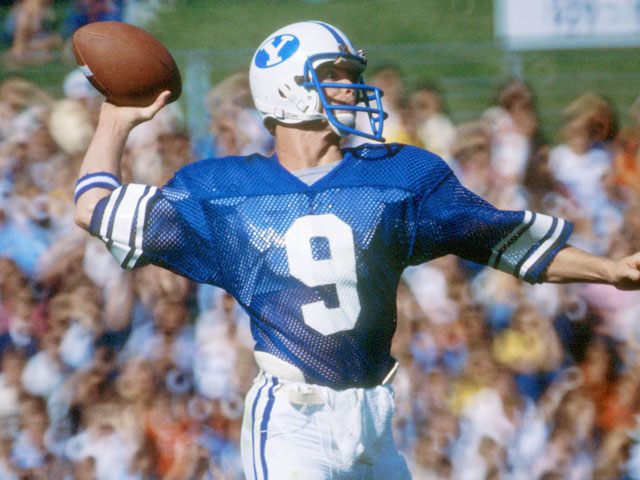
(Image from byucougars.com)

New Leader of the Pac

The Pac-12 is ready to announce a massive new television deal with Fox and ESPN worth $250 million annually.  (No one has been covering this story better than Jon Wilner of the San Jose Mercury News.)  I certainly have to give props to Pac-12 Commissioner Larry Scott here.  Up to this point, I’ve thought that he was smart and aggressive but more full of bluster with big ideas without necessarily the ability to implement them.  The amount of the Pac-12 deal, shows that the conference made a smart move in hiring from outside of the college administrator ranks.

Ultimately, the reasoning for a TV rights fee is akin to examining the price of a stock.  A portion of the price is going to be related to the market overall, another portion is connected to the industry sector, and there’s a final part that is based on the fundamentals of the individual company itself.  It wasn’t a surprise that the Pac-12 was able to raise its TV rights fees significantly, as the demand for sports programming in general has been skyrocketing over the past few months.  That’s a market-based factor that all sports entities negotiating new TV deals are benefiting from right now, which I examined in-depth in my last post.  What I didn’t expect was that the Pac-12 would vault itself to a position alongside the Big Ten and SEC in terms of TV revenue so quickly.  The Big Ten has the benefit of having the Big Ten Network that can take advantage of the market trends until its ABC/ESPN ends in 2016, but the SEC is locked into its CBS and ESPN deals until well into the next decade.  That doesn’t mean that the Pac-12 is inherently as valuable as either the Big Ten or SEC.  Indeed, the Big Ten and Pac-12 negotiated for the rights to their respective new conference championship games with Fox at virtually the same time.  Head-to-head, the Big Ten game garnered over $23 million per year, while the Pac-12 game received $14.5 million per year, so that gives you an idea of what the conferences are worth relative to each other when you take timing out of it.  My impression that the SEC championship game would be worth even more.  Still, it’s significant that the Pac-12 seems to have been able to pull away from the ACC and non-Texas/Oklahoma portion of the Big 12.

So, what are the fundamentals specific to the Pac-12 that led to this deal (as opposed to just the overall rising tide of sports fees)?  One important point that I’ve mentioned before but probably underestimated in the scheme of things is that the Pac-12 is the only conference with a BCS monopoly in its own footprint.  In fact, with the additions of Colorado and Utah, it’s the only BCS conference located in the entire Pacific and Rocky Mountain Time Zones.  That’s a pretty massive swath of area to effectively have all to yourself.  In contrast, all of the other BCS conferences compete with at least 2 other BCS conferences in their footprints.  For the the Big East in particular, it has to compete with all of the other BCS conferences in its footprint except for the Pac-12.

Another item to note is that Fox needed to retain the Pac-12 very badly for its owned-and-operated West Coast regional sports networks, especially FS West in the Los Angeles market.  FS West is suffering from the blow of losing its most valuable property of the Lakers next year, who are pouring salt in the wound by creating two competing networks (one English and the other Spanish) with Time Warner Cable.  Losing Pac-12 sports on top of that would have left FSN West to rely on the Clippers… and I don’t care how badass Blake Griffin might be (and he’s about as badass as one can be badass), but if I’m Rupert Murdoch, I’ll be damned if I run any organization that has to rely on the Clippers.  With ownership of FS Arizona and a minority interest Comcast SportsNet Bay Area, Fox had some heavy incentives to protect or expand its Pac-12 programming.

(Note that Fox’s owned-and-operated regional sports networks are heavily concentrated in California, Arizona, Texas, the Great Plains Midwest and the Southeast.  Looking at that lineup, it should come as no surprise why Fox paid up heavily for the Pac-12 and Big 12 TV rights and sent in a large bid for the ACC.  The Northeast markets, on the other hand, are largely the domain of Comcast RSNs with Fox largely being shut out.  This is instructive as to who might be (and not be) looking at the Big East’s TV rights down the road.)

ESPN expanding its relationship with the Pac-12 is a little more difficult to read.  Variety has indicated that the Pac-12 has agreed to provide 4 Thursday night and 4 Friday night football games per year to ESPN, so there seems to be a push from the Worldwide Leader to get more higher quality weeknight college football contests.  The Pac-12 also allows for late night games on Saturdays to compensate for the moves of Hawaii and Fresno State from the WAC to the MWC (which doesn’t show any games on ESPN).  Finally, there could be a return of a 11 pm Central Time Big Monday basketball time slot allocated to the Pac-12, which ESPN used to have for Big West or West Coast Conference games.  Overall, ESPN’s modus operandi may very well have been to ensure that neither Comcast nor Turner Sports would end up with the Pac-12, who could have been used as a cornerstone to really have beefed themselves up as legitimate college sports broadcast competitors.

It’s also a bit of a surprise that a Pac-12 network would be wholly-owned.  This is a good thing if the network can receive basic carriage, but could be a roadblock if there are any carriage disputes.  The Big Ten Network, which is 49% owned by Fox, was able to leverage its basic carriage with DirecTV (which was owned by Fox at the time of the launch of the BTN) to apply pressure on cable operators, while the MLB Network garnered one of the largest basic cable launches of any channel in history by offering minority stakes to several cable companies in exchange for carriage.  Those cable companies also provided capital start-up costs.  On the other end of the spectrum, the NFL Network (wholly-owned by the NFL) is still battling cable operators 8 years after it went on the air.  There seems to be a presumption that the Pac-12 wanted to have 100% ownership of a network, but I’m not so sure that’s the case with the amount of ramp-up costs involved and how critical basic cable carriage is for success.

Regardless, even if a conference network never even gets off the ground, I’m pretty sure the Pac-12 schools are acting like this right now.

(Follow Frank the Tank’s Slant on Twitter @frankthetank111 and Facebook)

(Image from Lehigh Valley Live)

What American Idol Viewers Show Us About Rising TV Sports Contracts

The Big 12 lost one of the best national TV draws in college football (Nebraska), the most popular college team in its largest and fastest-growing market outside of the state of Texas (Colorado) and its conference championship… and then signs a contract for a 350% increase for its second tier cable football rights with Fox.  Did Rupert Murdoch suddenly feel the need to go on a shopping free now that he doesn’t have to pay Glenn Beck anymore?  Is Dan Beebe getting a G5 and a pile of money so that Fox can cash in an insurance policy on Iowa State?  What gives?  Well, let’s take a look at some demographic shifts of the overall TV audience, how it has affected Fox’s most important property, American Idol, and how all of this explains why sports TV rights fees are generally going through the roof right now.

There are three massive changes to television over the past 5 years (and such changes are accelerating):

(1) More Old People Watch TV Than Young People – If you know anything about TV advertising, the overall Nielsen rating that a lot of networks like to trump in press releases is completely irrelevant.  The fact that CBS is the #1 watched TV network overall with top overall-rated shows in several categories has little bearing on what they are able to charge in terms of advertising rates.  Instead, the Nielsen number that really matters is what a show draws in the Age 18-49 demographic and, increasingly, the Age 18-34 demographic.  Historically, this emphasis on younger viewers has been justified with notions that older people are less likely to switch brands or purchase high-end products.  However, that really isn’t true anymore, as people over 50 generally have higher incomes and have shown to have more discretionary spending than their younger counterparts.

Now, the reasoning is a bit different: younger viewers are simply scarcer, therefore advertisers pay a premium to reach them.  Even though older viewers actually have more spending power than younger viewers, those older viewers watch more TV overall and can be reached throughout the day by placing ads on less expensive shows.

The difference between what advertisers will pay for a younger audience versus an older audience is massive – more massive than you probably could have ever guessed.  TVbythenumbers recently compared the ad rates for NCIS (which draws the largest overall audience of any scripted show on TV) and Glee.  It found that even though NCIS had 82% more overall viewers, the fact that Glee had 15% more viewers in the Age 18-49 demo and 92% more viewers in the Age 18-34 demo meant that Glee was able to charge 80% more than NCIS for every 30-second commercial spot.  It basically shows that viewers over 50 are effectively worthless from an advertising standpoint (and even viewers over 35 aren’t worth that much).  You can find a lot of shows that draw in the typical viewer of NCIS (even if that particular show brings in the most of them outright), while there are very few shows that bring in the demo that Glee delivers.  (For what it’s worth, I’m the type of person that enjoys dramas with deep and complex themes with subtle acting that doesn’t beat you over the head with blatant messages.  I can’t think of any show that provides less of what I’m looking for than Glee.)

With that type of advertising rate disparity, TV networks (both broadcast and cable) are continuously on the search for programming that attracts those younger viewers.

(2) More Women Watch TV Than Men – Here’s a fairly shocking statistic: out of the 63 prime time shows that were on the 5 major broadcast networks (for the purposes of this discussion, The CW gets counted as a “major network”) during the 2009-10 season, only 6 drew more male viewers than female viewers6 out of 63.  Three of those shows (The Simpsons, Family Guy and The Cleveland Show) are part of the Sunday night Fox comedy bloc that gets a lead-in from NFL games for half of the season.  Another one of those shows (24) is no longer on the air, a different one (Fringe) has been moved to a low-rated Friday night time slot and the last one (Chuck) has been on the cancellation watch list for a couple of years.  If you’ve ever wondered why ABC keeps churning out shrill high-budget prime time soap operas from Shonda Rhimes, there’s your answer.

Simply put, the TV networks are badly in need of a sausage fest and can’t seem to create any.

(3) More People Are Using DVRs – Nielsen recently reported that DVRs are in 38% of all U.S. households as of September 2010, exhibiting extremely rapid growth as that number stood at less than 5% in 2006.  Those users of DVRs are also younger and more affluent than the average television viewer.  While Nielsen argues that DVR users still watch commercials in decent numbers, the reality of it is that the attraction of the DVR is to be able to skip those ads (cutting down an hour-long show with commercials into around a 40-minute show without them).  As DVR penetration continues to grow (and frankly, I thought that current 38% number seemed fairly low), more and more people are going to be avoiding commercials like the plague.

These changes in who watches TV and how they watch it has had some fairly interesting implications in pop culture.  For instance, a couple of weeks ago, the American Idol audience shockingly voted off (or more accurately, did not vote enough for) widely-perceived front-runner Pia Toscano, meaning that she placed ninth and had a shorter run on Fox than The Heights.  It was enough to make J-Lo start crying uncontrollably while Steven Tyler rose from his crypt and started bashing America’s passion.  Now, seeing that Pia was clearly the top pure singer while also being the best-looking of the competitors, that typically indicates a Charlie Sheen bi-winning combination.  However, when looking at the demographics for American Idol, it reflects general TV viewing trends: its audience is getting older and skewing much more to the female side.  My impression is that these older women prefer the John Mayer soulful acoustic guitar-types as opposed to the hot young divas, which is the main reason why (1) soulful acoustic guitar-types have won American Idol for the past two seasons, (2)  5 out of the last 6 American Idol winners were male and (3) only 2 American Idol contestants left on this year’s show out of 8 are female (rose jacket Rod Stewart copy Paul McDonald became the first male eliminated since the initial public vote cutdown to the top 13).

What American Idol has going for it, though, is that people still generally watch it live.  In the latest week where figures are available, only 9% of American Idol Wednesday viewers watched it on DVR compared to 29% of the viewers of Modern Family and 28% of the viewers of Grey’s Anatomy.  Add in that it still draws a fairly good percentage of the younger demographics compared to most shows on television and it is a complete ratings cash cow for Fox.  Last year, American Idol was able to charge over three times as much per 30-second ad spot compared to Dancing with the Stars, the latter of which actually draws a higher number of total viewers but a lower number in the Age 18-49 demo.

So, when looking at how the TV audience has shifted, it has become clear what type of program obtains a premium greater than any other: the program that draws the age 18-34 male that watches it live.

Let’s take me as an example of the target demo.  I’m a professional 33-year old male that’s about a loyal to TV shows as Antonio Cromartie, can count on one hand the number of scripted TV shows that I watch regularly, and will purposely watch all of such shows on my DVR in order to avoid a single moment of watching any commercials.  I don’t know about you, but I put my DVR right next to food and water on Maslow’s hierarchy of needs.  The catch, though, is that I watch a lot of sports.  Even better, I actually watch them live with commercials.  There is no better vehicle to draw me, a member of the most valuable demographic of all (the male under 35), than sports… and there are tons of people like me in that respect.

Dennis Dodds, who has his own excellent write-up on theories on why sports TV rights are rising, stated the following:

Sports have become one of the safest and highest-grossing buys for media companies. There are no coked-up, petulant stars to deal with. Well, at least not a lot of them. The only “winning” is done on the field. Sports are somewhat cheap to produce.  Sports are true reality television, almost immune to being DVRed. Advertisers love that. There is a built-in following whose interest doesn’t wane with time. Even the strongest TV series are canceled. Try taking Alabama-Auburn off the air.

The success rate of new scripted TV shows has become abysmal – ABC may end up not renewing any of its new shows from this season.  In contrast, sports programs are considered to have “high floors” – ratings may not necessarily go through the roof for every single game, but there’s always a good base of viewers , that base includes a lot of members of the most valuable demo, and those viewers watch it live.  The Nielsen DVR report linked above stated that sports and news programs are watched on DVRs the least of any TV categories.

Sports programming also skews toward the younger demographic than the average show on TV.  During the week that ended April 10th, the only shows in the top 10 of the overall ratings that had more than 30% of their audiences under the age of 50 were the two editions of American Idol (approximately 40%) and the NCAA Tournament National Championship Game (47%).  This is consistent with the demographics for other major postseason sporting events, where the World Series, NBA Finals, BCS bowls and NFL postseason last year all had more than 40% of their respective audiences in the Age 18-49 demo.  (Note that if you were able to buy stock in a league, you ought to bet on the NBA.  It’s the only major sports property that draws over 50% of its audience from the 18-49 demo as well as being the most popular in the growing minority populations just using last year’s figures.  With the NBA now having legit contending teams in New York, Chicago, Boston and Los Angeles along with the Miami superteam, the viewership numbers have been record-setting this season across all of its platforms of ABC, ESPN and TNT.)

Does this necessarily mean that all sports rights fees will necessarily rise at such dramatic rates?  The Pac-12 is looking for even a better deal than the Big 12 (you can count me in as someone that’s more skeptical that they’ll hit those numbers) and the Big East is looking at a possible tripling of its current rights fees.  One ongoing negotiation that may be a better indicator of where rights fees might go for those two conferences is for the NHL, which is a league whose current deal was signed when it was at rock bottom in terms of popularity, has had a resurgence in a couple of key markets (Chicago and Boston), but still largely has a regional as opposed to a national fan base.  The NHL is looking for a substantial increase of around 2.5 times the current deal with Comcast/NBC most likely being retained as the broadcasting partner.

A rising tide lifts all ships in an outright manner, but where the conferences sit relatively each other will likely remain the same: the SEC and Big Ten at the top, the ACC, Big 12 and Pac-12 in the next tier, the Big East at the next level, and then everyone else.  Similarly at the pro level, the NFL stands alone at the top, NBA and Major League Baseball are in the next tier, and the NHL will be behind them.  Still, the circumstances are good for all sports entities.  While the rise of Internet streaming and mobile devices are going to complicate matters for sports leagues to continue cashing in on cable dollars over the next decade, they’re all getting the benefit of a revenue boom today.

(Follow Frank the Tank’s Slant on Twitter @frankthetank111 and Facebook)

(Image from Huffington Post)

College Basketball Jones Bi-Winning in the Big Ten Coffers and Big East Expansion

As America is engrossed with the start of the NCAA Tournament and determining which former Illini coach that this year’s Illinois team will lose to this weekend, let’s turn our attention to the business of college basketball for a few moments.  I’m actually a hoops guy at heart, but as this blog delved into college conference realignment, the focus here turned to football because of that’s really the driving force between the major moves.

Kristi Dosh and Patrick Rishe have been writing a number of posts at the Forbes SportsMoney blog about athletic department and basketball revenue and profits among the major conferences. (h/t to Slant reader Brian.)  What’s interesting to note is that the largest revenue basketball conference on a per school basis isn’t the 11-bid Big East or Dook-UNC-led ACC, but none other than the Big Ten, which an unbiased ESPN SportsCenter anchor lovingly noted this past week was like “watching fat people have sex“.  (The Big East has a larger total basketball revenue number, although that’s skewed because it has 16 members.)  Concrete factors for this are that for all of the bashing of Big Ten basketball and the reputation that it’s made up of football schools, the conference has a rabid hoops fan base where it has led the nation in attendance for the past 34 consecutive years along with revenue from the Big Ten Network.  My personal observation is that most Big Ten football fans follow their basketball teams at a consistently high level, whereas SEC football fans (outside of Kentucky and maybe Arkansas) basically need a Final Four contender to pay attention.

That difference in basketball revenue  between the Big Ten and SEC appears to be a major reason why the Big Ten has more profitable athletic departments overall even though SEC profit in the top revenue sport of football is greater.  (More detailed charts with estimated allocations taking into account the Big Ten Network are here on Dolich’s website.)  Regardless, college conference revenue has essentially created a tier for the Big Ten and SEC with everyone else way behind.  As for the importance of football relative to basketball, the Big Ten (22.2%), SEC (16.3%), Pac-10 (22.9%) and Big 12 (19.1%) are actually all fairly close to each other in terms of basketball revenue as a percentage of total athletic department revenue.  Not surprisingly, the Big East (36.7%) and ACC (31.8%) are the outliers where those conferences receive a lot higher proportion of their revenue from basketball (and therefore seem to emphasize basketball more than football compared to the other BCS leagues).

That high basketball percentage for the Big East has some implications for conference realignment/expansion insofar that the “this is all about football” mantra that applied to the Big Ten and Pac-12 expansions as well the Big 12 situation (where one of the top marquee basketball brands in the nation, Kansas, was almost left for dead) may not completely apply to the Big East.  To be sure, the Big East would love nothing more than to become a football power along the lines of the SEC, but the types of schools that would catapult the Eastern-based league to that status (i.e. Notre Dame and Penn State) aren’t reasonably attainable and no one is going to find them in C-USA.  At the same time, the Big East basketball TV deal (average of $2 million per school per year) is worth more than its football contract (average of $1.67 million per school per year), which means that basketball has to be taken in account.  (Recall my Big East Expansion FAQ back in November.)  With the New York Daily News reporting that a Big East TV network is unlikely (largely because getting basic carriage in the New York City market that’s already overloaded with expensive regional sports networks will be impossible), the “expanding for new markets” argument isn’t very compelling.

That’s why the Big East seems more interested in having Villanova move up to Division I-A than adding any expansion candidates from C-USA.  (Please add re-naming the first round of the NCAA Tournament to now be the “second round” after the First Four to the long list of perplexing, nonsensical, confusing and annoying NCAA changes to names that were easily understood by the average bear before.)   The argument is that none of those schools would add much to the national TV contracts on the football side, so it’s more important to avoid diluting the already more lucrative basketball side.  I wasn’t a big fan of the Big East having Villanova move up when it looked like it was a possibility that the Wildcats would be the only football addition without TCU included.  However, what I now understand is that for the Big East football schools to get the Big East Catholic members to vote for any further all-sports expansion in the first place was predicated on Villanova moving up, so the addition of the Philly-area school has to be looked at in the scheme of the entire Big East expansion in conjunction with TCU as opposed to on its own.  At the same time, much to the chagrin of the various schools that are looking for a Big East invite (i.e. UCF, Houston, East Carolina, Memphis, etc.), the most important fact is that Villanova is already a full member of the Big East.  This isn’t an expansion for the conference – it’s a current member moving up for a sport, which is an incredibly important distinction.

Villanova insiders indicate that it’s increasingly likely that the school’s Board of Trustees will approve the football upgrade.  Frankly, the school has to make the move.  This isn’t a matter of moving up for football to join a non-AQ conference – if the program is guaranteed AQ status, then this shouldn’t be a difficult decision.  The Big East is what it is – an extremely strong basketball conference with revenue in line with that status.  Football may drive the bus in college sports overall, but if a conference is unable to add a major power program (the “kings” and “barons” that Stewart Mandel once wrote about), then it makes no sense to weaken or dilute the nation’s best basketball league for little or no revenue upside for the football league.  Football in and of itself doesn’t make money for conferences; it’s having marquee football programs that matters.  To the extent Villanova provides an extra conference football game on the schedule without having to split the basketball TV contract into an 18th slice, it may very well be most lucrative (or at least revenue neutral) football addition that the Big East can realistically have for now.

(Follow Frank the Tank’s Slant on Twitter @frankthetank111 and Facebook)

(Image from CBS Chicago)

West Coast Represent: Pac-12 TV Talks and What it Means for Other Conferences

There were a couple of separate articles today regarding Pac-12 television rights that point to some implications for other conferences.  First, Jon Wilner from the San Jose Mercury-News had a fairly in-depth article today regarding the status Pac-12 television contract negotiations.  Second, Percy Allen from the Seattle Times had an interview with Pac-12 commissioner Larry Scott that focused on the conference’s basketball TV rights.  Here are the main points from those articles:

(1) Fox is the most likely long-term TV partner for the Pac-12 with a possibility of some over-the-air football games on the mothership network, while Comcast/NBC is the second option;

(2) ESPN is not willing to pay as much for the Pac-12 as it did for the ACC for a variety of reasons (including lack of time slots and the value of the ACC’s syndicated basketball package);

(3) Larry Scott wants the Pac-12 Network to happen, but Time Warner Cable will be a large obstacle in the Los Angeles market; and

(4) Going forward, all media rights for all Pac-12 members will be controlled by the conference (as opposed to a portion being controlled by the individual schools as it is today).

Let’s examine each of these points from the perspective of the Pac-12 and how they apply to the college sports world at large.

Point #1 about Fox’s involvement isn’t a surprise considering the current relationship that it has with the Pac-12 and the media giant’s increasing focus on obtaining college sports rights over the past several months (including paying $140 million over the next six years solely for the Big Ten Championship Game).  The overarching questions going forward are (a) how serious is Fox about expanding its overall college sports presence and (b) are they willing to use Fox over-the-air for games?  Fox bid on the ACC package last year with an offer that was heavily reliant on FX as the main national platform.  Indeed, David Hill, Chairman of Fox Sports Group, sees an increase in sports programming on FX as a key in making that network competitive with the likes of TNT.  While Fox didn’t win that deal, they did procure a smaller agreement with C-USA plus rights to the Big Ten and Pac-12 championship games.  A hungry Fox can certainly bid up the price of rights for other conferences… as long as ESPN is willing to play, too.  (More on that in a moment.)

As for Comcast/NBC, call me skeptical of them ever becoming a truly major player in college sports.  Comcast-owned Versus certainly is looking for more sports programming, but that’s a fairly unattractive national cable partner compared to ESPN or FX on its face and you’re more likely to see sports move away from NBC as opposed to any events being added.  Sports programs in general are loss leaders for over-the-air networks and the last thing that NBC needs is more losses.  In fact, NBC Universal CEO Steve Burke told Wall Street analysts covering Comcast specifically yesterday that NBC’s current “sports properties lose hundreds of millions of dollars per year.”  NBC lost $220 million on the 2010 Vancouver Winter Olympics and even its gold-plated NFL Sunday Night Football package loses around $100 million per year.  So, it doesn’t exactly sound like the new Comcast ownership is going to be spending very much money on more sports on NBC.  If anything, those quotes from the head of NBCU indicate that they’re preparing to cut back heavily.  Therefore, any conference hoping for Comcast/NBC to come through with some great offer is going to be severely disappointed.

From the Big Ten’s perspective, I see Fox only as a viable option in the conference’s next TV deal if there is essentially a replication of the SEC’s agreement with CBS: the top game of the week gets coast-to-coast over-the-air coverage.  I can’t realistically see the Big Ten considering a deal with Comcast at all.  While much has been made of the Big Ten’s partnership with Fox regarding the Big Ten Network, it must be emphasized that the conference still receives substantially more money from ESPN compared to the BTN.  There are also more Big Ten events on ESPN today than there were prior to the BTN being formed.  From the very beginning, the BTN has always been intended to be a supplement to ESPN coverage as opposed to a replacement.  The Big Ten is smart enough to know that the time slots that it has secured with ABC and ESPN provide incredible exposure and the conference doesn’t want to kill the proverbial long-term golden goose for short-term financial gains.  Any new deal going forward has to provide even more exposure than today’s deal.  Thus, I could see the Big Ten pushing to a movement of the games that are regionalized on ABC right now to national over-the-air Fox coverage.  However, I highly doubt that the Big Ten would ever seriously consider moving ESPN games to FX (and definitely not to the patchwork quilt of Fox Sports Net affiliates).  It’s interesting to note, by the way, that the two conferences that make the most money outside of ESPN (Big Ten with the BTN and SEC with CBS) also make the most money from ESPN. Money certainly talks, but the Big Ten seems to be a property that ESPN will pay up to get them to stay (and the desire to stay on ESPN will be reciprocated by the conference).

That leads to Point #2, where apparently the Pac-12 is a conference that ESPN is not willing to pay up for.  More specifically, ESPN appears to believe that the Pac-12 TV package is worth less than comparable ACC rights.  This doesn’t surprise me at all.  I’ve been fairly consistent on this blog that the ACC is in much better shape than what a lot of sports fans (that have concentrated on the conference’s relative weakness on the football field over the past few years) believe. 

National marquee brand names are extremely important for determining college sports rights and the ACC has 2 big ones for football (Miami and Florida State) and arguably the 2 very biggest ones for basketball (Duke and North Carolina).  The ACC basketball package is also unique in that it draws football-level ratings in several of its markets, which is something that none of the other BCS conferences can claim (even those that might be better on the court in a given year, such as the Big East).  If and when Miami and Florida State get back on track, you’ll see a dramatic turnaround in the football perception (and TV ratings) of the ACC.  In contrast, the Pac-12 is largely reliant on the strength of USC for football and UCLA for basketball in terms of drawing national interest.  Beyond the LA schools and Oregon’s wacky uniforms, the Pac-12 continues to struggle with getting much notoriety in the Eastern 2/3rds of the country.

The Pac-12’s inability to get much of a large bid out of ESPN should be a small warning sign to the Big 12 and a large red flag to the Big East, who are both hoping to receive large TV rights increases from the Worldwide Leader.  Several conferences last summer were under the impression that ESPN paying such a large amount to the ACC meant that the network’s greenback gushers were wide open and they could switch the style up, but if they hate let ’em hate and watch the money pile up.  Instead, it looks like ESPN is going to keep all its money in a big brown bag inside a zoo.  Dan Beebe and the Big 12 members may sweat it out a bit as there were some financial assurances from ABC/ESPN this past summer that aided in keeping the conference from splitting apart.  Personally, I’m a believer that ESPN understands the big picture and seeing that they presently want to avoid the formation of superconferences, they’ll pay enough to the Big 12 so that the conference makes good on its promises to Texas, Oklahoma and Texas A&M.  With ESPN’s investment in the UT network, the Big 12 needs to stay alive and a few extra bucks on the conference contract would be money well-spent.

The Big East is a different matter.  That conference has already bore the brunt of having football games moved by ESPN to Thursday nights initially, and then when the SEC, ACC and Pac-12 saw that Thursday was a great night for exposure, the Big East has been kicked around to several Friday nights and even some Wednesday evenings.  Much of the hope of a Big East TV contract increase rested on leveraging its valuable and massive basketball package into better football exposure.  However, if ESPN isn’t willing to pay the Pac-12 TV rights in line with the ACC, then it stands to reason that they’re going to value the Big East even less.  Unless Fox or Comcast swoop in with competing bids for the Big East, the conference’s schools are going to have a difficult time coaxing the increases that they’re hoping for from ESPN.  I’m sure that you’ll see the Big East get what amounts to an inflationary increase (maybe 150% of what they receive now), but not enough to get on the same tier as the other BCS conferences.

Under Point #3, Larry Scott seems extremely determined to start a Pac-12 network.  However, Jon Wilner pointed out a large potential obstacle: Time Warner Cable.  He noted that TWC is the largest cable provided in the Los Angeles market and they’ve had a habit of getting into carriage fights regarding regional sports networks.  What Wilner neglected to mention (and I find to be even more important) is that TWC just sent a Valentine’s Day present to Jerry Buss of what’s rumored to be around $150 million per year to create two new regional sports networks in the LA market (one English language and the other Spanish language) built around the Lakers.  With 3 Fox Sports networks in that market already, that means that the LA market will be supporting 5 RSNs and making it even more crowded than the New York City market.  This crowded environment in the Pac-12’s most important market has huge implications on whether a conference network can realistically be formed.  The Big Ten Network only had to compete with 1 RSN in each of the markets within its footprint (even in its largest market of Chicago, which only has Comcast SportsNet Chicago).  Thus, it was a more palatable for the cable providers to give in when the BTN was RSN #2 on their systems… and even then, it took over a year of carriage fights for them to get to that point.  It’s a much different value proposition for the Pac-12 attempting to enter into market that already has 5 other RSNs – TWC has a whole lot more leverage to demand lower subscriber rates or refuse basic carriage entirely.  Note that a potential Big East Network would face the same issues in the NYC market with so many RSNs already clogging up cable bills.  This was a factor in the Big Ten ultimately deciding to not go after schools like Rutgers or Syracuse in this last round of expansion, as the BTN absolutely had to get basic carriage in the NYC market in order to financially justify those additions, and they didn’t see that happening anytime soon.

Finally, with respect to Point #4, Larry Scott confirmed that all media rights for all Pac-12 members would be controlled by the conference.  This is important for one massive reason: the University of Texas.  With the Pac-12 taking that position, it has effectively wiped out any reasonable possibility of Texas joining the conference in the future, as the new Longhorn Network would be unable to exist under those conditions (and I don’t see UT giving up in excess of $10 million per year for any reason).  For the fear mongerers (who are all wrong, by the way) that continue to believe that UT’s ultimate goal is to end up independent or in the Pac-12, at the very least, that Pac-12 option is gone.  (I’ve listed a multitude of reasons of why UT wants to stay in the Big 12 in perpetuity and, in fact, needs that league to live, but many people seem to believe what they want to believe on that front.)

Fans of all conferences should keep a close eye on the West Coast since how the Pac-12 proceeds will be a significant indicator of how TV networks will pay for college sports in this next round of contracts.

(Follow Frank the Tank’s Slant on Twitter @frankthetank111 and Facebook)

You Can’t Always Get What You Want, Aggies

It was as predictable as a lackadaisical road game for the Illini basketball team. When the University of Texas signed its network deal with ESPN, the drumbeats from people that aren’t looking at the big picture started: “Well, this means Texas A&M is heading to the SEC sooner rather than later.”  It’s a stance that’s become reflexive among many widely read pundits.  Unfortunately, that stance is absolutely and positively dead wrong.

If there’s one overarching takeaway that you should get from this blog post, it’s that what Texas A&M wants to do means jack.  I’m very certain Aggies all across America (especially the younger ones) would love nothing more than to move to the SEC, yet that’s irrelevant.  What really matters is what Texas A&M is allowed to do, and with a Molotov cocktail of an SEC that doesn’t really want to expand, Texas state politicians that are out to quash any move that will injure Texas Tech and Baylor, and ESPN specifically wanting the Big 12 to live, that leaves with Texas A&M with virtually no options outside of staying right where they are.

THE REACTIONARY SEC

Let’s start out with the most basic rule in conference realignment: it takes two to tango.  In order for Texas A&M to even consider to move, the SEC has to want to add them in the first place.  There’s a widely misguided belief in the blog and message board world that since the SEC reportedly invited Texas A&M and Oklahoma over this past summer, that means there’s an “open invite” for the Aggies and Sooners.  Nothing could be further from the truth.  Everyone is forgetting the circumstances under which the SEC invited those two schools.  OU president David Boren stated that the Pac-16 proposal was researched and planned, while the SEC invitations were “a reaction to the situation”.  The SEC was never proactive in last year’s conference realignment because they didn’t (and still don’t) have any type of vehicle to justify expanding beyond 12 schools.  This is in contrast to the Big Ten, whose Big Ten Network can garner additional revenue from adding more basic cable households, and the Pac-10, who was so far behind in revenue that it was worth it for them to take a huge leap in order to add UT and friends.

The fact of the matter is that the SEC loves the status quo.  They are Wal-Mart to the Big Ten’s Target in college football’s financial hierarchy, with everyone else way behind.  The last thing that the SEC wanted was to see major changes to the conference landscape where a third equal competitor would rise up or, even worse, being sent to a permanent third place position.  So, the only reason why the SEC offered A&M and OU those invites was because they were looking at a world where 2 superconferences were about to be formed – the Pac-16 with UT as the centerpiece and a 16-school Big Ten with Nebraska and Notre Dame as the main additions – and they had to draw a little blood in order to not completely get left behind.

We need to make this clear: the SEC invites to A&M and OU were completely reactionary.  Once the Big 12 was saved and superconferences weren’t formed, the reasoning for the SEC to expand evaporated.  There is only one way that the SEC can lose its dominant position next to the Big Ten at this point: if UT moves from the Big 12 to another conference (because as we’ve explained here before, they’re never going to the SEC themselves).  That’s something the SEC absolutely doesn’t want to see happen.  As a result, the SEC isn’t going to make a proactive move on the Big 12 because it’s not going to risk giving UT a reason to explore the Pac-16 proposal again.  If some other conference makes a move on the Big 12, then the SEC will react in order to pick up the pieces, but they’re not going to attack first.  The only realistic way A&M gets an SEC invite is if someone else raids the Big 12.

ALL CONFERENCE POLITICS ARE LOCAL

Now, let’s say that I’m completely wrong about all that I just said about the SEC and they extend invites to A&M and OU, anyway.  That doesn’t mean that the Aggies (or OU, for that matter) can just move willingly.  Here’s a quick recap of the major conference realignments since the collapse of the Southwestern Conference:

1994 – UT and A&M attempt to move to the Big 8 by themselves to create a 10-team conference.  Texas legislators catch wind of the plan and use political pressure on those 2 schools to force Texas Tech and Baylor into the league, too.

2003 – The ACC invites Miami, Boston College and Syracuse.  Virginia legislators catch wind of the plan and use political pressure on UVA to force Virginia Tech to get an invite in lieu of BC and Syracuse.  BC eventually gets an invite later on, while Syracuse is still in the Big East.

2010 – The Pac-10 invites the entire Big 12 South except for Baylor.  The deal falls apart and Pac-10 commissioner Larry Scott attributes it to the political heat from Texas legislators with Baylor getting left out.

See a pattern here?  State legislators have played a central role in all three major conference realignments in the past 20 years, including Texas legislators specifically in two of them.  Public universities are controlled by a ton of different interest groups, including people whose loyalties lie with competing universities.  Notre Dame, as a private university, can simply listen to its own rabid alumni base in making decisions.  Texas A&M (and other public universities) can’t do the same.  Despite this fact along with recent conference realignment history, virtually every single column that I’ve read suggesting that Texas A&M will eventually head to the SEC either (a) completely ignores Texas politicians altogether or (b) makes unsubstantiated comments that the politicians aren’t obligated protect Tech and Baylor anymore.

What?!  It’s incredulous to me how anyone that observed what occurred this past summer could think for two seconds that Texas politicians won’t get involved.  If anything, it proves that Tech and Baylor have more pull than previously anticipated.  As I’ve admitted previously, I certainly made the grave mistake a year ago in my conference realignment analysis of underestimating how much Texans believe that football matters are of the utmost political importance.  I haven’t seen a single person articulate a legitimate reason why a single thing has changed in the political environment in Texas since this past summer or even 1994.  The Texas legislature has literally done more to shape college conferences over the past 20 years than any other entity.  Besides, even if you assume that Tech and Baylor don’t have a Bob Bullock-type figure to hammer through their interests, UT is going to be right alongside the supporters of the little brothers on this issue.  UT wants nothing to do with A&M in the SEC (for good reason) and the Longhorns know how to play the political game as well as anyone.  I really hope people aren’t naive enough to think that Texas politicians are just going to sit on the sidelines if A&M attempts to move to the SEC by itself. 

IF TEXAS TECH AND BAYLOR AREN’T BETTER OFF WITHOUT A&M THAN WITH THEM, THEN DO NOT PASS GO

The main argument that I see from those that believe that A&M is heading to the SEC is that Texas Tech and Baylor can be “taken care of” in order to placate the politicians.  There is a prevailing belief that as long as the Big 12 survives with UT staying there, then A&M can move alone.  The problem with this line of thinking is that Texas politicians have consistently placed a MUCH higher standard of what it means for Tech and Baylor to be “taken care of”.  Having those schools “taken care of” really means two options:

(1) UT and A&M are in the same conference as Tech and Baylor.  Period.

OR

(2) Tech and Baylor are financially stronger without one of the big brothers in the same conference than with them.

Think of it this way: if I come and take a wrecking ball to your kitchen, you’re probably not going to think you’re “taken care of” if I point out the fact that I left your bedroom intact, so at least you’re not homeless.  Well, Texas A&M can’t just leave the Big 12 and make more money in the SEC while simultaneously reduce the conference revenues for Texas Tech and Baylor (and for that matter, UT) and claim that they’re “taken care of”.  That’s a proactive move by A&M that hurts those in-state little brothers.  So, simply saying that Tech and Baylor are still in an AQ home isn’t good enough for the Texas politicians.  A&M has to find a way to ensure that Tech and Baylor somehow make more money with the Aggies leaving the Big 12, which most reasonable people would conclude simply isn’t realistic.  As noted earlier, the SEC doesn’t really have a financial vehicle to justify expanding in the first place, so every expansion candidate has to pull more than its own weight.  A&M is a very good catch for any conference by itself, but that school isn’t worth SEC having to add any type of financial dead weight (Tech or Baylor) in order to get them.

As for OU, the Sooners are even more tethered to Oklahoma State politically than the Texas-based schools are to each other.  The T. Boone Pickens mafia will destroy that prospect immediately.  There’s absolutely no scenario where OU would move to another conference without Okie State.  None.  Zip.  Nada.  Zilch.

THE PAC-16 PROPOSAL IS THE MINIMUM FOR ANY FUTURE CHANGES

Here’s the bottom line: the Pac-16 proposal is now the bare minimum that politicians will consider.  That proposal protected Texas Tech and Oklahoma State, yet the big brothers of UT, A&M and OU ultimately rejected that deal.  As a result, those big brothers expended pretty much all of their political capital on conference realignment.  There was a massive offer from a major conference that was willing to take Tech and Okie State, which means that the big brothers can’t now look their respective state legislators in the face and say that they’re ditching the little brothers for a better deal elsewhere.  (This includes the prospect of UT going independent.)  From this point forward, there’s absolutely NFW that the politicians in either Texas or Oklahoma are going to let the big brothers move without something that replicates the original Pac-16 proposal at the very least.  If you believe Larry Scott, Baylor has to protected in order to ensure it gets approved, too.

Some OU supporters are already ruing the day that they walked away from the Pac-16 offer.  (Of course, that’s neither here nor there.  OU wasn’t getting a Pac-10 invite without UT also coming along.)  Honestly, A&M’s reluctance to go to the Pac-16 might be what ends up forever binding them to the Big 12 that so many of their alums now hate.  Why would Texas politicians let them go off to the SEC alone when all of UT, A&M and Tech would’ve been taken care of in the Pac-16 deal if A&M didn’t have any reservations to going west?  The answer is that they’re not – A&M is stuck, whether they like it or not.

ESPN ISN’T STUPID – THEY WANT THE BIG 12 TO LIVE

Finally, there’s a pretty basic item that so many people are missing: ESPN paid up last summer specifically to save the Big 12, so they wouldn’t have entered into a deal with UT unless they believed the Big 12 would stay together.  Certainly, ESPN wouldn’t have created the new UT network if it would have the effect of actually breaking apart the conference that it just saved.  ESPN might be annoying from a journalistic standpoint, but their business people aren’t stupid.

(Indeed, in the third quarter of 2010, ESPN provided half of the profit of the entire Disney Company.  Think about that for a second: add up all of Toy Story 3 ticket sales, all of the people visiting Disney World and Disneyland, all of the Mickey Mouse and Winnie the Pooh swag sold, all of the ABC advertising revenue, all of the Disney books and DVDs hawked, all of the High School Musical and Hannah Montana crap, all of the Disney Broadway show tickets, and revenue from thousands of other Disney properties, and they still weren’t as profitable altogether as ESPN was by itself.  That’s power.)

So, ESPN entered into the deal with UT based on assurances that the Big 12 was going to live on, and the cable giant has a ton of control over that.  With the Worldwide Leader holding the purse strings for the Big 12’s next TV contract, they’re going to provide juuuust enough to keep the non-UT members placated to ensure the investment in the Longhorn network was worth it.  ESPN wants nothing to do with paying massive rights fees for superconferences, which is why they intervened when it looked like the Big 12 was going to collapse.  The status quo is what they desire for college conferences and they have the financial capital to pay out accordingly in order to keep it that way.  Make no mistake about it – ESPN knows that UT staying in the Big 12 is ultimately what provides it stability and that’s a big reason why $15 million per year for the Longhorn Network is a relatively inexpensive insurance policy for the Worldwide Leader.

TOO LITTLE, TOO LATE FOR A&M

At the end of the day, if A&M or any other Big 12 school had an issue with UT’s new TV network, the time that they had any leverage was last summer.  They’ve all known for years that UT has been planning for a new TV network, so this wasn’t a surprise.  In fact, it was a key negotiating point of last summer’s realignment discussions.  Now that they agreed to keep the Big 12 together and, more importantly, rejected a Pac-16 deal that would’ve protected Texas Tech and Oklahoma State specifically, A&M in particular doesn’t have any more chips to play.  You can’t always get what you want, Aggies.  Instead, you can only do what you’re allowed to do, which isn’t much at all.

(Follow Frank the Tank’s Slant on Twitter @frankthetank111 and Facebook)

(Image from Texas A&M to SEC Facebook Page)

ESPN UT: How it Saves the Big 12 and What’s in it for ESPN

One of my Texan friends loves to remind me that Texas is the only state that was also a country.  (He’s an Aggie, by the way.)  Well, the University of Texas Athletic Department will soon have enough cash money to buy up a country or two.  As long-rumored, UT and ESPN have entered a deal to create a new Longhorn TV network that will pay the university $247.5 million over the course of 20 years.  An additional $52.5 million is earmarked for IMG, which is UT’s media licensing partner, which adds up to $300 million overall that ESPN is throwing down for this new property.

Believe it or not, this deal is what’s going to keep the Big 12 together.  UT gets to make more TV money than any other school in the country, play its rivals in all sports and keep the Texas state politicians happy.  As a result, UT is in a perfect spot and as long as they want to stay, the Big 12 will live on.  Could UT make a few more TV dollars down the road by becoming independent?  Sure, but that’s ignoring the fact that UT isn’t in complete control of its affairs in the same way as, say, Notre Dame, who only has to answer to its own alums.  UT’s leadership has to deal with state legislators whose loyalties may lie with Texas A&M, Texas Tech or Baylor.  Drawing the ire of those politicians that hold much greater purse strings beyond athletics, much less giving up its rivals and relegating its non-football sports to secondary status (noting that UT isn’t a one-trick football pony with across-the-board strong programs in basketball, baseball, softball, track and field, etc.), simply isn’t worth the extra money that might be there for independence.  UT has exactly what it wants: a conference that it controls with a TV network that it gets to keep all to itself.  It’s the best of both worlds.  Other schools in the Big 12 can complain, but as I noted last month, the conference is safe in a maximum security prison way.  No one’s getting out of there even if they want to very badly.

What’s ESPN getting out of this deal?  On its face, $15 million per year appears to be a whole lot of money for 1 football game per season, a handful of men’s basketball games and a bunch of Olympic sports.  However, we need to look at the big picture beyond Texas.  Think of the old sports adage that the best offense is a great defense.  For ESPN, the creation of the Big Ten Network was a nightmare.  Conference networks, whether real or imagined, created a viable threat for leagues to use in negotiations to drive up TV rights fees for college sports.  As a result, the last thing that ESPN wants to see is for any of the other BCS conferences to form their own channels with competitors such as Fox and Comcast.  (The Mountain West, on the other hand, can go start up 10 channels for all it cares.)  Well, for a mere $15 million per year in payments to UT and IMG, ESPN has completely destroyed any chance of a Big 12 network EVER forming.  Spending $15 million per year now will likely save ESPN tens of millions of dollars more in rights fees for the overall Big 12 package (assuming that it bids on it) in the long term.

At the same time, ESPN has taken the position that superconferences are bad for its business, as they would also drive up rights fees.  That’s why they were willing to step in and aid in saving the Big 12 by paying the same amount for a 10-team conference without a championship game as a 12-team conference with a championship game.  The new UT network effectively ensures that the school will stay in the Big 12 for at least the next 20 years.  With UT off the market, the Big Ten, Pac-10/12 and SEC are going to have a difficult time to financially justify expanding past 12.  So, ESPN’s $15 million per year for the UT network is insurance against having to spend literally hundreds of millions of dollars in extra fees for superconferences.  The ESPN UT network is likely going to profitable by itself (as with only one mouth to feed, it will take a fairly low basic cable subscriber rate across the state of Texas to make money), but preventing other conference networks and superconferences from forming is where ESPN is getting the most value of all.

Finally, this is a landmark deal for ESPN for a separate reason:

(1) ESPN
(2) ESPN2
(3) ESPN3
(4) ESPNU
(5) ESPN News
(6) ESPN Classic
(7) ESPN Deportes
(8 ) ESPN UT

The Ocho has finally arrived.

(Follow Frank the Tank’s Slant on Twitter @frankthetank111 and Facebook)

(Image from Scream Punch)

New York Daily News: TCU to Join Big East

The New York Daily News is reporting that TCU has been invited to the Big East and there will be a 1 pm CT announcement today.  If this actually occurs as reported, then I’m happy (1) that the Big East has overcome its internal inertia and made the right choice and (2) for TCU fans as that school has truly been a BCS-level program for a long time.  I’ll have more as this story develops.

(Update: AOL FanHouse is reporting the same regarding TCU to the Big East.)

(Follow Frank the Tank’s Slant on Twitter @frankthetank111 and Facebook)

A Modest Proposal for the Big East, TCU, Boise State and Others: The Big Country Conference

The Pitt beat writer for the Pittsburgh Post-Gazette believes that the Big East is purely looking for football-only members, and with the athletic director of TCU going on the record of only wanting to consider all-sports memberships, UCF and Villanova are considered to be the “Plan A” expansion candidates (with Temple as a back-up if Villanova decides against moving up from the FCS level) because they’re more willing to move just for football.  I’ve heard people with connections to other Big East schools state the exact same thing.  Frankly, if this is all true, it’s quite a shortsighted and underwhelming stance by the Big East as it ought to do whatever it takes to grab TCU, but not surprising as 16 members for basketball and other sports is already a massive league.  For all of those that want to make the divisions in the Big East to be simply “basketball vs. football”, the fact of the matter is that if the football members were all on the same page with anything, they would get their way with the Catholic schools.  The problem is that they aren’t even close to being on the same page – some were ready to split yesterday, others are hell-bent on keeping the hybrid together, some don’t care if the league adds multiple all-sport members and others don’t want any more all-sport members at all.  Therefore, if the Big East fails to add TCU or expand at all, the football members have only themselves to blame as opposed to the Catholic schools or the people in the conference offices in Providence.  (Note that the Fort Worth Star-Telegram is a bit more optimistic that the TCU-Big East marriage will eventually be consummated.) 

Let me throw some spaghetti against the wall here.  If I was running the Big East and the members were looking to make a significant move in football but preserve its strength and membership in basketball, I’d turn the concept of football-only membership on its head.  Instead, the Big East football members could head the formation of a football-only conference.  In essence, it would be a quasi-split – the Big East football members would separate from the conference in only football while keeping all other sports there.  This would preserve the 16-team league in basketball and all of the large markets and television contract advantages that come with it.  (Note that in my Big East Expansion FAQ post, I neglected to include the Big East basketball contract with CBS in the conference TV revenue figures, which is $9 million per year.  That means that each school makes $2 million per year total for basketball between the ESPN and CBS deals, which is actually more than what the football members make for football.  This only serves as further evidence that the Big East doesn’t want a full split and will do everything to keep its basketball league together.)  There is precedent for this type of structure, where the Missouri Valley Conference and Missouri Valley Football Conference share the same branding and headquarters with several common members, but are operated as separate entities with different charters and voting procedures.

After that, the new conference, which I’ll call “The Big Country”, will cherry-pick the best non-AQ schools from across the nation to create a strong and TV-friendly football league.  In fact, instead of the Big East members fearing the Big Ten and/or ACC raiding them to form 16-team leagues, they could form the first BCS superconference themselves.  Since it would be a football-only conference, the concerns about travel largely go out the window as the expenses as the non-revenue sports wouldn’t have to trek across the nation.  With two separate 8-team East/West divisions, even the travel for football itself would largely be minimized.  For the sake of argument, check out this proposed 16-team league:

EAST COAST FAMILY DIVISION
Syracuse
UConn
Pitt
West Virginia
Rutgers
USF
1 of Temple/Villanova*
1 of UCF/ECU**

WEST SIDE IS THE BEST SIDE DIVISION
Louisville
Cincinnati
TCU
BYU
Boise State
1 of Houston/Memphis***
2 of New Mexico/Nevada/Hawaii****

Each school would play the 7 teams in its division plus 2 cross-division games, so the wide geographic range of the conference is a lot more manageable than how it looks on its face.  (Admittedly, Cincinnati and Louisville would get the shaft in terms of travel under this format, but remember that they had to travel all over the place in the much less lucrative former C-USA that stretched from West Point to Texas.)  A conference championship game would then be played (likely at the home stadium of the school with the best record or highest BCS ranking).

(* Whether it’s right or bone-headed tunnel vision, the Big East football members REALLY want a presence in Philadelphia.  In a way, it makes sense to the extent that it’s difficult to position yourself as the Northeastern BCS representative without a Philly school when you’ve already conceded Boston and DC/Baltimore to the ACC, don’t have a great hold in New York City and Penn State has such a solid fan base throughout the entire East Coast.  While the Big East would know with about five minutes of market research that Philly will probably only support Penn State en masse if it supports college football at all, the location in and of itself appears to be extremely important to the conference in this expansion process.)

(** Maybe it’s just me, but UCF doesn’t excite me as much as they seem to have excited Big East officials.  It’s a large and growing university that happens to also be the college home of Michael Jordan’s kids, yet I’m always wary of adding a school in an area that already faces an overload of direct BCS competition.  East Carolina actually has a very good fan base for a non-AQ school, but having 4 other BCS schools in the state of North Carolina that is an overwhelmingly ACC state is a killer.  On that front, UCF would get the nod purely because of its physical location where the Florida market is large enough to pump in enough additional quality BCS-level football players.)

(*** Is there any athletic department that has messed up more since the 2003 conference realignment than Memphis?  With its strong basketball program, solid fan base for an urban school, historic rivalries with Louisville and Cincinnati and financial backing from Fred Smith and the FedEx Mafia, Memphis would’ve been the next-in-line for an all-sports Big East membership if it had ANY football pulse whatsoever.  Instead, the Tigers might have the worst football team at the FBS level right now with dwindling attendance and are almost certainly getting passed over again.  I’ve only put them here as a football-only option as a geographic bridge between Louisville/Cincinnati and the rest of the West Division, but Houston would reasonably get the nod if I had to choose one of those two.)

(**** The one thing that I like about all of these schools: they’re flagship universities in growing areas that don’t have any other direct in-state BCS competition.  These are truly markets that this football league can own outright even if they’re on the smaller side.  In fact, I’d be willing to sign up all three in lieu of picking one of Houston/Memphis.  UNLV could also emerge as an option instead of Nevada here, but the Wolf Pack has clearly been stronger in football recently.)

If I’m running ESPN or another network, this is a conference worth paying some real money for compared to the current Big East or even an expanded 10-team Big East football league that includes TCU.  The Big East football members get the benefit of controlling their own destiny for football but still keep their profitable basketball league together.  As for what the other schools in this football-only league do with their other sports, the Big East members can legitimately say, “Not my problem.”  If this superconference is formed, then this permanently kills the chances of any other presently non-AQ conference like the Mountain West rising up to AQ status, so the stance can be either get onto the AQ gravy train now or forever hold your peace in the non-AQ world.  The Big Country wouldn’t make Big Ten or SEC TV money on a per school basis, but it would certainly present the opportunity for a massive upgrade that neither the Big East football members nor the non-AQ schools could hope for in more measured and conservative expansion scenarios.  This would make it a whole lot more palatable for schools such as TCU to agree to find a separate home for its other sports in comparison to the good-but-not-great revenue bump that it would receive if it were tacked on as a 10th football-only member of today’s Big East.  With other schools such as Boise State looking for a conference for other sports in the same manner, they can all agree to end up in a place like the WAC, WCC or even a brand new conference, which would provide a quality league for such other sports.

Do I think that the Big East football members are even considering this at all?  Heck no!  I’m sure that plenty of people will look at this proposal and perform some virtual vomiting all over it.  Yet, when The Big Country is framed and managed as a football-only conference, I don’t think it’s nearly as crazy logistically as it looks on a map.  This is a way that the Big East football members can throw in all of their last poker chips on the pigskin without risking anything on the basketball side.  In a way, the low revenue of Big East football gives those schools freedom to make moves that would be impossible for the Big Ten and SEC – they have little to lose on the football end, so this is a chance to go for a huge gain that will excite the general public and legimitately change the perception of the league.  Regardless, there’s no reason for the Big East football schools to split off (whether it’s just for football or all sports) unless it does so in a massive game-changing way.

(Follow Frank the Tank’s Slant on Twitter @frankthetank111 and Facebook)

(Image from Last.fm)