Reexamining the Plus-One College Football Option

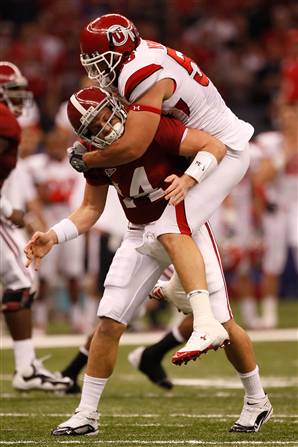
Utah Utes Alabama Crimson Tide Sugar Bowl

On a couple of occasions on this blog, I’ve argued in favor of an 8-team college football playoff system that uses the BCS bowls with their traditional conference tie-ins. While I still believe this would be the most viable solution to determine a national champion, I’m frankly getting completely sick of politicians trying to do anything with college football. Any sports fan that actually supports the federal government to get involved in this issue is completely insane. If there’s one system that’s guaranteed to be worse than the BCS today, it’s whatever convoluted format that Congress would come up with. Congressman Joe Barton needs to find a new issue to focus on, such as the economy, health care, or the multiple wars that our country is engaged in at this time. At the same time, the complaints from the bowl abolitionists such as the Mountain West Conference are getting as tired and worn out as Rachel Nichols’ campouts outside of Brett Favre’s Mississippi compound. The blind drumbeat that Utah was somehow disenfranchised last season has actually made me less sympathetic to the playoff issue since I wrote this post back in November largely supporting President Obama’s views on the matter. If you honestly can tell me that you would feel comfortable wagering your life savings that Utah would’ve beaten Florida, USC, Texas, and/or Oklahoma last season head-to-head, then you can go ahead and claim that the Utes deserved to be national champions. Otherwise, the fact that they went undefeated is irrelevant when compared to 1-loss teams from the much stronger SEC and Big 12. Besides, it’s incredulous to me that the Mountain West Conference and other fans are all of the sudden arguing how unfair the system is today even though the BCS expanded in 2006 to give the non-BCS conferences more opportunities to get into the top-level games and despite the fact those conferences bring very little of their own revenue (and definitely not many viewers as evidenced by the TV ratings) to the table. In the pre-BCS days, teams such as Boise State, Hawaii, and Utah would’ve never gotten a sniff of the Sugar Bowl and Fiesta Bowl, yet there were hardly any calls for a college football playoff prior to 1998 even though all bowls were completely about conference tie-ins and backroom deals.

Regardless, the college football playoff issue keeps coming back up like the Chinese water torture drip of baseball player names coming out from the 2003 steroid testing. The more that I investigate the issue, the more that I become convinced that even an 8-team playoff will never come to fruition (much less the extremely bad idea of a 16-team playoff). When the BCS bowls expanded to add a separate national championship game, thereby having 5 bowls with 10 participants, several things occurred.

First, it gave the non-BCS conferences a lot less incentive to push for a playoff. As stated before, those conferences were now getting access to revenue and bowls that they never did in the pre-BCS days, and that’s why all of those conferences opposed a playoff proposal in front of the BCS last week (except for the Mountain West, who submitted that proposal).  (Apparently, Senator Orrin Hatch didn’t realize that this automatic qualification existed for the non-BCS conferences in the Senate hearing on college football matters on Tuesday and actually openly speculated that this was some type of secret despite being published and written about everywhere.  This happens to be the Senator that called this hearing in the first place.  Once again, I don’t care how much you might hate the BCS – you don’t want these politicians anywhere near college football, particularly when you consider that Senator Hatch is relatively smart and thoughtful compared to the rest of that sorry lot.)  Therefore, those non-BCS conferences now have less incentive to mess with a system that they are now gaining revenue from (which they never would’ve had access to in the pre-BCS days).

Second, it clarified to the TV networks that the college football postseason is not like the NCAA Tournament. While the NCAA Tournament is partially about hyping Cinderellas in the first two rounds, the general public has shown year after year that it wants to sit down to watch the power teams in college football such as Florida, Texas, and Ohio State, even if they claim verbally that they want to see the Utahs and Boise States of the world. This is similar to when a lot of sports fans claimed to rejoice when neither the Red Sox nor Yankees were involved in the World Series last season, yet hardly any of those sports fans bothered to subsequently watch that World Series and drove the event to its worst ratings in history. Ever since the major conference realignments in the ACC and Big East that became effective in 2005, the only BCS bowl games other than the national championship games to have garnered over a 10.0 TV rating have all involved Big Ten schools (see historic data and this past year’s numbers). Meanwhile, the Boise State-Oklahoma 2006 Fiesta Bowl overtime classic that lots of non-BCS school proponents love to point out got trounced in the ratings that season by blowouts in the USC-Michigan Rose Bowl and LSU-Notre Dame Sugar Bowl. When ESPN, Fox, or some other network pays for sports rights, it cares about what people actually “do” as opposed to what they “say”, and what people keep doing is watch power programs in the major bowl games while ignoring the less sexy match-ups.

Third, the BCS expansion has better allowed the various bowls to retain their traditional tie-ins more often than not even if they lose a conference partner to the national championship game. The Rose Bowl has been getting its desired Big Ten-Pac-10 matchup even though Ohio State went to the national championship game 2 seasons in a row, while the Sugar Bowl has been able to always pick an SEC team despite the conference having sent its champ to the BCS title game for the past three seasons. This is an important point, particularly for the Rose Bowl, in terms of retaining the historical matchups that these bowls provide.

Finally, the Big Ten, SEC, and Big 12 have consistently established themselves as conferences that will almost always send 2 teams each to BCS bowls. Those conferences have teams from top-to-bottom with fan bases that both travel en masse to bowl games and bring in TV ratings. As a result, those conferences received even more benefits from the current BCS system since they are consistently receiving second BCS bowl game revenue shares to split among its members. Schools with horrific football histories such as Indiana, Vanderbilt, and Baylor now take in more bowl game revenue on a year-to-year basis than USC and Notre Dame. So, those 3 conferences aren’t ever going to vote for a system that would reduce their chances of sending 2 teams to the BCS.

The upshot is that even though the general perception is that a college football playoff would be a no-brainer money-maker, the fact is that the BCS conferences, TV networks, bowls, and even the non-BCS conferences actually don’t have much incentive to radically change the system that is in place today.  Team Speed Kills put together an excellent economic analysis of why it wouldn’t be financially rational for the BCS conference to alter the system (and this is coming from someone else that is on record as a playoff supporter).  This means that every sports fan out there needs to stop wasting their breath on advocating scrapping the whole system. You’ll see Sammy Sosa in the Baseball Hall of Fame before that happens.

However, we can still improve upon what we have now for everyone involved by implementing a plus-one model. For the uninitiated, the plus-one model consists of the BCS bowls all being played, having the national championship matchup being determined thereafter, and then a separate title game subsequently being played. I know that I have previously criticized the prospect of a plus-one as simply pushing off a #1 vs. #2 decision from December to January, but I’ve come around to it as a reasonable, if imperfect, alternative to today’s system. Here is how I would envision it working taking into account all of the financial and historical realities that are in place (which way too many fans either ignore or dismiss):

  1. The BCS would add the Cotton Bowl as a true 5th bowl game. As previously noted, there needs to be 10 total participants in order to maximize the opportunities for both the non-BCS conferences (to obtain single bids) and the largest power conferences (to obtain multiple bids).
  2. The BCS bowls will always have their traditional conference tie-ins. I know that this is anathema to a lot of fans that want to see straight seeding (or at least the top 4 teams seeded in a de facto 4-team playoff), but whether you agree with it or not, the Big Ten and Pac-10 aren’t going to give up the Rose Bowl. If the Cotton Bowl is added as a 5th BCS game, it would take the Big 12 champ if it’s from the Big 12 South (meaning any of the Texas or Oklahoma schools) while the Fiesta Bowl gets that conference tie-in if a Big 12 North team qualifies. This makes the most sense from both a historical (old Southwestern Conference connection with the Cotton and the Big 12 South schools) and traveling fan base perspective (Midwestern schools in the Big 12 North such as Nebraska and Missouri prefer going to Phoenix over Dallas). After that, the bowl of those two that doesn’t get the Big 12 auto bid gets the first pick of at-large teams using the same BCS ranking qualifications that are in place today (i.e. teams in the top 14 are eligible, top non-BCS conference school on top 12 must be picked by someone, a maximum of 2 teams can be picked from any one conference, etc.). After that, the bowls with open at-large spots will make selections from the BCS eligible pool in reverse order of the BCS rankings of the the teams that are already locked into those bowls. For example, the Orange Bowl had the lowest ranked team automatically committed to its game last year (#19 Virginia Tech as the ACC champ), so it would have been next in line with its selection, and so forth. This would be the mechanism to get as even of a distribution of teams across the bowls as possible (except that the Rose Bowl gets the Big Ten and Pac-10 champs no matter what). So, last year’s bowl matchups would’ve ended up like this (with BCS rankings after the regular season):Rose Bowl: #5 USC (Pac-10 champ) vs. #8 Penn State (Big Ten champ)

    Cotton Bowl: #1 Oklahoma (Big 12 champ) vs. #12 Cincinnati (Big East champ/6th at-large)

    Sugar Bowl: #2 Florida (SEC champ) vs. #6 Utah (non-BCS automatic qualifier/5th at-large)

    Fiesta Bowl: #3 Texas (1st at-large since Cotton got Big 12 champ) vs. #10 Ohio State (3rd at-large)

    Orange Bowl: #19 Virginia Tech (ACC champ) vs. #4 Alabama (2nd at-large)

  3. The day after the last BCS bowl is played, another set of BCS rankings will come out to determine the national championship matchup.  The title game will then be played on an open date thereafter (third Monday in January or one week before the Super Bowl).

Obviously, there’s still the prospect of controversy surrounding those final BCS rankings.  However, at least the outcomes of the BCS bowls provide some important information, such as whether a team such as Utah could handle Florida.  All of the catcalls about Utah last season were with the benefit of 20/20 hindsight after it beat Alabama in the Sugar Bowl.  Up to that point, reasonable college football fans wouldn’t have put Utah in the top 2 teams in the country, so it’s a bit disingenuous to state that they should’ve been in the national championship game based on the information that people had as of the final BCS rankings.  If the Utes were able to beat Florida in a plus-one system, though, then they would have had the marquee win necessary to have legitimately been in the championship discussion before the national title game (as opposed to after it).  Meanwhile, all of the BCS bowls become relevant to the national championship race as opposed to being glorified consolation prizes.  This is a throwback to the pre-BCS days when the first day of the year was one of the best sports days of the year.  The regular season also continues to have much more impact under the plus-one model.  Indeed, this is the biggest advantage of the plus-one system over any form of a playoff and why I’ve warmed up much more to the prospect of the idea.  We lose key historical moments like last year’s SEC championship game, the crazy last day of the 2007 regular season, and the 2006 Ohio State-Michigan game if all of those games become merely seeding exercises for a playoff.

So, the unseeded plus-one system is an option that the BCS conferences actually have a rational economic incentive to put into place.  Whether this could ever be put into place is obviously the continuing dilemma.

(Image from MSNBC.com)
Frank the Tank’s Slant on Twitter

I apologize for the lack of blog posts over the past month as my family and work obligations have been impeding on my ability to write pithy comments about the Bulls’ obsessive need to draft more tweener forwards.  (That being said, I haven’t really missed writing about the White Sox and the general awfulness of Chicago baseball this summer.)  The full-length posts will soon return, but in the meantime, feel free to follow Frank the Tank’s Slant on Twitter as I’m more able to squeeze in some 140 character thoughts these days with my new iPhone.  This is a public page (so you can read my musings regardless of whether you have a Twitter account or not) where the types of content will essentially mirror what’s seen on the blog (meaning that I won’t be boring you with inane details about the contents of my cat’s lunch even though I might find such Tweets personally amusing) – microblogging, as the digerati like to say.  So, check out the Tweets and have a great Fourth of July weekend!

Remembering the Worst Call in the History of Sports

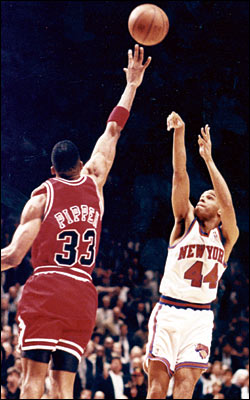
Scottie Pippen Hue Hollins Hubert Davis Foul

With all of the issues with NBA officiating these days, J.A. Adande and ESPN.com just had to rip off a longtime scab with this 15th anniversary retrospective of the worst officiating call I have ever witnessed in any sport (notwithstanding the claims of Blackhawks coach Joel Quenneville) and it happened to come against one of my teams: the phantom foul call by Hue Hollins on Scottie Pippen, who as you can see from the picture above was about 80 feet away on the other side of the court from Hubert Davis.   I will go to my grave believing that the 1994 Bulls without Michael Jordan would have at least made it to the NBA Finals if not for that inexcusable call.  The fact that this loss was to the archrival Knicks made it all the more infuriating.  Psychologists believe that our brains essentially lock in the traumatic moments in our lives where we can recall every single vivid detail around them many years later, which would explain why I start immediately ranting about how far away Pippen was from Davis on that play every time that this story gets brought up (such as today).  Just don’t get me started on the 2000 Illinois-Michigan game.

(Image from NBA.com)

If the Lions Are On the Clock, It Must Be NFL Draft Day

joey-harrington-matt-millen-detroit-lions-nfl-draft

A couple of quick thoughts on today’s NFL Draft:

(1) With the Bulls and Blackhawks in the playoffs, both the White Sox and Cubs not yet knocked out of the postseason race two weeks into the baseball season, and the fact that the Bears essentially have had their draft already with the Jay Cutler trade, it’s been nice to not have to deal with several weeks of babble of who the Bears will take in the NFL Draft.  In past years, the Chicago sports media would have been in all-draft mode for days on end with supposed life or death questions of the Bears’ future.  Sure, the Bears still need an arsenal of wide receivers for Jay Cutler to actually throw to and I’m very interested to see where various Illini players such as Vontae Davis will end up, yet these concerns pale in comparison to everything else that’s happening on the Chicago sports scene.  Don’t get me wrong – I enjoy draft talk as much as anyone, but I really love watching my favorite NBA team being competitive in the playoffs (notwithstanding this past Thursday evening) a whole lot more.  It’s great to have actual games on the field dominate the sports discussion in Chicago in April as opposed to the war room at Halas Hall.

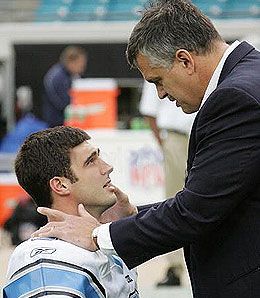
(2) The NFL has compounded its mistake of moving the draft start time from its long-time slot at 11:00 am CT on the first day to 2:00 pm CT last year by pushing this year’s start time back another hour to 3:00 pm CT.  I understand that this move was made to draw in more viewers in prime time.  However, it takes away a lot of the allure of the NFL Draft as a television event in the first place.  To me, it’s a perfect “have the TV on in the background event” and an excuse to get together with your buddies to hang out for a whole morning and afternoon in a low-key manner while you invent creations such as bacon tacos (as Minneapolis Red Sox and I did the year that the Vikings forgot to get their draft pick in on time).  However, it’s far from a prime time edge-of-your-seat event (particularly when playoff basketball and hockey games are alternative options).  So, instead of the draft having already started in the late morning as a write this post, ESPN and ESPN News are in the midst of an 8-hour marathon of punditry (featuring the legendary hair of Mel Kiper, Jr.) on draft prospects, even though the world already knows that Matthew Stafford of Georgia is going to be picked first by the Detroit Lions.  (Let’s see if that pick works better than, well, every Lions pick since Barry Sanders.)  The NFL had a great all-day format for the draft, but its belief that this is somehow a compelling prime time event is misguided and, as a result, this will be the second year in a row where I’ll watch little, if any, of what was once one of my favorite not-on-the-field sports events of the year (next to NCAA Tournament Selection Sunday, the NBA Draft, and the NBA Draft Lottery) as someone that has always wanted to run a sports team.

(Image from The Nasty Boys)

Unclear Bandwagon Status

blackhawks-flames-2009-stanley-cup-playoffs-game-1

I’ve always considered myself to be a complete purist when it comes to my sports fandom.  As much as Bill Simmons can be insufferable these days, his column on “The Rules For Being a True Fan” from earlier this decade is a classic and still holds up today.  I grew up on the South Side of Chicago, so I’m a die-hard fan of the White Sox, Bears, and Bulls.  When I went to the University of Illinois for my undergraduate years, the Illini became my college team forever.  I’m a huge believer in steering clear of sports bigamy or shenanigans with adopting popular teams in different markets just because they happen to be dominant or have players that date supermodels and music stars (i.e. Cowboys and Yankees back in the ’90s or any of the Boston teams today).  The only acceptable exception would be some direct family connection – for instance, if I had to move to, say, New York, I would insist that my future kids be raised as Chicago sports fans.

This also means that I have very little tolerance for bandwagon fans.  While I believe that Chicago has the best sports fans in the country (only Boston, Philadelphia, and Detroit fans can be allowed to debate this), there is also an unfortunately long history of bandwagoneering in this town.  The ’85 Bears, the Bulls dynasty of the ’90s, the ’05 White Sox, and every Cubs team that has finished above .500 have all drawn out the pink hat crowd in massive numbers.  These people took a sudden interest in these teams right when they were on the ascent without having had to endure the blood, sweat, and tears of missed expectations and painful losses.  Maybe that’s acceptable in places such as Los Angeles and Miami, but it’s infuriating to witness this happening in the legit sports towns like Chicago and Boston.

Having said that, I wonder if I’m being a complete hypocrite on this issue with respect to the Blackhawks.  For reasons that I’ve stated elsewhere, I never became anything more than a casual hockey fan.  While I absolutely love seeing the game live (making it a point to go to at least a game or two per year) and own a Blackhawks hockey sweater (which is my favorite sports jersey since it’s the only one that I can wear that doesn’t make me look like a complete tool), the combination of the half century of ineptitude of the Bill Wirtz regime and the fact that I have the ice skating skills of a Brachiosaurus means that I never cared about the Hawks in the same way as the teams that I listed in the first paragraph of this post.

The number of hockey games that I watched this past regular season is one-and-a-half: about half of the Blackhawks-Red Wings Winter Classic game at Wrigley Field (as I flipped between that game and the college football bowls going on at the same time) and then a Hawks-Kings game that I attended in person.  I know a handful of guys that are on the team: budding young stars in Patrick Kane and Jonathan Toews, Martin Havlat, and Nikolai Khabibulin (who, as the “Bulin Wall”,  was my lockdown goalie with the Phoenix Coyotes in marathon sessions of EA Sports NHL ’98 back in college).  The last time that I watched a hockey game that didn’t involve the Hawks was the 1999 Stanley Cup Finals when the Stars beat the Sabres on the controversial Brett Hull goal (where he may or may not have been in the crease) in overtime.

Yet, I’ve been juggling my schedule to watch the Blackhawks’ playoff games, as hockey this late in the year has been a rare occurrence over the past decade.  Thursday’s win over Calgary with Havlat scoring the game winner with 16 seconds into overtime was thrilling in terms of action and spurred me to look forward Saturday’s game (which turned out to be another win against the Flames to go up 2-0 in the series).

What I’m trying to figure out is if I actually start following the Hawks with some semblance of regularity, particularly if the team has a successful run in this year’s playoffs, would I be one of those bandwagon-jumpers that I despise?  Granted, I think that a lot of my contemporaries in Chicago are in a similar position as me since the late Bill Wirtz did everything possible to destroy the franchise’s fan base with bass-ackwards TV and marketing policies along with a reputation of throwing nickels like manhole covers (as Mike Ditka once said of George Halas) in terms of payroll.  With son Rocky in charge, it’s as if though Chicago received a completely new NHL franchise with a fresh start.  Still, I don’t want to be one of those guys that just hops onto a shooting star when it’s the easy thing to do.  That would be an injustice to the Hawks fans that still bought season tickets even when the United Center was barely half full (such as a mere 2 years ago, when I went to a Hawks-Red Wings game with Danny M and it was at about 2/3 capacity, with 3/4 of those people being Detroit fans).

Realistically, the Blackhawks will likely always be a team that I want to win (similar to my attitude toward the basketball team at my law school alma mater of DePaul), but never reach a level in my heart where I would be a die hard fan.  In contrast, earlier in the day on Saturday, I was screaming at the television for a solid three hours during the Bulls-Celtics game.  (It should be no surprise to you that my continuing man crush on Derrick Rose has been sent into the stratosphere.)  That type of emotional investment didn’t occur overnight or even over the course of a year or two – it was built up over nearly three decades of watching and growing up with the Bulls.  By the time the Blackhawks could catch up to that timeframe, I’ll be starting to take withdrawls from my 401(k) and hopefully be spending my winters in a place with a beach and palm trees.  (As a side note, I’m not foolish enough to believe that anyone in my generation will ever actually be able cash a  Social Security check.)  Plus, I’m not sure how much longer my wife would want to be around me if I started watching hockey on top of all of the basketball and football that I follow during the fall and winter months.  Thus, I envision myself being the hockey equivalent of the people that I wrote about a couple of weeks ago that don’t watch college basketball all year but then rabidly follow the NCAA Tournament, where my interest in the sport is pretty much limited to the Stanley Cup Playoffs.  My promise is that I will cheer for the Blackhawks, but do everything in my power to not fall into the traps of the typical bandwagon fan (i.e. using the royal “we” when talking about the team’s performance).  If I still get called a bandwagon jumper in this instance, I’ll just have to suffer the consequences when I get judged by the sports gods.

(Image from Chicago Tribune)

When the NCAA Tournament Becomes Less Fun

chester-frazier-illinois-fighting-illini

There are essentially three types of people that watch the NCAA Tournament. The first set of people consists of the ones that don’t pay attention to college basketball the entire season but then rabidly fill out brackets at work and get engrossed by the tournament. Just like how most Americans don’t watch an iota of swimming or track and field except for two weeks every four years during the Olympics, these people don’t know the existence of college basketball other than for three weeks in March every year. There’s certainly nothing wrong with these short-term basketball watchers (as many of them are some of my best friends and I don’t mind dishing out well-intentioned gambling advice on Selection Sunday that invariably turns out to be wrong), but they are able to approach the NCAA Tournament purely as an entertaining reality television event in the same manner as American Idol and thus aren’t invested in its outcome in an emotional sense (it might be a different story financially).

Then, there’s the second set of people that are fans and alums of schools where simply making the NCAA Tournament is the end goal. These could be teams from tiny conferences whose only time in the national limelight every year is to get smashed by a #1 seed in the first round (for example, despite my continuing interest in studying the locations and conferences of every possible college out there, I have to admit that this year was the first time in my life that I had ever heard of play-in game winner Morehead State) or schools from large conferences that are largely devoid of any basketball success (I’m looking at you, Northwestern). While these fans have some more emotional investment in the tournament than the first set described above, they also can walk away from their respective teams’ losses with the comfort of knowing that they were playing the role of the proverbial Cinderella and thus look back at the tourney experience itself with some fond memories.

Finally, there’s the third set of fans and alums that are from schools where the NCAA Tournament is an expectation as opposed to an aspiration and satisfaction doesn’t come unless there’s at least a Final Four appearance and ultimately a national championship banner. While these people may participate in brackets and other gambling pools as much or more than anyone else (I’m looking at myself in the mirror), there’s also a sense of dejection and emptiness when your team loses that is a bit harsher than any other sport because everyone else around you that’s emotionally detached from the situation is still partying up and enjoying the tourney (especially in the first two rounds when games are constantly going on). The best comparable situation is the feeling of watching your favorite football team play the Super Bowl (the main sports event other than the NCAA Tournament that draws in a disproportionate number of non-sports fans) and they are getting killed on the field (or, in my case, Rex Grossman is chucking deep balls into triple coverage) – 99% of America is having a great time downing beer, nachos, and pizza at parties, while you’re part of that 1% that is swearing unmercifully at the television screen and questioning why you ever started watching sports. That’s what it feels like if you’re a fan of a basketball program that’s expected to actually advance in the NCAA Tournament and they end up losing, with the crucial difference being that your favorite NFL team probably doesn’t make the Super Bowl very often (if ever), so that lonely feeling is rarely or never experienced (except for those poor Buffalo Bills fans of the 1990s – how cruel is it for those people to now have the NFL openly nudge that franchise toward Toronto), while a fan of a top tier basketball school has to deal with this type of loss in the midst of a national party nearly every single year.

You have probably figured out that I’m in the third set of NCAA Tournament watchers. When Illinois lost in the 2005 National Championship Game to North Carolina, I couldn’t even watch that season’s “One Shining Moment” montage for several months (and I’m telling you in all seriousness that I hadn’t missed a “One Shining Moment” film since I was cognizant of the existence of the NCAA Tournament as a young child – this was like me ignoring Christmas for a year or not bringing up the John Tesh’s Roundball Rock and the 1990s NBA on NBC intros at every available opportunity on this blog). The pain from that day was so horrid for Illini fans that it was even encapsulated in a Nike Jumpman commercial that’s been running during this year’s tournament.

So, why would anyone be willing to deal with the type of constant dejection that I just described? The reason is that this emotional investment has a pay-off unlike any other in sports when it all goes right. When your team is on the winning end of one of those crazy games or buzzer-beaters and you see your school’s jersey in the “One Shining Moment” montage, it’s a direct connection that doesn’t quite exist to the same extent in other realms. Any person can wake up and decide to cheer for the Bears, Packers, White Sox, or Cubs, but there are only a finite number of people in the world that attended the University of Illinois, so there’s a certain sense of ownership when the Illini come through. I’ve been blessed enough to witness all three of my favorite pro sports teams – the Bears, Bulls, and White Sox – win world championships in my lifetime in dramatic fashion, but there’s only one sporting event that is on both of the DVRs in my house so that I can watch it at any moment on any TV: the 2005 NCAA Tournament Chicago Regional Final. The 15-point comeback by Illinois in the last 4 minutes of that game against Arizona was the most exhilarating experience that I’ve ever had (and probably ever will have) as a sports fan (even more than Michael Jordan’s brilliance in the last 41 seconds of the 1998 NBA Finals, which is a reel that I’ll show my future children over-and-over again as to how a perfect basketball player can take over a game by using explosiveness to drive to the rim to make an easy lay-up, come back down the floor and use defensive intelligence and anticipation to straight-out strip the ball from arguably the greatest power forward in the history of the game, and then dribble right back the other way and nail the iconic jumper in textbook form from the top of the key to win the NBA title – I have broken down those final 41 seconds more than Oliver Stone has watched the Zapruder film, yet it’s still just behind the 2005 Illini comeback as my favorite sports moment) where I honestly didn’t sleep that evening from shaking so much and how excited I was that we had made the Final Four in a way that it would be shown on ESPN Classic in perpetuity.

This year’s Illini squad obviously didn’t have anywhere close to the expectations as the 2005 team that made it to the national title game. In fact, Seth Davis pronounced Western Kentucky as the winner of the first round matchup between them and Illinois before the South Region bracket was even fully announced on Selection Sunday. It didn’t surprise me that Davis would engage in his typical Duke-baggery prognostications, but it REALLY irritated me when essentially every pundit in the country (other than Erin Andrews, who I will say is the only pundit that matters) also picked WKU and its nightmare fuel of a mascot. While it was certainly understandable that this would be a somewhat trendy 12-over-5 upset pick, I felt as if though Illinois was getting slammed for its high profile 33-point clunker against Penn State in February, yet no one was giving the Illini credit for hammering fashionable pick (and eventual Elite Eight participant) Missouri by 26 points (and the game wasn’t even that close – it would have been a 40-point spread if Bruce Weber hadn’t called off the dogs) on a neutral floor in the Braggin’ Rights Game, soundly beating another fashionable pick (and eventual Sweet Sixteen participant) in Purdue both at home and on the road, and finishing in second place in a resurgent (if not quite great) Big Ten. Bruce Weber picked up on this national media swarm, as well, and I thought for sure that Illinois would come in with the “nobody believed in us” card and frothing at the chance to kick Cinderella to the curb.

Alas, the national media turned out to be correct on this one, although I firmly believe that it was because Illinois played its worst game of the season (outside of the aforementioned Penn State game) as opposed to Western Kentucky’s play (which was spotty other than two separate two-minute spurts where they couldn’t miss from the three-point arc). I thought that we would miss the presence of Chester Frazier to a certain extent, but the way that we were able to handle a run-and-gun Michigan team (another trendy pick at the beginning of the tournament that was able to win its first round game) a week prior to that on a neutral floor in the Big Ten Tournament gave me a bit more confidence that we could at least get through the first round without him. (I must say that Frazier turned into one of my favorite Illini players of all-time and wish that he could get a fifth year of eligibility.  He endured such unfair criticism and catcalls last season from the Assembly Hall home crowd when he was thrust into a role he should never have been in when the Eric Gordon situation went down, yet he didn’t complain and came right back to solidify himself as the heart and soul of this team this season.  By the end, Illini fans couldn’t imagine this team without his leadership and defensive intensity as he played through.  While Frazier will never be in the discussion as one the best Illinois players in history from a pure talent standpoint, he may very well be the toughest.)  Of course, this is why I write this blog for free as opposed to being paid as a coach that supposedly knows what the hell he is talking about. After I was ready to swear off the team when it was down 17 points with four minutes left to go, Illinois charged back to within a possession provide me with some thoughts that this could be another 2005-like comeback that would live on in Illini history. However, it was the old “too little, too late” story, where the Hilltoppers hung on to win a sloppy game. As most others in the bar where I was watching the game were merrily finishing up their drinks and wings after a marathon opening day of the NCAA Tournament, TK, the other Illini fans in attendance, and I sat around wondering how this team could have come out so flat after talking about all week how they weren’t being respected.

Now, I’ll be the first to say that back in October, I didn’t think Illinois would even get a sniff of the NIT this season, much less the NCAA Tournament. So, logic should have put me and the rest of Illini Nation into the second set of fans this year, where we should have been just happy to be invited to the dance. However, while Illini fans were pretty realistic for the most part about the limitations of this year’s team, there’s a residual bad taste in the collective mouth for having ended the season on a downswing. At the same time, I’m not sure if there’s any fan base in the country that has a dying need to win the National Championship more than us. Illinois is almost always at or near the top of discussions of “the best programs that have never won the National Championship”, which is a dubious distinction that we want erased as soon as possible. We came about as close as you can get to the pinnacle without having actually reached it in 2005, so every entry in the NCAA Tournament that doesn’t end up at that pinnacle is another opportunity lost.

Still, the beauty of college sports is that players don’t get signed to 10-year $200 million contracts unless they attend Florida State or UConn. New blood turns into new hope, where Bruce Weber appears to have reversed his prior recruiting issues and secured elite classes for the next couple of years. At the same time, current sophomores Demetri McCamey, Mike Davis, and Mike Tisdale showed a great deal of improvement this season and will all be returning, and hopefully Alex Legion will be able to live up to his hype once he’s able to spend a full season with the team.  All of this means that expectations in Champaign are going to be ramped up more than ever when Midnight Madness comes around in October, which in turn leads to even greater scrutiny next March. We just ask that there will be one year in our lifetimes where we actually get to celebrate on the first Monday in April.

(Image from Chicago Tribune)

The Linear Regression of Big Ten Basketball

Wisconsin Northwestern Basketball

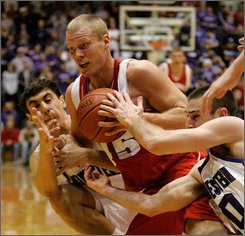
The regular readers of this blog know that I’m the consummate Big Ten guy.  On the football side, I’ve been quick to point out that the Big Ten’s recent problems in BCS bowl games are more due to having to play USC and SEC teams on their respective home turfs than anything about the quality of the conference overall.  However, there’s only so much that I can defend the state of Big Ten basketball.  Somehow, the conference enters into the week of the Big Ten Tournament with a legitimate chance to send 8 teams to the NCAA Tournament since each of its 5 bubble teams have solid numbers and key victories on paper.  (Northwestern still has an outside chance for a potential 9th Big Ten bid, but put itself on death’s door with a loss in a winnable game at Ohio State yesterday.)  While this could indicate to the naked eye that the conference has strong depth overall, it’s masking the fact that the level of play is simply not up to snuff compared to the Big East and ACC.  Michigan State has the only reasonable chance of making the Final Four out of the Big Ten this year.  Purdue and Illinois might get to the Sweet Sixteen if everything falls into place.  Everyone else, though, has been the beneficiary of beating each other up as good-but-not-great teams that make the RPI and other computer numbers seem strong even though anyone that has been watching the games would know otherwise.  The Illinois-Penn State game in Champaign on February 19th, with a 39-33 final score in favor of the Nittany Lions, was the single worst sporting event involved people purported to be upper level athletes I have ever witnessed in my entire lifetime.  (I’ll spare you any comments on the choke job the Illini performed in the second tilt between those two teams in State College last week in order to avoid beating my computer with the house-full of bricks put up by Illinois in the last 5 minutes of that game.)  That game wasn’t the mark of two good defensive teams.  Instead, it was the result of two horrific offenses.

In fact, Loren Tate wrote a column a couple of weeks ago indicating the difficulty that the Big Ten has had in attracting top-level recruits.  This is not a suprise whatsoever, as better athletes these days seem to enjoy playing in systems that emphasize running offensive schemes that would make Mike D’Antoni quiver in delight.  Conferences usually adapt to the styles of play of the teams that have had the most consistent success.  In the ACC, that means that schools have emulated Duke and UNC, which run extremely fast-paced offenses.  The same has occurred in the Big East, where teams have loaded up to keep pace with UConn.  It’s no wonder that those two conferences have been filling up the top ten all season since the styles of play in those leagues are being dictated by teams that are perennially Final Four contenders.

Meanwhile, the Big Ten’s style of play seems to have been dictated by Wisconsin, with its emphasis on using nearly all of the shot clock on offense.  Penn State, Northwestern, Iowa, and Minnesota also have emloy deliberate offensive sets, which means that nearly half of the conference is in slow-down mode.  Certainly, it has been admirable that Bo Ryan has been able to produce a consistently winning program while using middle tier recruits from places like Waukesha and Eau Claire.  However, this isn’t a great trend for the conference overall since Wisconsin is the classic “always-very-competitive-but-rarely-great” type of team that attains a gaudy regular season record and then gets rolled over by a superior athletic team in the NCAA Tournament.  Today’s superstar high school players might not have cared 10 or 20 years ago about this (i.e. the old saying that Dean Smith was the only person that could hold Michael Jordan to under 20 points per game), but it’s evident that they certainly do today.  As Tate points out in his column, not a single one of the 24 of this year’s McDonald’s All-Americans will attend a Big Ten school.  In contrast, North Carolina will enroll 4 alone, while Duke adds 2.  While some college basketball fans may scoff at how the McDonald’s All-Americans are chosen or say that they don’t really matter, history says otherwise.  The last Big Ten team that made it to the national championship game was the 2007 Ohio State team that boasted 4 McDonald’s All-Americans (Greg Oden, Mike Conley, Daequan Cook, and Ivan Harris).  The 2005 Illini team had Dee Brown as a McDonald’s All-American along with Deron Williams and Luther Head being top-rated recruits.

I’m not arguing against the old adage that defense wins championships.  Clearly, a team needs to be a solid defensive team in order to win the national championship.  However, at the college level, it appears that having a great offense and a good defense is the winning combination (while an NBA team is better off with a great defense and a good offense).  At the same time, athletic ability means more in terms of winning at the very top level of basketball compared to any other sport.  As a result, the Big Ten’s relevance is going to depend upon attracting the best athletes over the long term.  Hopefully, the highly-rated recruiting classes anticipated to be coming in for Illinois and Ohio State over the next couple of years (along with the jack-up-threes-at-will John Beilein sets at Michigan) will turn the Big Ten away from the Wisconsin-style of play and into a league that has more open court offenses that will be more attractive to the nation’s top-level players.

(Image from USA Today)

Frank the Tank’s Super Bowl XLIII Parlay

71465420MS005_Arizona_Cardi

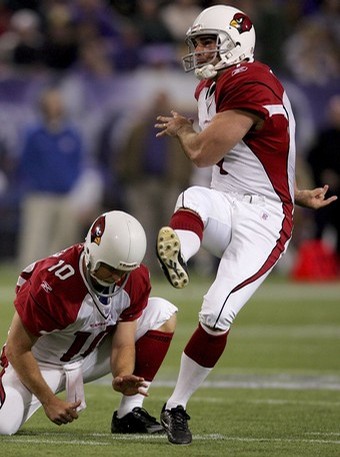
As much as I’d love to pick the Cardinals in Super Bowl XLIII solely because they feature the long snapper/placekicker combo from my college days (which goes to show you how little performance in college really matters in terms of predicting success at the pro level –  my undergraduate time in Champaign coincided with the worst four year stretch in Illini football history, including a one win season that was followed up by a winless season, yet the special teams tandem from that team are playing together for a chance at the world championship), I simply have to believe that Mike Tomlin is going to do what the Eagles should have done two weeks ago and make sure that Larry Fitgerald is covered by at least two men at all times without exception.  If Philly had used its second half zone defense for the entire length of the NFC Championship (instead of allowing three first half touchdowns by Fitzgerald), we would be looking at an all-Pennsylvania Super Bowl.  The bottom line is that Pittsburgh has proven from the the beginning of the season until now that it is one of the best defenses ever to play in the Super Bowl, particularly considering how much scoring is up this season.  I have faith that they will find a way to shut down Fitzgerald and, ergo, the Arizona offense in general.  At the same time, I have noticed that most of Vegas has dropped the line on the game from the Steelers being a 7-point favorite to only 6.5, which must mean that way too much money is flowing in Arizona’s direction right now.  I’ll take my chances betting against the rest of America here (and in favor of the house).  Since a single pick does not make a parlay, here’s a whole slew of sports predictions for Super Bowl Sunday (home teams in CAPS, if applicable, and all prop bets are actually offered in Vegas):

  • Pittsburgh Steelers (-6.5) over Arizona Cardinals
  • Under 46.5 combined points for the Super Bowl
  • ILLINOIS FIGHTING ILLINI (-11.5) over Iowa Hawkeyes
  • LeBron James rebounds and assists (+5.5) over Arizona Cardinals points (-5.5)
  • Anquan Boldin receiving yards (+14.5) over Michigan State Spartans points (-14.5)
  • Highest scoring quarter by Steelers and Cardinals (+1.5) over Paul Pierce points (-1.5)
  • Under 38.5 for the jersey number of player to score the first touchdown

If I were anywhere near the Strip this weekend, I would be hammering those Super Bowl/basketball combo prop bets.  The long-promised Bulls midseason rant is forthcoming (it’s just going to end up being an extremely long piece).  In the meantime, enjoy the Super Bowl!

Frank the Tank’s NFL Football Parlay Record
Conference Championship Games: 1-1
Playoffs Overall: 6-3
Bears Games for the Season: 3-10-1
Overall Season: 27-25-3

(Image from Daylife)

Illinois and Northwestern at Wrigley? A Discussion of Illini Football Scheduling

wrigley-field-chicago-bears-football

Believe it or not (because I’m a dork), I had been thinking over the past few weeks that a neutral site game at Soldier Field between Illinois and Northwestern would be a very positive option for the U of I football program when the Big Ten moves its final regular season games to Thanksgiving weekend starting next season (as opposed to the traditional slot of the week prior to Thanksgiving).  The main issue is that Illinois hosts the state high school football championships every year on Thanksgiving weekend at Memorial Stadium, which is an event that the athletic department doesn’t want to give up since it amounts to a campus visit to Champaign for many top in-state recruits without having to count against NCAA recruiting limits.  As a result, a great way to solve this problem is to move the Illinois-Northwestern game to a neutral site in Chicago.  The majority of Illinois students live in the Chicago area and are more likely to be home than down on campus in the first place, while also providing the school’s Chicagoland alumni an opportunity to watch the team close by every year.

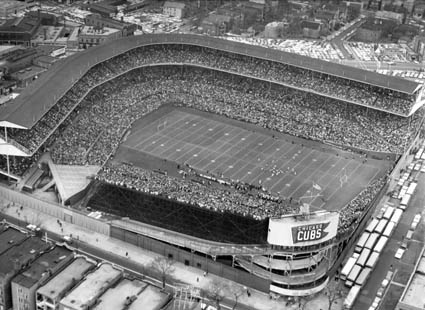
Lo and behold, the front page of Saturday’s Chicago Tribune sports section splashed an article of Northwestern’s investigation of moving a game against Illinois to Wrigley Field on the heels of the success of the NHL Winter Classic.  Wrigley Field actually has a whole lot more football history than hockey as the long-time former home of the Bears from the franchise’s first season in Chicago in 1921 until 1970.  (On a side note, an oft-forgotten part of Chicago sports history was on prominent display this past weekend with the Arizona Cardinals reaching the Super Bowl, which brought up a multitude of references to the franchise’s last NFL championship in 1947 as a Chicago-based team that played at old Comiskey Park.  With the Bears having been the clear #1 team in Chicago in terms of year-in year-out fan support for quite awhile, as alluded to in this great commercial, it’s easy to forget that the old-time football fans in town lived through a time when the Bears-Cardinals rivalry mirrored the Cubs-White Sox split between the North and South Sides of the city.)

It turns out that this is purely a proposal by Northwestern to move a home game from Ryan Field at this point and it has been confirmed that the Evanston school doesn’t need the permission of Illinois to move forward.  Seeing that Illinois wouldn’t be giving up a home game in Champaign, there would likely be an incredible amount of national press coverage by playing at Wrigley, and this would likely turn what is already a “mild” road game (since the Illini usually bring a large contingent of fans to Evanston when they play there) into a neutral site game or even a real home field advantage (considering that I felt like I was back on Green Street with the number of people I ran into in Wrigleyville every weekend for the first couple of years that I was out of college), this is a fantastic opportunity for the program without having any risk.

There are a few items that would need to be cleared if Illinois were ever to agree to a permanent annual neutral site game in Chicago as opposed to just a one-time deal, though.  First and foremost, above all else, and most importantly (I can’t throw in enough emphasis on this point), the Illinois football program MUST have seven home games in Champaign every year before it should consider any type of neutral site game.  Seven home games is now the standard for any BCS program that wants to maximize its revenue and even more imperative for Illinois, which has just finished a massive renovation of Memorial Stadium.  Of course, Ron Guenther appeared to forget about this when he agreed to the series against Missouri at the Edward Jones Dome in St. Louis while at the same time scheduling home-and-home series against non-BCS teams.  The St. Louis games have been fine to get the border rivalry on the radar on the football side, but after a few years into the series, the neutral location is best left to the basketball side alone with the Braggin’ Rights Game.  (From a financial perspective, giving up a home basketball game has nowhere near the same impact as moving a home football game, while the Illinois-Mizzou basketball tilt is engrained as a St. Louis holiday tradition in a way that the football game probably never will be.)  Missouri would be great to keep on the schedule, yet it should be home-and-home.  The non-conference schedule after that should be filled out with three body bag home games against an assortment of MAC and Division I-AA opponents.  This is the modus operandi of essentially every power program in the country (one marquee non-conference game and then three home games against non-BCS opponents), so it would be in the best interests of Illinois to follow suit to keep up with its peers (or, more to the point, the programs that we aspire to be considered peers with).

Now, it could be argued that the Mizzou game could be kept in St. Louis with three non-conference body bag home games while the Northwestern series would continue home-and-home as it has for a century.  However, it would seem to me that it would be much more important for Illinois to have an annual presence in the Chicago market over St. Louis for numerous reasons.  I’ve already noted that the majority of U of I students and alums live in Chicagoland and even more significant is the fact that securing a place as the virtual home team in the nation’s third largest media market for marketing and recruiting purposes ought to be a no-brainer priority over the much smaller St. Louis market if it comes down to a choice between one or the other.

Finally, a one-time game at Wrigley Field is perfectly fine as a novelty for press coverage.  However, in order for an annual game in Chicago to be financially viable for Illinois, it must be played at Soldier Field.  For Northwestern, moving a game from Ryan Field (47,130 capacity), where the Wildcats almost never sell-out, to Wrigley Field (41,118 capacity), which would be a guaranteed sell-out and a premium could be charged for tickets, would likely be a net economic gain for that program.  Illinois, on the other hand, sold out Memorial Stadium (62,870 capacity) for all four of its Big Ten games last season, which means that the amount that we would get from splitting the gate at Wrigley (i.e. the equivalent of revenue from only around 20,000 seats) would not make any economic sense.  At least Soldier Field (61,500 capacity) would provide enough seats to make a neutral site move financially feasible from the Illini perspective.

Let me be clear once again – I absolutely DO NOT advocate Illinois having less than seven home games in Champaign.  As long as there’s seven home games, though, then playing neutral site games in Chicago on top of that makes a lot of sense.

(Image from Stadiums of the NFL)

A Mid-Major Program in a Major Conference: DePaul Basketball Program Progress Report

jerry-wainwright-depaul-blue-demons

I was listening to Terry Boers and Dan Bernstein (for non-Chicagoans, they host the afternoon drive on WSCR 670 “The Score” and, in my opinion, have the best sports talk show in the city) last week and they had an extended conversation on the state of DePaul basketball, which was extremely unusual since I don’t believe that I’ve ever heard them discuss the Blue Demons in ten years of listening to their show.  Their main point was that DePaul doesn’t seem to know what type of program that it wants to be as of today – if the school doesn’t want to commit the resources to be competitive in the brutal Big East, then it ought to just resign itself to being a Loyola-type program.  Truer words have never been spoken.  When I wrote this high-level assessment of the DePaul program in the wake of its first Big East conference game three years ago (a victory over rival Notre Dame), I was optimistic about the school joining a conference that it felt it should have always belonged to (in the sense of being the dominant Catholic university in a major media market).  However, I also sounded the following warning:

Still, it’s not just enough for DePaul to simply join the Big East – the Demons need to establish a winning program within that conference.  Otherwise, DePaul is going to be to the Big East what Northwestern basketball is to the Big Ten: a Chicago outpost whose arena is filled up every game with fans of the opponents.

Unfortunately, it looks like the latter scenario is becoming the norm at Allstate Arena.  DePaul has lost its first five Big East games of the season, including a blowout loss at home against a horrific South Florida team.  While I knew that DePaul’s stadium situation would always put a damper on the program’s ability to draw recruits, what I didn’t expect was for the school to simply ignore the financial realities of what it takes to be able to compete in the Big East.  Let’s just put aside schools with football programs, such as Notre Dame and Syracuse, and take a look at a ranking of the 2007-08 athletic revenue and expenses of the Big East Catholic schools that don’t play Division I-A football (all of the Catholic schools except for Notre Dame):

  1. Georgetown
    Undergraduate Enrollment: 6,545
    Revenue: $28,956,475
    Expenses: $28,956,475
  2. St. John’s
    Undergraduate Enrollment: 11,567
    Revenue: $27,865,749
    Expenses: $27,750,357
  3. Villanova
    Undergraduate Enrollment: 6,663
    Revenue: $23,925,129
    Expenses: $23,925,129
  4. Marquette
    Undergraduate Enrollment: 7,482
    Revenue: $23,677,426
    Expenses: $23,677,426
  5. Seton Hall
    Undergraduate Enrollment: 4,577
    Revenue: $17,345,372
    Expenses: $17,345,372
  6. Providence
    Undergraduate Enrollment: 3,892
    Revenue: $17,314,913
    Expenses: $17,314,913
  7. DePaul
    Undergraduate Enrollment: 11,128
    Revenue: $14,342,873
    Expenses: $14,342,873

For some points of reference, Ohio State had the largest amount of athletic revenues in the nation last year with $117,953,712.  Among the schools in Chicago sphere of influence, Notre Dame had revenues of $83,352,439, Illinois had $57,167,843 (almost right at the median for schools with BCS football programs), and Northwestern had $41,835,733.  All information is from the fascinating institutional data site run by the U.S. Office of Postsecondary Education.

The expenses number is a pretty good proxy for each school’s athletic budget since athletic departments will typically spend every penny of it (which leads to some Enron-esque accounting to meet the balanced budget mandates of most schools, so that’s why every one of the Catholic schools listed above except for St. John’s reported revenues that equaled exactly to their expenses).  As you can see from the list, it’s clear that DePaul is far behind its peers in the rest of the Big East in terms of commitment of resources to athletics.

I’m not saying that DePaul should be prioritizing athletic spending over other parts of its educational mission.  However, if DePaul wants to be part of a power conference, then it’s going to have to make the commitment that is commensurate of a power conference team or else consider moving out.  When the Blue Demons have a smaller budget than Providence and Seton Hall, which are institutions with around 4,000 undergraduates (compared to DePaul with over 11,000), much less being nearly doubled by smaller schools in smaller markets like Marquette and Villanova, it appears as though the administration just wanted to be passive part of the Big East as opposed to actually competing in it.

I completely understand that DePaul is collecting much larger checks from ESPN and other sources as a Big East member compared to, say, if it had moved to the Atlantic 10 in the same manner as St. Louis University.  There’s also a certain cachet of being in the same conference as Notre Dame, Georgetown, and other Catholic universities that DePaul wants to consider its peers.  It was obvious five years ago that the invitation to the Big East was an opportunity that the school under the El tracks in Lincoln Park couldn’t possibly pass up and I was extremely excited about the move at the time.  However, DePaul hasn’t done much over the past several years, if anything, to justify that invitation.  As of now, DePaul has an athletic budget that’s closer to Loyola than Marquette, and while that’s fine for a mid-major school, it’s simply not befitting a Big East program.  DePaul needs to figure out what it wants to be in terms of sports.

(Image from Chicago Tribune)